
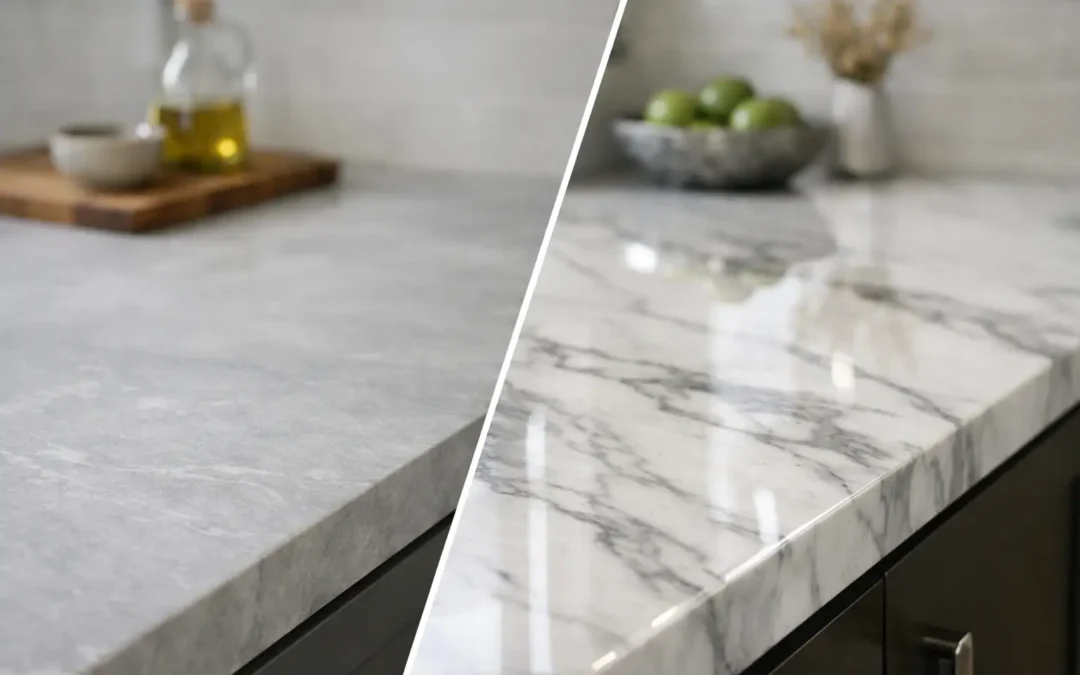
A slab can look completely different once the finish changes. The same marble that feels crisp, bright, and reflective when polished can read soft, understated, and more relaxed when honed. That is why this decision matters so much – you are not just choosing a stone, you are choosing how that stone will live in your space every day.
For homeowners planning a kitchen or bath, and for designers trying to balance beauty with real-world use, the question of honed vs polished marble countertops usually comes down to three things: appearance, maintenance, and tolerance for natural wear. Marble is a premium material with lasting appeal, but the right finish depends on how you want it to perform and how comfortable you are with patina over time.
Honed vs polished marble countertops: what changes?
The marble itself does not change. The difference is in the final surface treatment.
A polished finish is buffed to a high shine. It reflects light, brings out depth and contrast in the veining, and gives the surface a more formal, luminous look. In many kitchens, polished marble feels brighter and slightly more dramatic.
A honed finish is ground to a smooth, matte or low-sheen surface. It still feels refined, but the look is quieter and more natural. Veining can appear a little softer, and the overall effect is often more relaxed and architectural.
Neither finish is inherently better. They simply behave differently, and those differences become obvious once the countertop is installed and in use.
How the finish affects the look of the room
If your goal is to make the stone feel crisp and visually elevated, polished marble usually has the stronger first impression. It bounces light around the room and can make white marble look cleaner and more vivid. In a smaller kitchen or bathroom, that extra reflectivity can help the room feel more open.
Honed marble tends to appeal to clients who want warmth, subtlety, and a less formal finish. It works especially well in interiors that lean organic, layered, or old-world rather than glossy. In natural light, honed marble often feels calmer and more grounded.
This is where showroom viewing matters. Finish changes the personality of the slab. Looking at a sample is helpful, but seeing larger pieces in person gives you a better sense of movement, depth, and how the surface interacts with light.
Veining, color, and visual contrast
Polished marble usually intensifies color and pattern. Dark veins can appear sharper, and the background can look brighter or more saturated. If you selected marble because of strong movement or dramatic veining, polishing often emphasizes that character.
Honed marble mutes contrast slightly. The stone still has pattern and variation, but the effect is softer. For some projects, that is exactly the point. If you want the room to feel elegant without the countertop demanding all the attention, honed can be the better fit.
Etching, stains, and everyday wear
This is where the conversation gets more practical. Marble is calcium-based stone, which means it can etch when exposed to acidic substances like lemon juice, vinegar, wine, or some cleaners. Etching is not the same as staining. It is a chemical reaction that changes the surface finish.
On polished marble, etching is usually more visible because it disrupts the glossy surface. A dull spot or mark stands out against the shine. For clients who want a pristine, highly uniform look, that can become frustrating in a busy kitchen.
On honed marble, etching still happens, but it tends to be less obvious because the surface is already matte. The mark often blends more naturally into the finish. That is one reason honed marble is frequently recommended for active kitchens where some wear is expected.
Staining is a separate issue. Both honed and polished marble can stain if spills are left in place, especially oils or deeply pigmented liquids. Proper sealing helps, but sealers reduce absorption – they do not make marble stain-proof or etch-proof.
Which finish hides use better?
In most day-to-day settings, honed marble is more forgiving visually. It tends to mask etching, fingerprints, and small surface disruptions better than polished marble. If you have children, entertain often, or cook daily, that lower-contrast wear pattern can be a real advantage.
Polished marble can resist surface dirt a bit better because the tighter, shinier finish is less likely to hold onto grime at a microscopic level. But because it shows etching more clearly, many people feel it looks more delicate even when the stone itself is not weaker.
Maintenance expectations for each finish
Both finishes need thoughtful care. Marble is not a zero-maintenance material, and anyone telling you otherwise is oversimplifying the choice.
For daily cleaning, use a pH-neutral stone cleaner or mild soap with water and a soft cloth. Avoid acidic or abrasive products. Wipe spills promptly, especially around prep zones, coffee stations, and bathroom vanities.
Honed marble may show darkening temporarily when wet or when oils sit on the surface, particularly on lighter stones. Polished marble can show water spots and smudges more readily under direct light. Neither issue is severe, but they are worth understanding before installation.
Professional maintenance is also part of the long-term picture. Honed marble can often be refreshed more easily if the surface develops uneven wear. Polished marble can also be restored, but matching a high-gloss finish in isolated areas may require more skill and can be harder to blend perfectly.
Where honed marble makes the most sense
Honed marble is often the right choice when the project calls for a softer, more lived-in finish and the homeowner wants less visual stress around daily wear. It is especially well suited to kitchens where cooking is frequent and a little patina is acceptable.
It also works beautifully in bathrooms, laundry rooms, fireplace surrounds, and feature applications where the design goal is texture and quiet elegance rather than shine. For many designers, honed marble feels more current because it photographs well and pairs naturally with warm woods, plaster finishes, and mixed metals.
Where polished marble makes the most sense
Polished marble is a strong choice when you want brightness, formality, and more visual depth from the slab. It can be especially compelling in bathrooms, bar areas, powder rooms, and lower-impact surfaces where acid exposure is less frequent.
It is also a valid kitchen choice for clients who truly love the polished look and understand the maintenance trade-off. Some homeowners prefer a finish that starts with high shine and accept that use may become part of the story over time. That is not a mistake – it is a design preference.
The real question: perfection or patina?
Most finish decisions come down to mindset more than performance charts. If etching will bother you every time you see it, polished marble in a hard-working kitchen may not be the right fit. If you appreciate natural materials and can accept some evolution, either finish can work.
This is why honest guidance matters. The best specification is not the one that looks perfect on installation day. It is the one that still feels right a year later, after meals, guests, rushed mornings, and normal life.
How to choose with confidence
When clients are deciding between honed vs polished marble countertops, we usually recommend looking at the full context of the project. Start with how the room is used. A serious cooking kitchen has different demands than a guest bath. Then consider the lighting, cabinet finish, hardware, and the overall design language of the home.
It also helps to ask a simple question: do you want the countertop to look freshly finished, or naturally settled in? Polished tends to favor the first feeling. Honed tends to favor the second.
If possible, view the same or similar marble in both finishes before making a final decision. Large samples, slab viewing, and practical discussion around maintenance usually reveal the right answer quickly. At Stonhaus Design, that hands-on selection process is a big part of helping clients choose with confidence rather than guess from small samples.
Marble rewards a thoughtful decision. Choose the finish that fits your eye, your routine, and your tolerance for change, and the result will feel intentional long after installation day.