
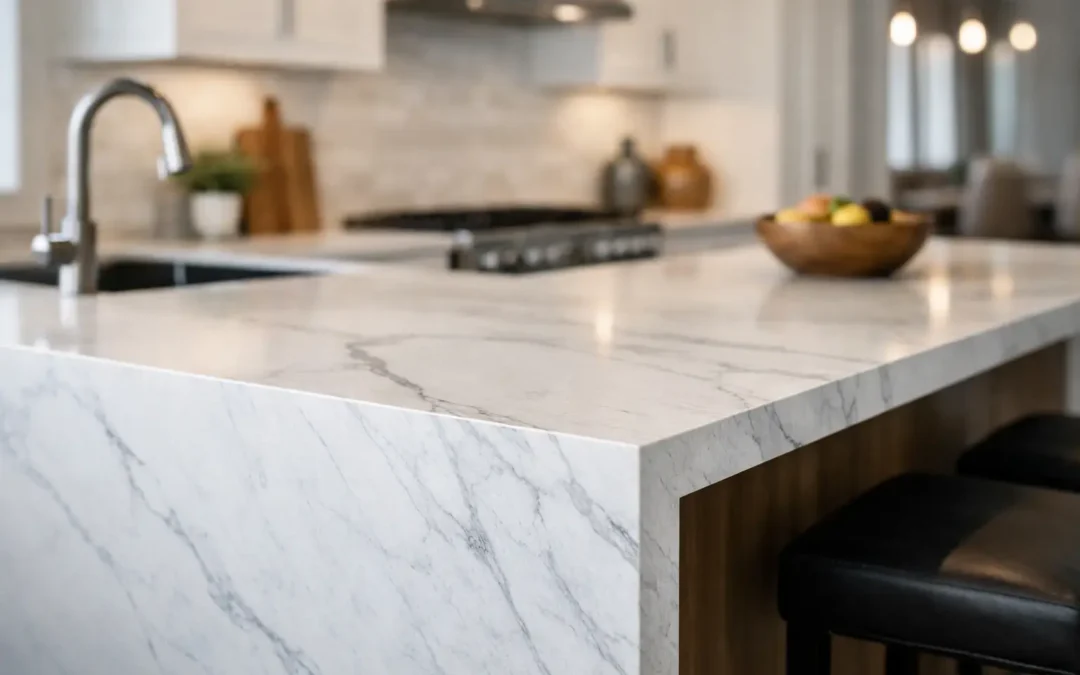
A waterfall edge countertop can make an ordinary island look custom in a single move. That continuous slab dropping straight to the floor has presence – and it also changes budget, fabrication, and how the whole kitchen feels.
For some homes, it is exactly the right choice. For others, it is a design feature that looks impressive in photos but adds cost without solving a real need. If you are weighing waterfall edge countertop pros and cons, the right answer usually comes down to material, layout, lifestyle, and how committed you are to a more architectural look.
What is a waterfall edge countertop?
A waterfall edge countertop extends the surface material vertically down one or both sides of a cabinet, island, or vanity. Instead of stopping at the top with a standard overhang, the stone continues to the floor or near the floor, creating a clean, sculptural end panel.
In kitchens, this detail is most often used on islands. In bathrooms, it can appear on vanities for a more tailored look. It is especially striking in natural stone with bold movement, because the veining can be fabricated to flow from the top onto the side for a dramatic, book-matched effect.
That visual continuity is what draws most people to the idea. But the fabrication and design decisions behind it matter just as much as the final appearance.
Waterfall edge countertop pros and cons at a glance
The biggest advantage is visual impact. A waterfall edge looks intentional, high-end, and clean. The biggest drawback is cost, since you are using more material and more labor to fabricate and install it correctly.
Beyond that, the trade-offs are more nuanced. A waterfall edge can protect the cabinet end from scuffs and create a polished focal point, but it can also feel too formal or too dominant in the wrong room. It often works best when the slab itself deserves attention.
The pros of a waterfall edge countertop
It creates a strong focal point
If your island is the center of the room, a waterfall edge helps it read as furniture rather than cabinetry. It gives the kitchen a finished, intentional look and can elevate a simple layout without adding decorative clutter.
This is one reason designers often use it in open-concept homes. The island is visible from multiple angles, and the waterfall treatment gives those exposed sides a cleaner, more refined appearance.
It highlights beautiful stone
Certain materials benefit from large, uninterrupted surfaces. Marble, quartzite, and some quartz patterns can look especially striking when the veining runs down the side. Instead of treating the countertop and the end panel as separate elements, the slab becomes one visual statement.
This is where material selection matters. A subtle stone can look elegant and quiet. A heavily veined slab can become the defining feature of the room. In a curated showroom setting, seeing the full slab before fabrication makes a real difference because scale and movement are hard to judge from a small sample.
It protects exposed cabinet ends
On a practical level, the vertical slab can shield the end of an island from bumps, shoes, pet traffic, and everyday wear. In busy kitchens, that can be useful, especially if the island sits near a main walkway.
Stone is not indestructible, but a properly fabricated panel can hold up better than painted wood or finished cabinetry in a high-contact area.
It works well in contemporary and transitional spaces
Waterfall edges are often associated with modern kitchens, but they are not limited to that style. In the right material, they also fit beautifully in transitional interiors. The key is proportion.
A soft-toned quartzite or a warm marble can make the detail feel refined rather than severe. Pair it with thoughtful lighting, wood tones, or layered finishes, and it becomes less about trend and more about architecture.
The cons of a waterfall edge countertop
It costs more
This is usually the first practical concern, and for good reason. A waterfall edge requires additional slab material, more fabrication, more handling, and more installation precision. If you want the veining to align from horizontal to vertical, that can also increase planning complexity and waste.
For premium stone, that cost difference can be meaningful. If your budget is already stretched by cabinetry, appliances, or structural work, a waterfall edge may not be the best place to spend. Sometimes a thicker-looking edge profile or a well-chosen full-height backsplash delivers more impact per dollar.
It is less forgiving of poor fabrication
A standard countertop can hide minor inconsistencies more easily. A waterfall edge cannot. The seam placement, veining alignment, edge treatment, and support all need to be handled with precision.
If the joint is awkward or the slab pattern does not transition well, the finished result can look like two pieces forced together rather than one continuous feature. This is why experienced templating, fabrication, and installation matter so much.
It can overpower smaller spaces
In a large, open kitchen, a waterfall island often feels balanced. In a compact room, it can become visually heavy, especially with dark stone or bold movement. Rather than opening the space, it may make the island feel blocky.
That does not mean small kitchens cannot use waterfall edges. It just means the proportions have to be right. Lighter materials, cleaner patterns, and thoughtful cabinet design help keep the feature from taking over the room.
It may not suit every style of home
Some homeowners love the crisp, tailored look. Others find it too contemporary for the architecture of the house. In a traditional kitchen with detailed millwork, ornate hardware, and classic cabinetry, a waterfall edge can sometimes feel disconnected from the rest of the design.
There are exceptions, of course. The right stone in the right setting can bridge styles beautifully. But if your overall design language is warm, layered, and traditional, a standard countertop end may feel more natural.
Material choice changes the answer
Not all waterfall edges perform or look the same because the material itself changes the equation.
Quartz is popular for waterfall applications because it offers consistency, predictable patterning, and lower maintenance. It can be a strong choice for busy family kitchens where ease of care matters.
Quartzite and granite bring more natural variation and depth. They are often chosen when homeowners want a one-of-a-kind statement with strong durability. Marble offers unmatched elegance, but it requires a homeowner who is comfortable with patina and maintenance over time.
The right choice depends on how you use the space. If the island is a daily work zone for cooking, homework, and entertaining, practicality matters just as much as appearance. If it is a showpiece in a lower-wear setting, you may prioritize movement, rarity, or softness of color.
When a waterfall edge makes the most sense
A waterfall edge is usually worth considering when the island is highly visible, the slab has character, and the room benefits from a stronger focal point. It also makes sense when you want to protect the exposed side of cabinetry and create a more custom, furniture-like finish.
It tends to work especially well in new kitchens, major remodels, and custom homes where the cabinetry, flooring, lighting, and stone are all being selected together. In that context, the detail can be integrated from the start rather than added as an afterthought.
When it may not be the right choice
If you are trying to keep costs disciplined, working with a modest footprint, or designing around a more traditional cabinet style, a waterfall edge may not give you the best return. The same is true if your slab is visually quiet and the vertical drop will not add much design value.
Sometimes the smarter move is to invest in a better material, a cleaner fabrication finish, or a more functional island layout. Good design is not about adding every premium feature. It is about choosing the ones that fit the room and the way you live.
A better decision starts with seeing the slab
Photos make waterfall edges look simple. In real projects, the details are what determine whether the result feels effortless or expensive in the wrong way. You want to know how the slab will lay out, where seams will land, how the veining will read at full scale, and whether the proportions suit the room.
That is why the selection and fabrication process matters as much as the design idea itself. At Stonhaus Design, many clients find clarity by seeing full materials in person and talking through how a specific slab will perform, fabricate, and look once installed.
If you are deciding between a waterfall edge and a more standard countertop finish, trust the version that makes the whole room better, not just the island more dramatic. The best stone decisions feel just as right five years later as they do on installation day.