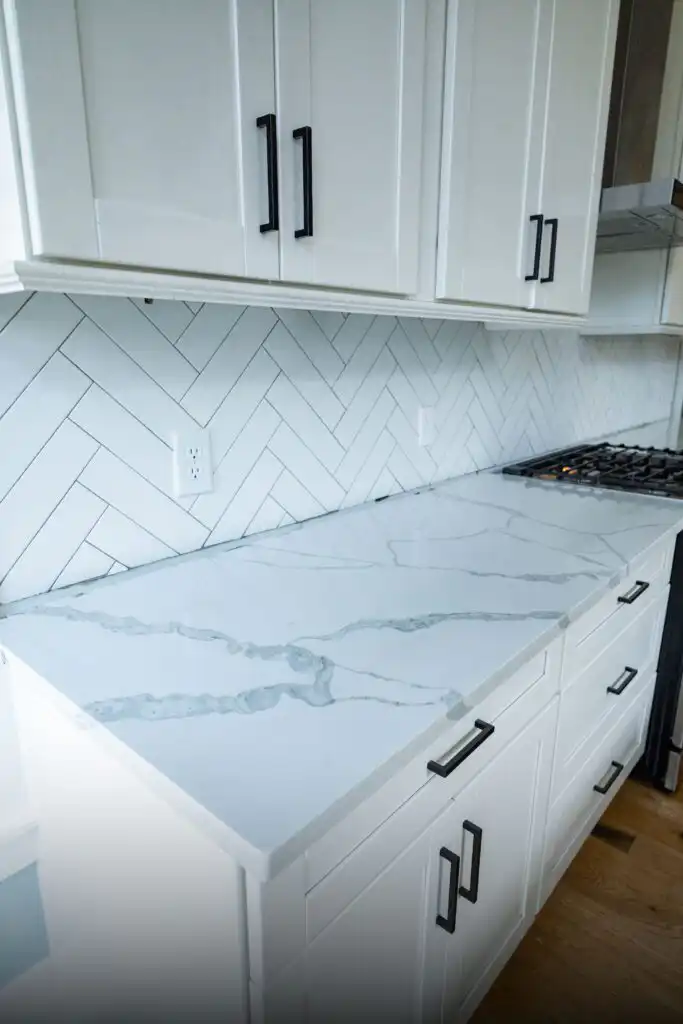
Is quartzite heat resistant? Yes. True quartzite is a rock made almost entirely of quartz, fused at temperatures no kitchen comes close to, and it contains no resin to scorch or melt. What remains is a mechanical risk: a sudden temperature jump at a thin edge or a cutout. That is why trivets still make sense on it.
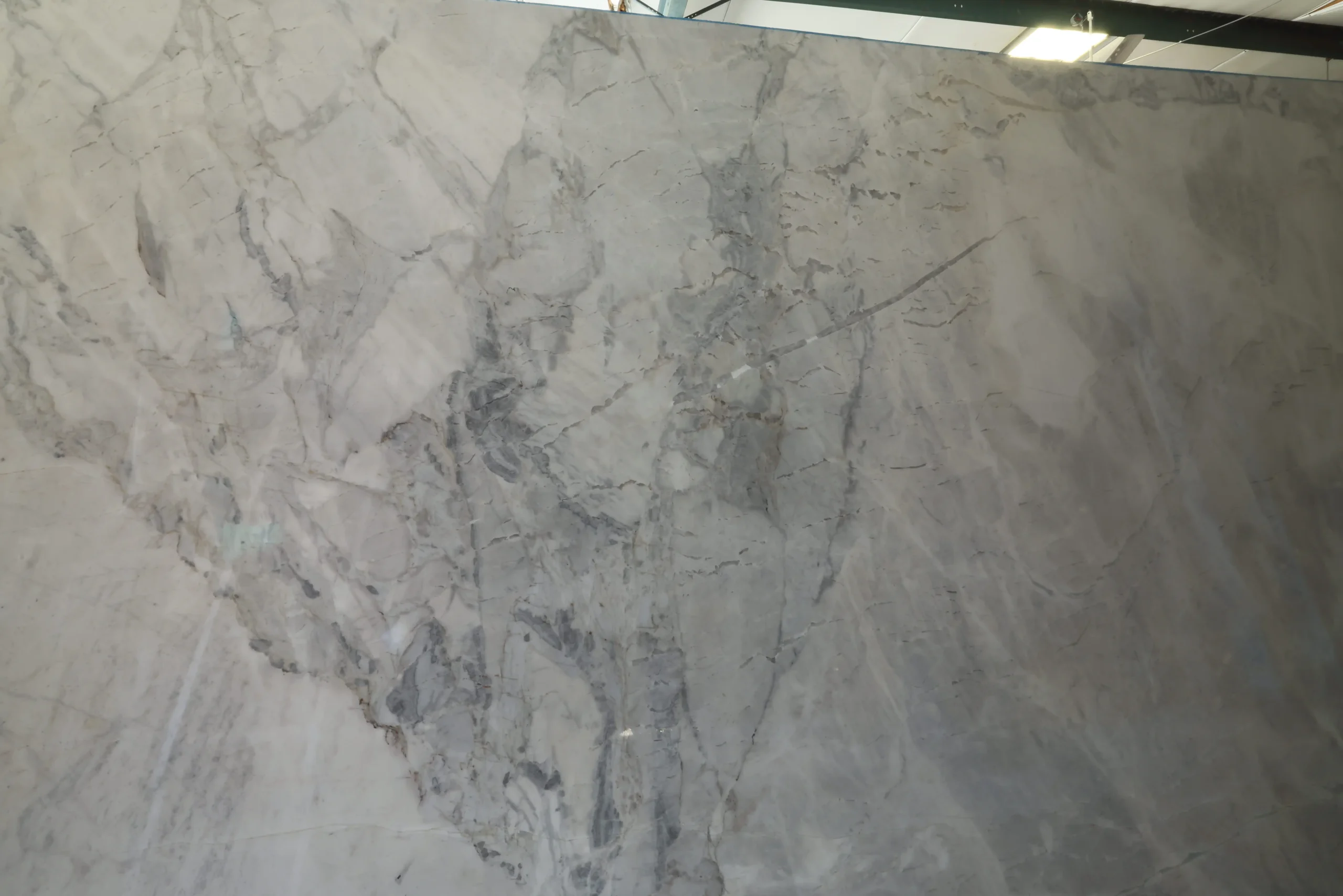
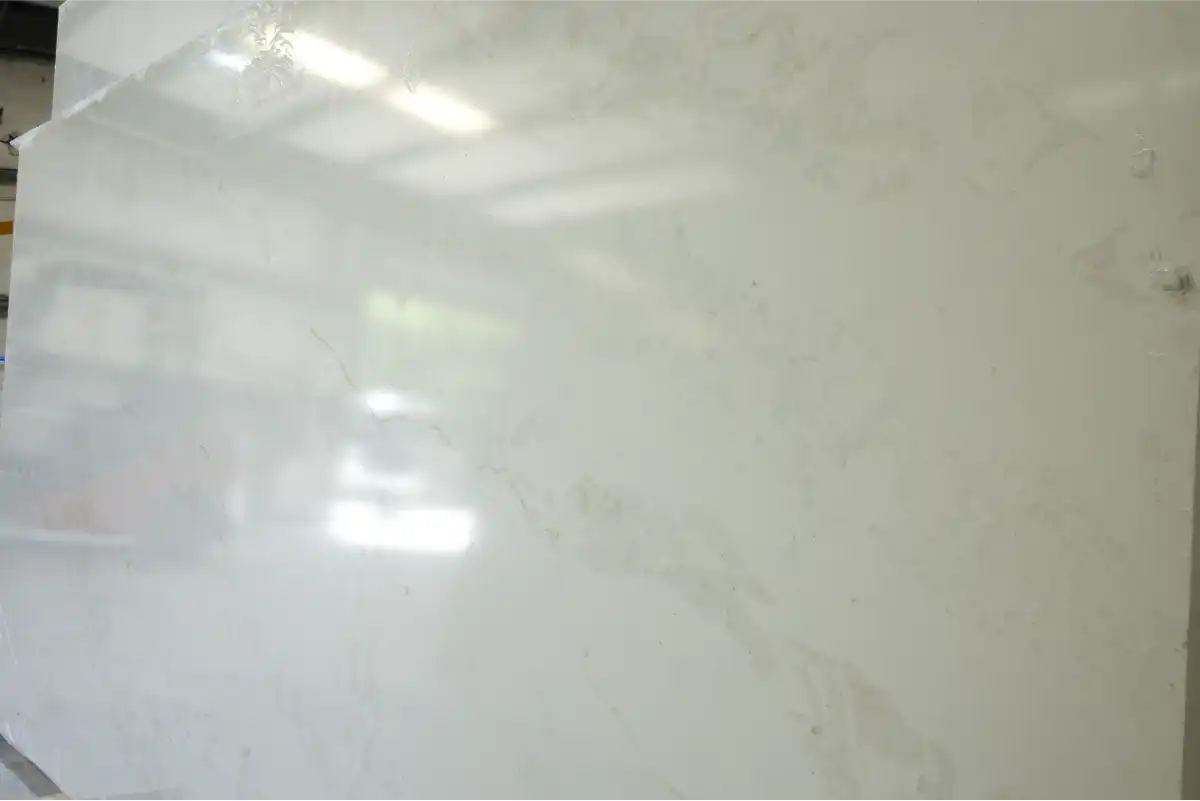
The answer has one condition, though: the slab has to be real quartzite. Stones sold under the name are not always what the label says, and that changes how they behave. Our page on quartzite countertops in Charleston shows the slabs we fabricate and the two checks that confirm one.
Can you put a hot pan straight on quartzite?
Occasionally, yes. Quartzite gives you a margin that a resin-bound surface doesn’t, so a pan set down in a hurry is not the event it would be on engineered quartz. Even so, the Natural Stone Institute’s (NSI) care advice for quartzite still lists coasters, trivets and cooling racks among the everyday habits.
Treat it the way you would treat a good knife: the material can take some abuse, and it lasts longer when you don’t test it. Slow cookers, roaster ovens and griddles that run for hours should sit on a board, on any stone.
Why quartzite handles kitchen heat so well
Quartzite is metamorphosed sandstone, formed at somewhere between 800 and 3,000 °F and at least 40,000 pounds per square inch, the NSI explains, and made of minerals and nothing else. A formation temperature is not a rating for your countertop, but it tells you there is no binder in the stone waiting to soften.
A 2026 NSI report comparing natural and manufactured slabs puts quartzite with granite as dense, mineral-based materials that generally tolerate heat and temperature swings well. It flags the polymer resins in engineered quartz as the part that may be sensitive to sustained high temperatures; our answer on how engineered quartz reacts to heat covers that material.
Where heat can still damage a quartzite countertop
Thermal shock is the real risk. The NSI defines it as a rapid temperature change that creates internal stress inside the material, and its example is an extremely hot object placed on a cool surface. Heat alone is rarely the problem; a big, fast difference in temperature across a small area is.
Edges and cutouts are where that stress concentrates. Cambria’s care guide, written for an engineered product, says it plainly about natural stone: sudden or rapid temperature changes can damage it, especially near the edges, and so can direct or sustained heating of the top. The narrow strips around a cooktop or a sink are the spots to protect.
A mislabeled slab is the other risk. The same NSI report notes that marble can be more susceptible to thermal stress depending on its composition, and marble or dolomitic marble is sometimes sold as quartzite. If a “quartzite” etches from lemon juice or fails to scratch glass, our article on fake quartzite explains what you actually have.
What our quartzite pages list for heat
Our quartzite material pages each carry a characteristics panel. Here is what five of them say about heat, and where each stone is recommended.
| Stone | Heat resistance (our page) | Best for (our page) |
|---|---|---|
| Mont Blanc quartzite | Excellent | Kitchen countertops, bathroom vanities, islands, outdoor |
| Sea Pearl quartzite | Excellent | Kitchen countertops, bathroom vanities, islands, outdoor |
| Taj Mahal quartzite | Excellent | Kitchen countertops, bathroom vanities, fireplaces, islands |
| Crystallo quartzite | Excellent | Kitchen countertops, bathroom vanities, fireplaces, feature walls |
| Sequoia Brown quartzite | Excellent | Kitchen countertops, fireplaces, feature walls, islands |
Every one of these pages also asks you to choose your slab in person. That matters for heat as much as for looks: two slabs sold under one name can differ in color, movement and density, and density decides how much a slab absorbs.
How granite compares when the pan is hot
Granite is the other stone people trust near a range, and the NSI is direct about it: granite won’t melt or blister, and a hot pan can go from the oven onto the counter without harm. It still recommends a trivet under appliances that give off heat for long periods, such as a crockpot.
In a 2019 NSI test, a cast-iron skillet at about 570 °F sat on two granites for 10 minutes. On a clean surface, neither changed. Over a smear of oil and hot sauce, a white granite took a slight stain that faded within a day, and a black one darkened so faintly that observers missed it.
So can granite handle heat? Yes, on the same terms as quartzite: no resin, a mineral body, and the same caution about thermal shock at edges. Choose between them on looks and on how the two compare on scratches, chips and stains. Our page on granite countertops in Charleston covers that side of the showroom.
Fireplaces, outdoor kitchens and other hot spots
Three of the quartzites above list fireplaces among their uses. Around a firebox, the stone is rarely the weak link; the fireplace manufacturer’s installation manual and local building code set the clearances and materials, so bring that manual to the design meeting. Our notes on choosing stone for a fireplace surround go through the rest.
Outdoors, the NSI says harsh weather and UV light won’t affect natural quartzite, which is why two of the pages above list outdoor use.
A grill station in full sun is exactly where a resin-bound top struggles, and quartzite has no resin to yellow. If you are still weighing it against an engineered surface, see quartzite and quartz compared.
Signs it’s time to call a fabricator
- A hairline crack appears near a cooktop or sink cutout after a hot pan or a cold spill.
- A dark patch around the sink stays dark after the stone has had time to dry, a sign the stone is absorbing water.
- Your “quartzite” shows dull etch marks from lemon, wine or vinegar.
- You are planning a cooktop on an island or a narrow run, where the strips around the cutout get thin.
- You are designing a fireplace surround or an outdoor kitchen and need the stone, thickness and support settled early.
For damage on an existing top, a stone restoration professional is the right call; Stonhaus Design fabricates and installs new countertops and doesn’t offer repairs. For a new kitchen, bring your cooktop and fireplace specs and book a quartzite slab viewing in North Charleston.