An exotic slab is chosen the way a painting is, not the way a paint color is. You pick the actual piece, because the next one out of the quarry will not match it.
Exotic stone slabs are natural stones prized for something rare: a translucent body, an unusual color, or bold movement that few quarries produce. Most are quartzites and marbles, with some granites, and many come from Brazil and Italy. Because every slab differs, they are best chosen standing in front of the stone.
Our North Charleston showroom has eight such stones on its materials pages. Below is what each page says about its stone, with a link to it, and what to check before you commit. Availability changes, so use this as a map and browse the materials we stock for the current list.
The eight stones at a glance
| Stone | Look, in our page’s words | Check before you buy |
|---|---|---|
| Crystallo | Semi-translucent body with amber, gold and ferrous veining; can be backlit | Lighting design and electrical work planned before templating |
| Taj Mahal | Creamy champagne background with beige, gold and pale gray veining | How the warm tone reads next to your cabinets |
| Sea Pearl | Soft greenish gray with fine veining and a faint shimmer | The color in daylight, not only under showroom lights |
| Mont Blanc | Cloud-like white with gray, charcoal and occasional lilac veining | Variation from one slab to the next |
| Sequoia Brown | Strong linear bands of charcoal, taupe and warm brown | Bookmatch and seam layout on long runs |
| Super White | Bright white with bold, irregular gray veining | Where the strongest veins land on your layout |
| Calacatta | White background crossed by bold, well-defined gray veining | The finish and care routine of the slab you pick |
| Black Forest | Near-black with fluid, painterly white veining | Fingerprints and lighting; it shows smudges more than light stones |
Light that passes through: Crystallo
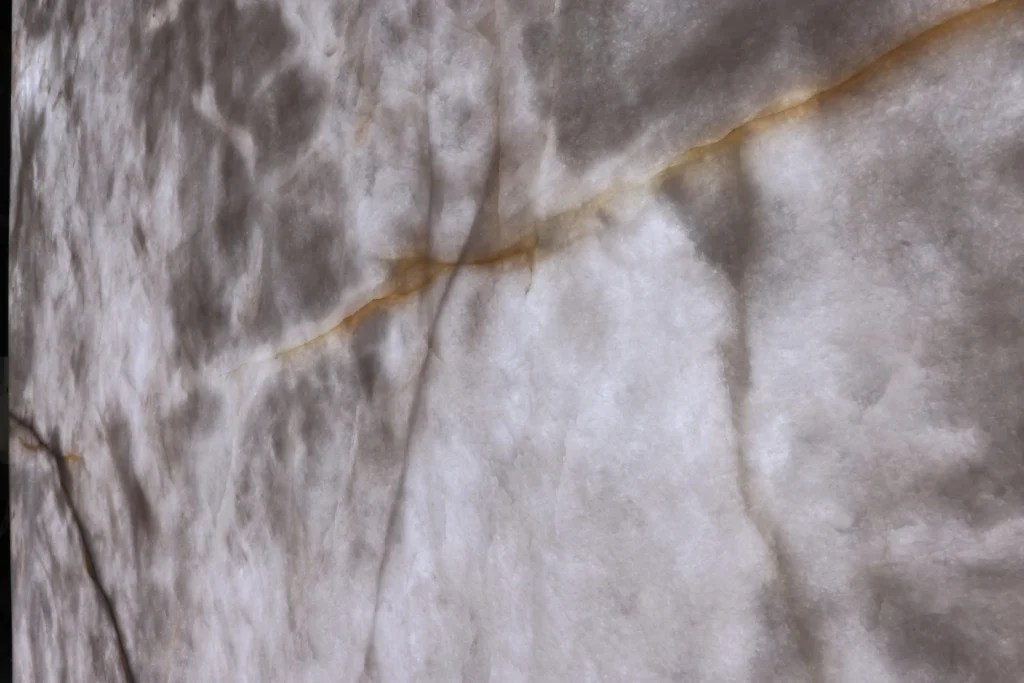
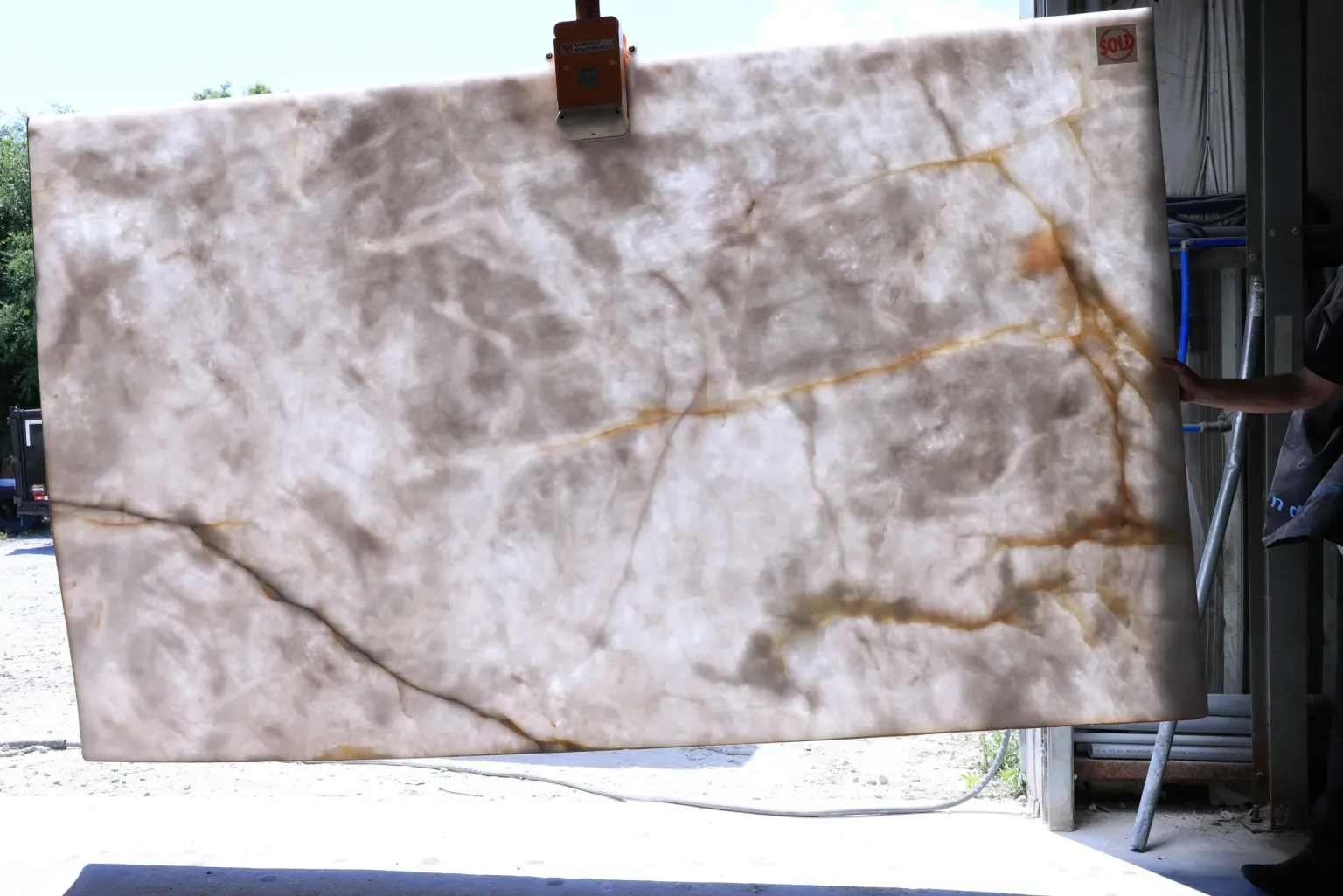
Crystallo is the one stone in the group that can glow. Our page describes a semi-translucent body with amber, gold and ferrous veining that can be lit from behind, for floating islands, bars and backlit shower walls. The photo, from that page, shows the cloudy white body and the amber veins.
Two notes from the same page are worth taking seriously: slabs sell quickly, and the stone is best shown with proper lighting design. If you want it backlit, the light panel, its wiring and access for service are decided with your electrician and fabricator before templating, not after.
Warm and quiet: Taj Mahal and Sea Pearl
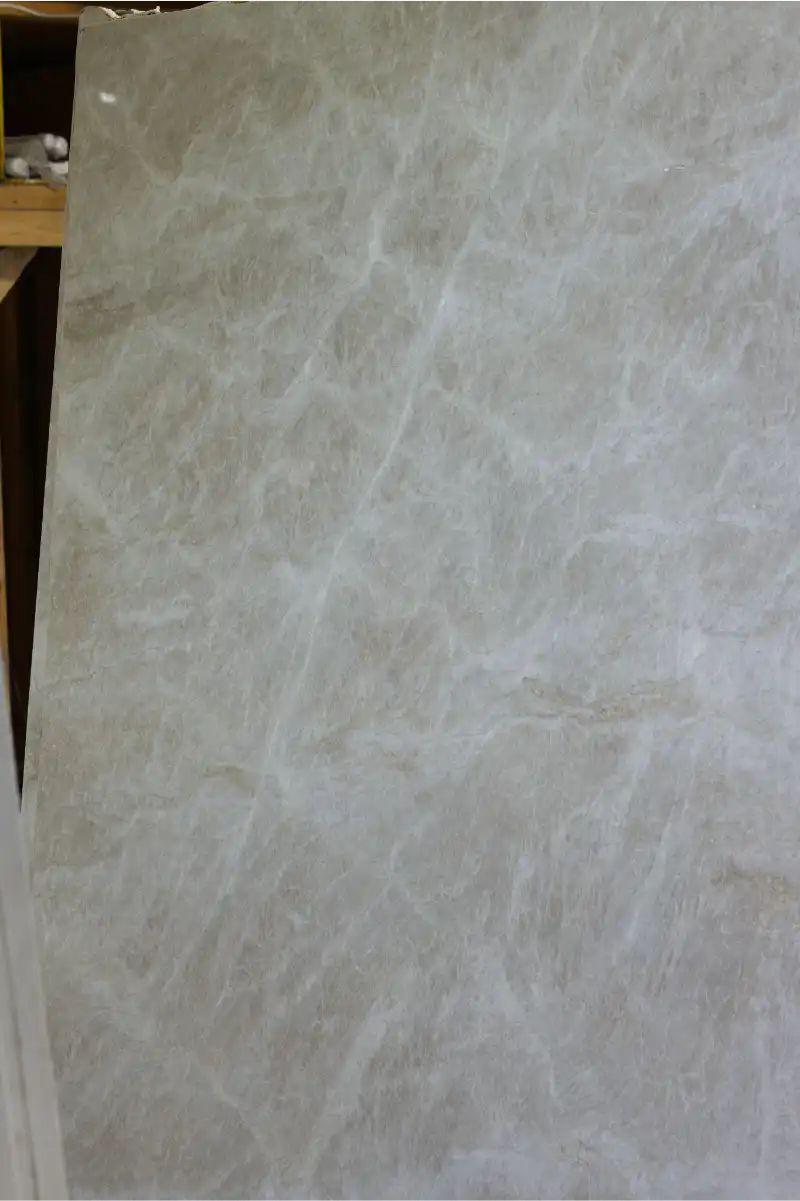
Exotic does not have to mean loud. Taj Mahal is a creamy, champagne-toned stone with soft veining that our page pairs with white cabinetry, warm wood and aged brass.
Sea Pearl shifts between cool gray, sage and pale silver, with quiet veining that lets the cabinetry and architecture lead. Our page notes it is particularly popular in Charleston homes with coastal palettes.
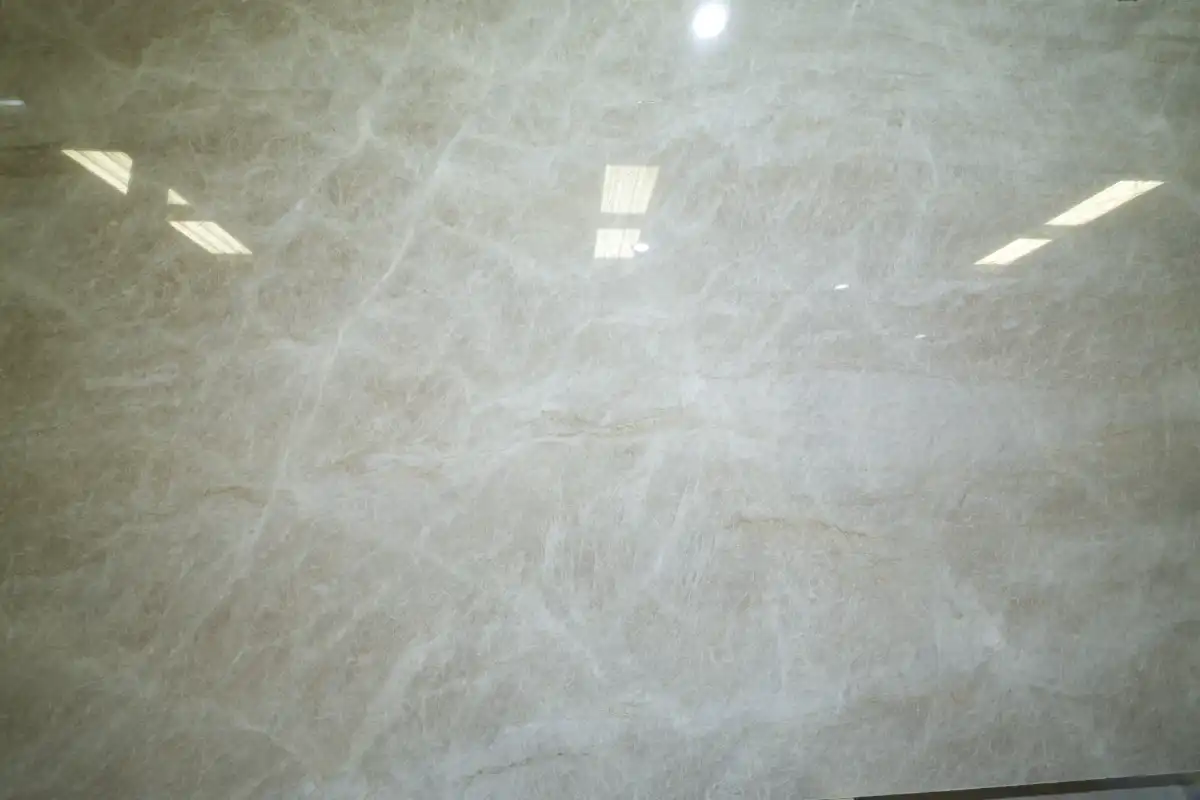
Both also have a practical edge. The Natural Stone Institute’s guide to quartzite counts Taj Mahal and Sea Pearl among the stones whose minerals fused tightly under heat and pressure, so they absorb little. The photo above comes from our Taj Mahal page.
White with gray veining: Mont Blanc, Super White and Calacatta
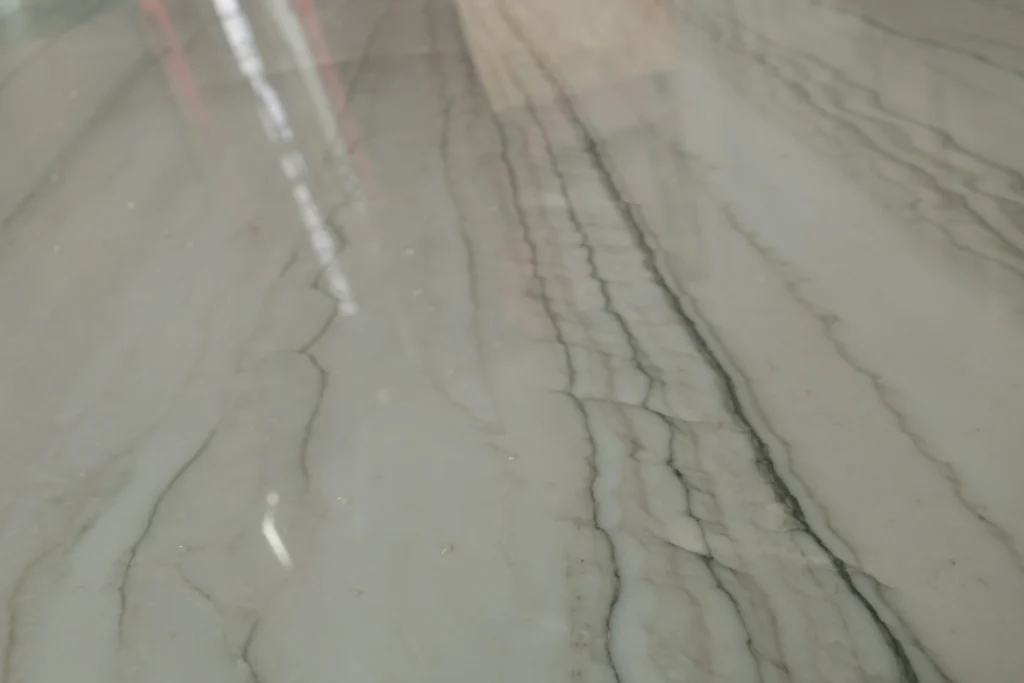
These three answer the same wish, a bright white kitchen with gray movement, in different ways. Mont Blanc, shown above from its own page, is a soft white with gray, charcoal and occasional lilac veining. Our page presents it as the look of white marble with the strength and lower upkeep of quartzite.
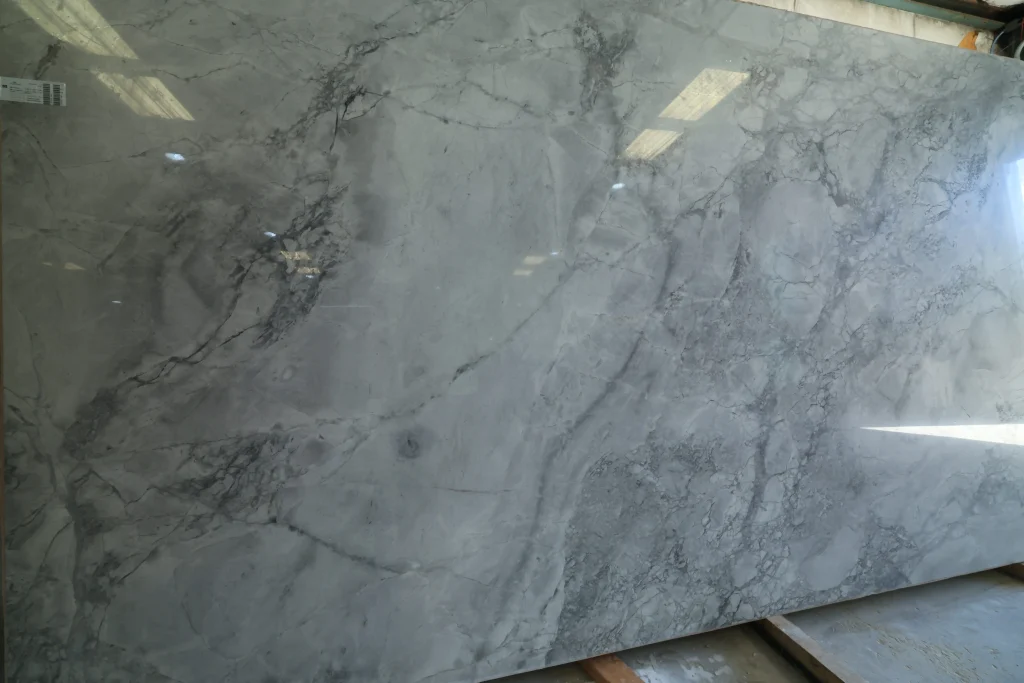
Super White, pictured here from its page, comes in several movement styles, from cloud-like to dramatic and broken.
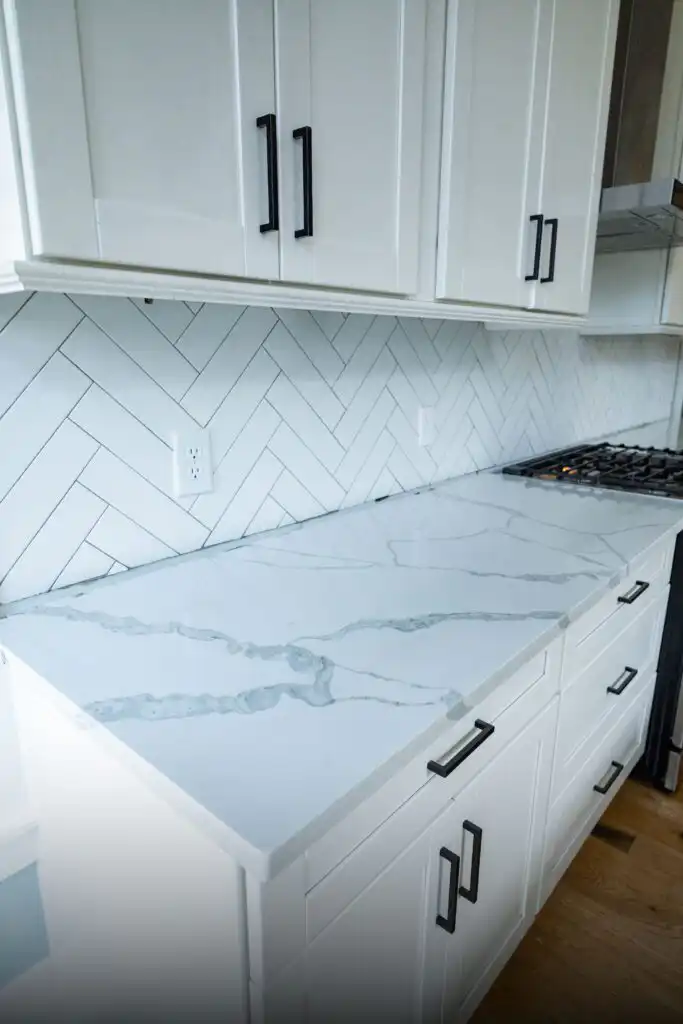
Calacatta has a white background crossed by bold, well-defined gray veining. Our Moncks Corner kitchen shows it installed on a main run and cooktop wall.
Lines and contrast: Sequoia Brown and Black Forest
Sequoia Brown is the stone for people who like order in their drama. Its bands of charcoal, taupe and warm brown run across the slab almost like wood grain, and our page notes it reads best in long bookmatched runs, where mirrored slabs open the pattern up.
That same page lists the catch: bookmatching requires careful planning, which is where planning a bookmatched layout comes in.
Black Forest is the boldest of the eight: a near-black background with fluid white veins that our page compares to brushwork. It works as an island, a bar or a fireplace surround.
Pair it with light cabinetry for maximum contrast, and expect fingerprints and smudges to show more than on a light stone. It is best in a well-lit room.
If you came looking for exotic granite, none of the eight above is sold as granite, though granite can be every bit as unusual in color and movement. For that route, start with our page on granite slabs in Charleston.
What makes an exotic slab cost more
The price of an exotic countertop is built from the stone and from the work it asks for, so it is quoted from the actual slab and your layout. The main factors:
- Rarity and availability: some stones, Crystallo among them, sell quickly and come from few sources.
- How many slabs the layout needs, and whether they must come from the same block to match.
- Bookmatching and vein direction, which can use more stone to get the pattern right.
- Hardness: the institute notes that very hard quartzites take longer to fabricate and wear tooling faster, so fabrication can cost a little more.
- Edges, sink and cooktop cutouts, thickness and waterfall ends.
- Backlighting, if the stone is translucent, and access to the house for large pieces.
Choosing one in person
- Look at the whole slab, not a sample, and from across the room as well as up close.
- Decide where the best movement should land and where the sink and cooktop will cut through it.
- For any white stone with gray veining, ask for the glass and acid tests on a sample before you buy.
- For long runs or islands, ask how many slabs of the same lot are available.
- Bring a cabinet door, a hardware sample and a photo of the room’s light.
The next step is simple: come and stand in front of the stone. Visit the showroom in North Charleston, or call (843) 284-7866 first to ask which slabs are in today.