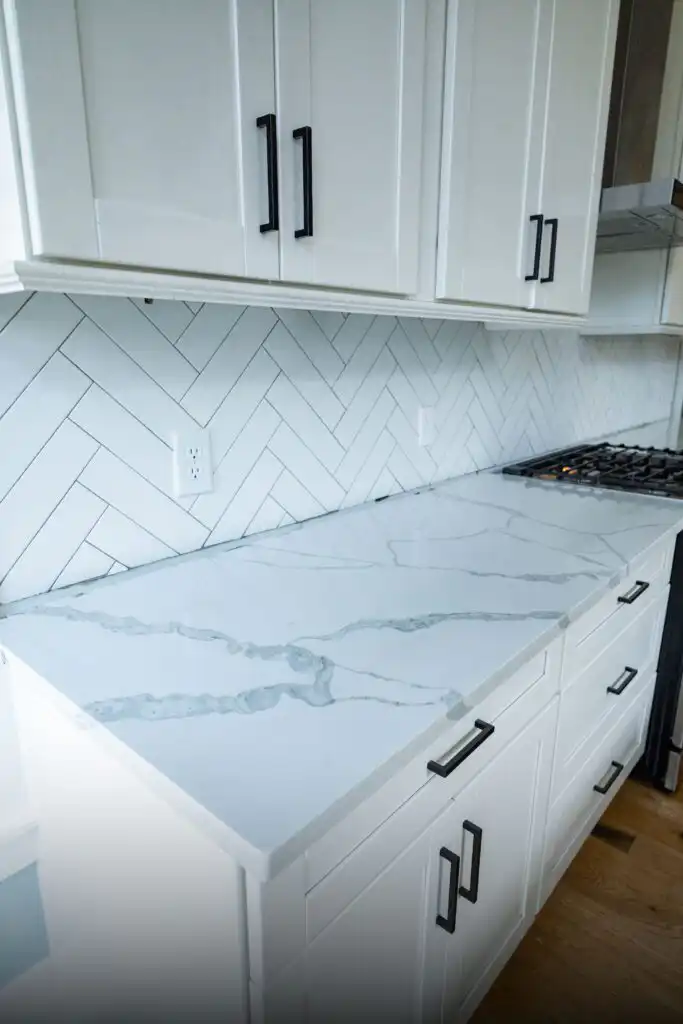
Coastal kitchen countertops are chosen for two things at once: a light palette that echoes sand, water and sky, and a house that lives with humidity, salt air and strong sun. Around Charleston, the second part decides as much as the first. Dense natural stones such as quartzite and granite handle that setting well.
Marble can work too, if you welcome a patina. Engineered quartz looks the part, but its resin binder is the weak point wherever strong sun reaches it. The seven checks below explain why, and what to look for when you stand in front of a slab.
1. Watch where the sun lands before you pick a color
Many coastal homes are built around light: big windows, porches, pass-through counters that open to the deck. Look at where sun will sit on the counter, because materials react to it differently.
The Natural Stone Institute notes that engineered quartz is best left indoors: slabs left outside turned yellow in the sun, while quartzite is unaffected by UV light and weather.
So a counter that runs through a window to the porch, or a bar that lives outside, is a job for natural stone. For an indoor run that bakes in direct sun for hours, ask the quartz manufacturer what its warranty says about sunlight before you commit.
Sun also changes how a counter feels. The same institute points out that darker stone gets hotter on the surface in the sun than lighter stone. On a sunny bar top or a counter under a west window, that is one more reason the classic light coastal palette is practical, not only pretty.
2. Ask how porous the stone is, and how it is sealed
In a humid house, porosity matters more than the name on the slab. Stone with more open pores takes in water and oils faster, so it needs a good sealer and a little attention around the sink.
Quartzites vary here. According to the Natural Stone Institute’s guide to quartzite, Taj Mahal and Sea Pearl are tightly bonded, while varieties like White Macaubas are more porous and benefit from sealing.
An easy home check comes from the institute’s quartzite care advice: if the stone darkens around the sink after water sits on it, the sealer needs refreshing. Our guide to sealing marble and quartzite covers how that works in practice.
3. Decide how you feel about etching before choosing marble
Marble is a calcium-based stone, so acids such as citrus, wine, tomato and vinegar can dull its surface where they touch. A Charleston stone restoration specialist interviewed by the Natural Stone Institute on caring for marble countertops describes it as softer and prone to scratches and etching.
That does not rule marble out of a beach house. A honed finish shows etching less than a polished one, according to the same article. It does mean marble suits people who like a surface that records its use. If you choose it, our notes on keeping marble free of stains will help from day one.
4. Pick tones that stay calm in bright light
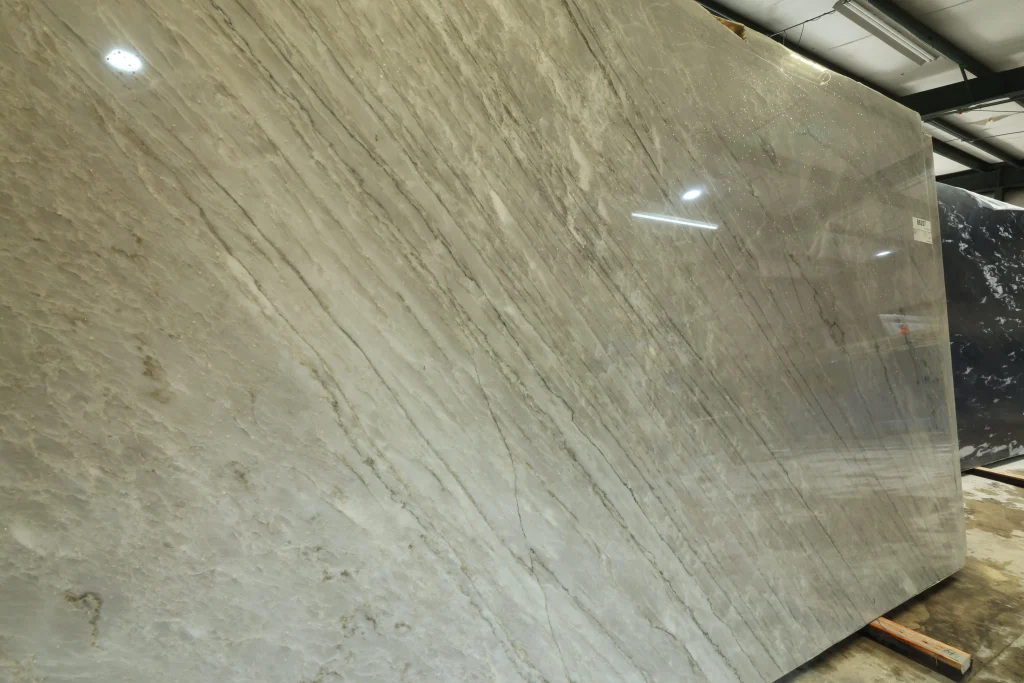
The slab above is Sea Pearl quartzite, photographed in our warehouse. Notice what you do not see: no bold contrast, no busy pattern. The veining runs in fine lines over a gray-green base. In a bright room, that quiet surface lets cabinetry, tile and the view do the talking.
On our materials page we describe Sea Pearl as shifting between cool gray, soft sage and pale silver, with a natural affinity for coastal palettes: white shiplap, weathered wood, brushed brass and soft blues. For a warmer look, Taj Mahal quartzite brings a creamy, champagne background that pairs with white cabinets, warm wood and aged brass.
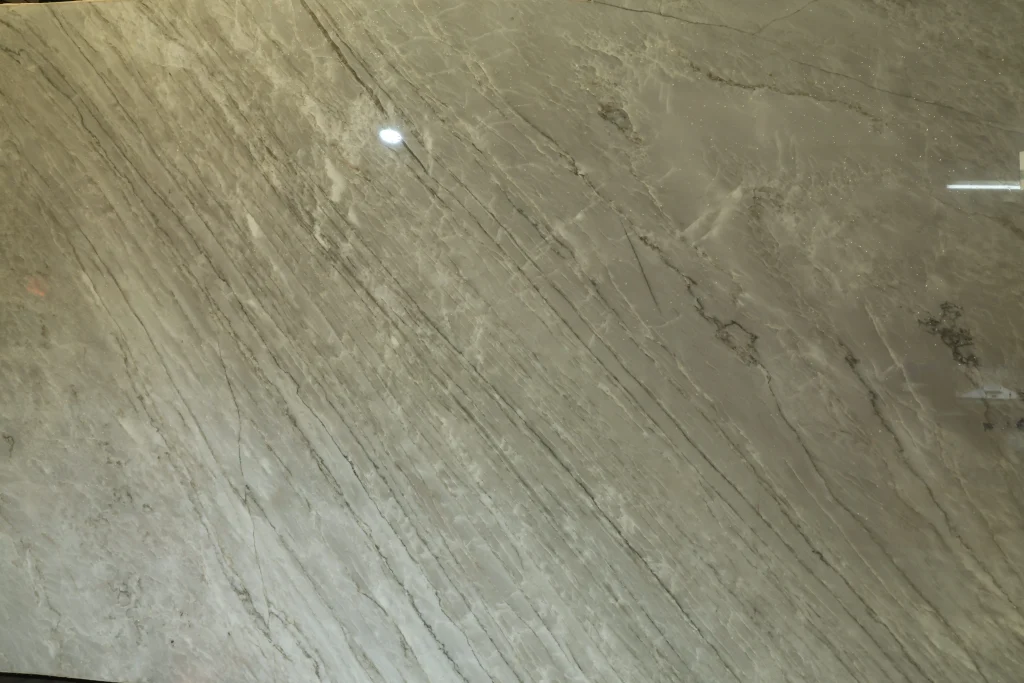
Up close, the same stone shows long, thin veins that read almost like rippled sand. That is the detail to look for if you want a coastal feel without beach decor: texture in the stone itself rather than shells on the shelf.
5. Match the finish to how the kitchen is used
Polished stone reflects light and makes colors look deeper. Honed and leathered finishes are matte or textured, and the Natural Stone Institute notes in 3 questions to ask before using natural stone in your kitchen that they are growing in popularity on light stones because they tend to disguise etch marks.
Dark stones behave differently. On our Black Forest page we note that the stone shows fingerprints and smudges more than light stones and looks best in a well-lit room. In a sunny coastal kitchen, that can be striking on an island; on a main prep run, a lighter stone asks for less wiping.
6. Plan a cleaning routine for sand, salt air and hard water
Beach days come home on hands, coolers and towels. Much beach sand is quartz, the same mineral that makes quartzite hard, so it scratches softer stones like marble when something gritty is dragged across them. Sweep sand off before setting heavy bags down.
For daily cleaning, stone care experts quoted by the Natural Stone Institute on caring for granite countertops recommend a neutral stone cleaner. They warn that improper cleaners, along with sunlight and air, break down sealers over time, and that water left around the faucet can calcify and turn white.
7. See the slab in daylight before you commit
Photos and small samples flatten stone. A coastal palette is about subtle undertones, and those change between warehouse lights, an overcast morning and late sun off the water. Ask to look at the full slab near a door or window, and bring a cabinet door, a tile and a paint chip.
At our North Charleston showroom you can compare full slabs of granite, marble, quartzite and quartz side by side, and our team fabricates on site. If you are planning a kitchen near the water, start with a visit to compare countertops in Charleston, SC in person and talk through sun, use and upkeep with a stone specialist.