A two-tone kitchen works a lot like a good duet: one voice carries the melody, the other supports it, and the trouble starts when both try to lead. Two tone kitchen countertops pair two different stones or colors in one kitchen, most often a statement stone on the island and a quieter, harder-working surface on the perimeter.
The combination works when one surface clearly leads, the two share an undertone, and each stone suits the job its zone does. The rest of this guide takes those three rules one layer at a time, then gives four pairings to start from.
The three rules that make two stones look planned
Rule one: let one surface lead. Movement shows best on large, uninterrupted pieces, so the island is the natural place for the bold stone.
A kitchen and bath specialist quoted by the Natural Stone Institute in matching your countertops with your personality describes exactly that: a high-movement statement piece on the island, and a toned-down surface on the perimeter.
Rule two: share an undertone. Warm with warm, cool with cool. The same article quotes a kitchen designer whose formula is to make sure the stone includes a color from the cabinetry. When both stones pick up a color already in the room, contrast reads as intention.
Rule three: contrast one thing at a time. Light against dark, busy against calm, or polished against honed. Changing color, pattern and finish all at once is how two stones start to look like two kitchens.
Four stone pairings to start from
These pairings use stones from our own materials pages, with the reasoning for each and the one thing to watch. Treat them as starting points to test in person, not as fixed recipes.
| Perimeter (quiet) | Island (statement) | Why it can work | Watch for |
|---|---|---|---|
| Taj Mahal quartzite: creamy, soft veining | Sequoia Brown quartzite: bold linear brown and charcoal bands | Both warm; both quartzite, so care is similar | Sequoia’s lines need careful layout on a long island |
| Sea Pearl quartzite: quiet gray-green | Black Forest: black with fluid white veining | Calm perimeter lets a dramatic island lead | Dark stone shows fingerprints and smudges more |
| Mont Blanc quartzite: white with gray and lilac veining | Crystallo quartzite: translucent, can be backlit | Light and airy, with one luminous centerpiece | Backlighting must be planned with the electrician early |
| A light, low-pattern quartz | Calacatta (listed as a marble on our materials page): white with bold gray veining | Easy-care perimeter for daily prep; marble where people gather | Marble etches; keep heavy citrus prep on the perimeter |
The descriptions come from our pages for Sequoia Brown quartzite, Black Forest and the other stones in our collection. On the Black Forest page, for example, we suggest pairing it with light cabinetry to maximize contrast, and we note it is best in well-lit spaces.
Match each stone to the job its zone does
Two-tone is a practical tool, not only a look. Put the more forgiving stone where the heaviest work happens, often the sink and range run, and the more delicate one where use is lighter.
A Natural Stone Institute case study, Two-Tone Solution, follows a Washington, DC kitchen that did exactly this with Taj Mahal quartzite on the island and perimeter and a dark soapstone on a smaller bar area.
In that kitchen, the homeowner explains that the soapstone areas are relatively small and do not get as much heavy-duty use as the island. Mixing materials also means mixing care routines. If one of your stones is marble, read our marble countertops pros and cons before deciding where it goes.
Sunlight belongs in the same conversation. If one surface is engineered quartz and part of the counter sits in strong sun or extends outdoors, our guide to coastal kitchen countertops explains why natural stone is the safer choice there.
Two-tone cabinets with one countertop, or two?
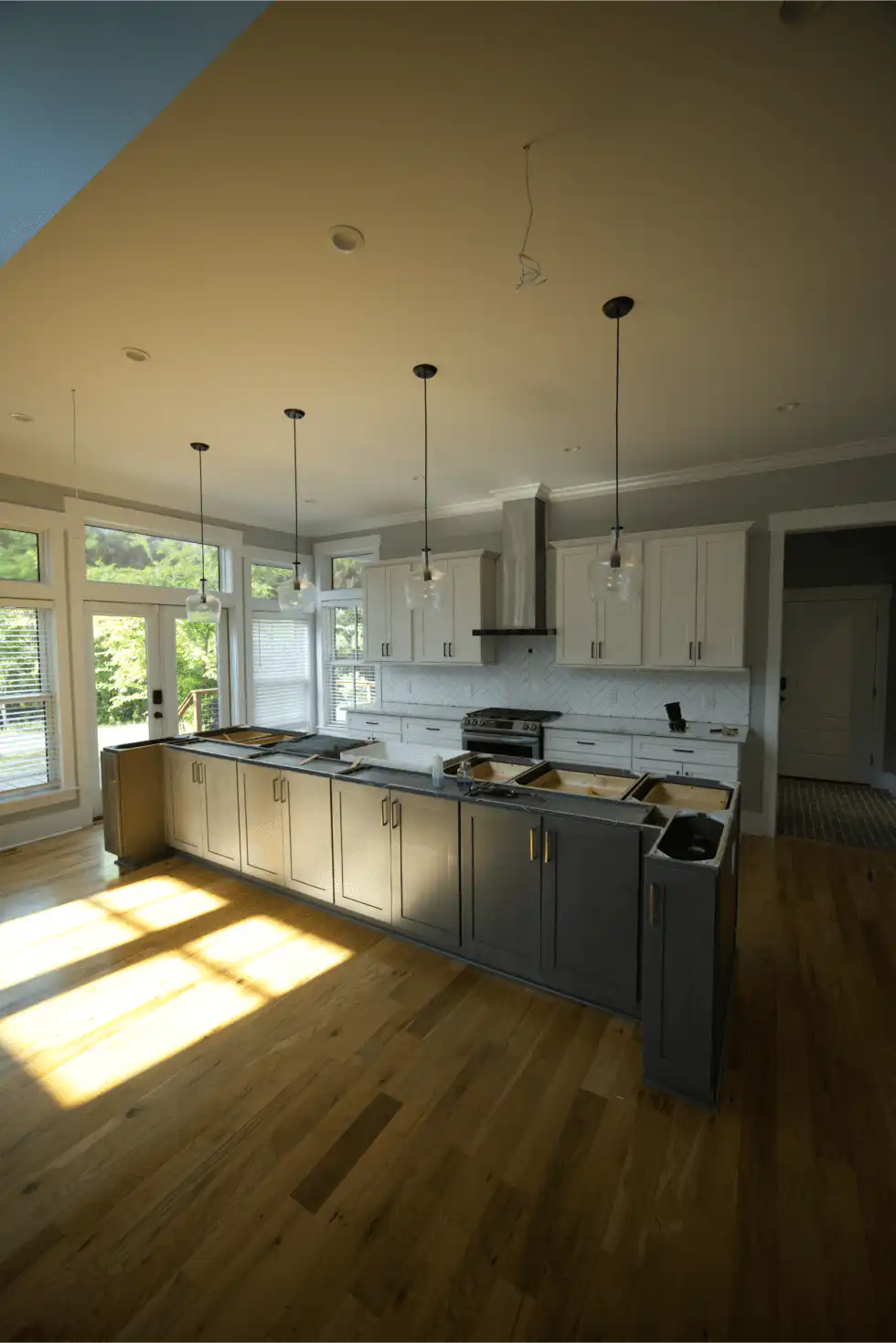
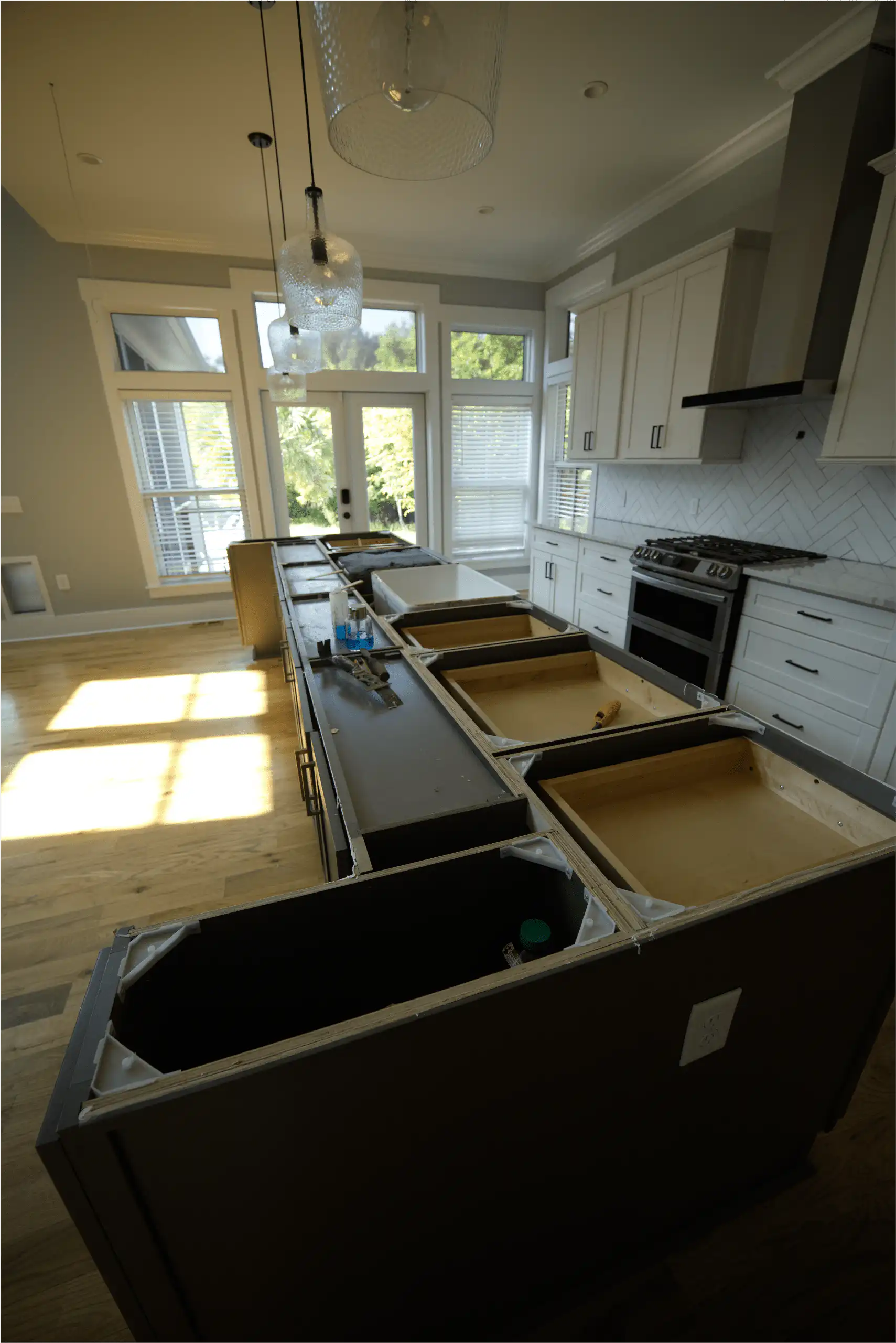
Many two-tone kitchens start with the cabinets. In the photo, from our Moncks Corner kitchen project, the island is painted gray and the perimeter cabinets are white, and the island is photographed before its stone went on. That is the moment the two-tone countertop question gets decided.
With two cabinet colors, a single stone that contains both tones can tie the room together.
A second stone on the island adds another layer of contrast, so it works best when the cabinet colors are already close or quiet. If both the cabinets and the stones change at the island, keep at least one thing constant, such as the edge profile or the hardware finish.
Small details that keep two stones from fighting
- Same thickness and edge profile throughout. Matching edges make two stones read as one design. Our guide to granite countertop thickness explains the 2 cm and 3 cm options.
- Let the stones meet only where the pieces already end. The island and the perimeter are separate pieces anyway; avoid switching stones in the middle of one run.
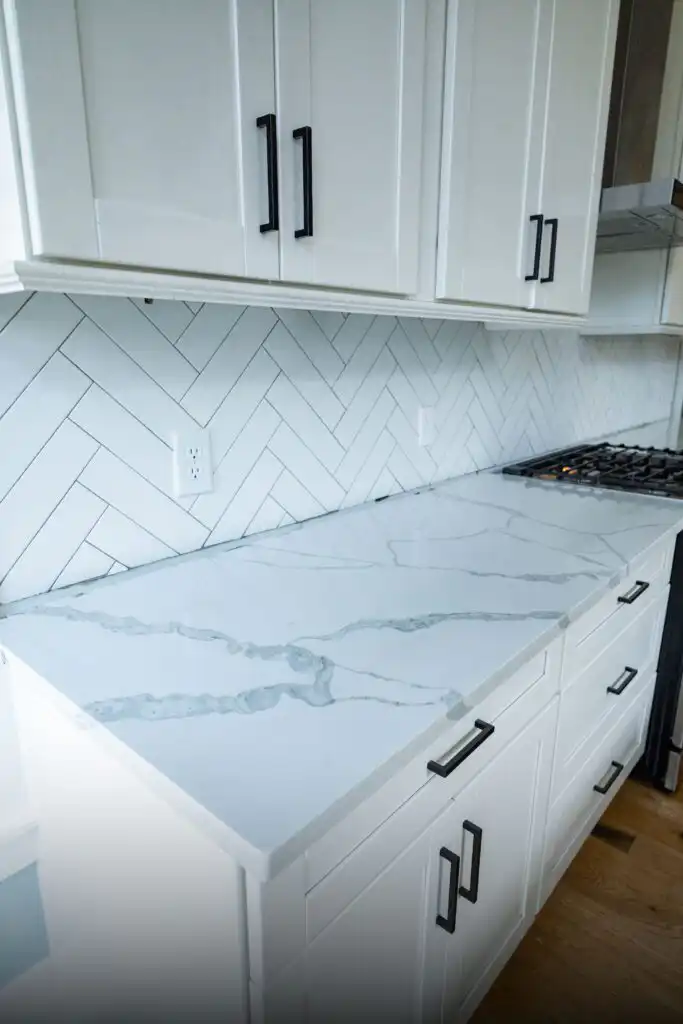
- Decide the backsplash with the perimeter stone, not the island. Running the quieter stone up the wall extends the calm surface instead of adding a third look.
- Repeat one color somewhere else, in hardware, a stool, or a cabinet, so the island stone does not float on its own.
Will a two-tone kitchen look dated?
Any strong look can date; a thoughtful one tends to age better. A surface-materials sales representative quoted in the same Natural Stone Institute article notes that solid colors with little movement help with resale because they are versatile, and adds that clients who plan to stay for years and love bold movement should pick what they love.
A two-tone plan sits neatly between those: the calm perimeter carries the resale logic, and the island carries the personality. If you are choosing a statement island stone, our notes on choosing a quartzite island slab help with that part of the decision.
Test the pair before you commit
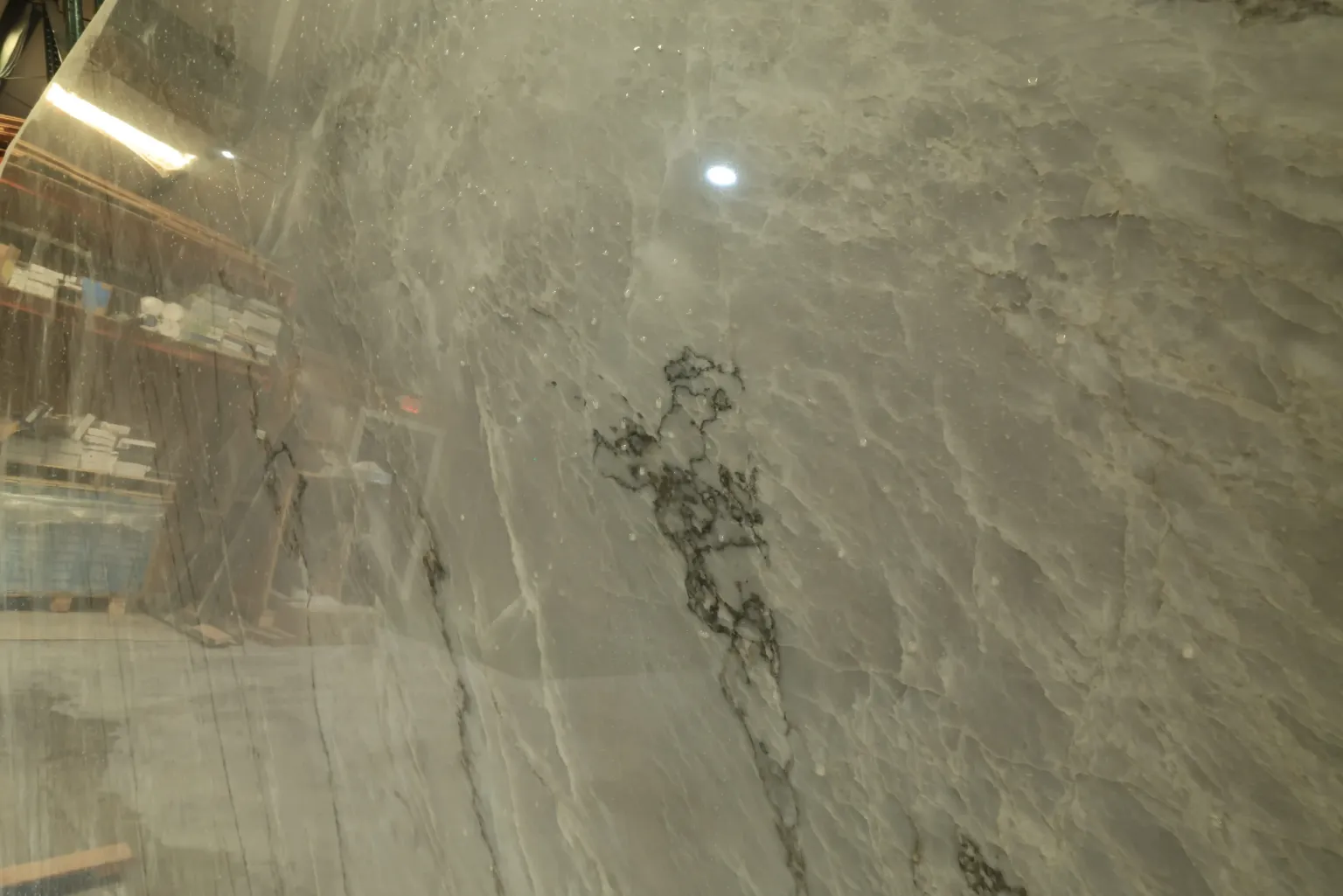
Small samples cannot show how two large slabs talk to each other. Ask to stand the two candidate slabs near each other, bring a cabinet door and a hardware sample, and look at them under daylight as well as warehouse light. The contrast that thrills you at arm’s length may feel different across a room.
At our North Charleston showroom you can compare full slabs of granite, marble, quartzite and quartz, so a pair can be judged in one visit. Start by browsing the Stonhaus slab gallery to shortlist a quiet stone and a statement stone, then come see them together.