
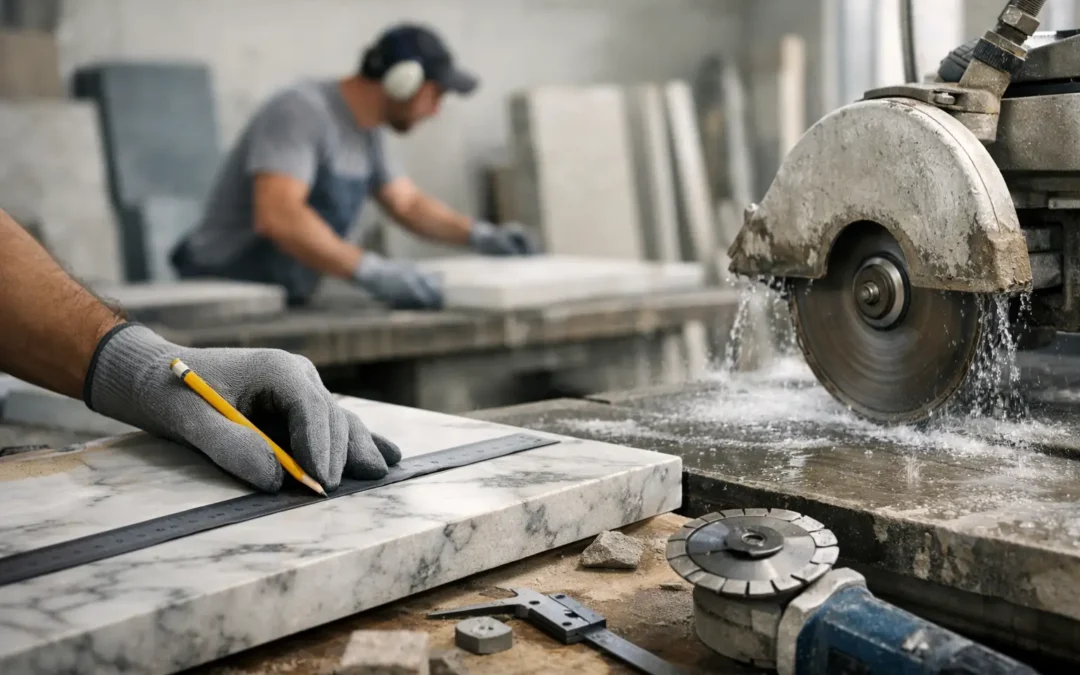
A slab can look perfect in the showroom and still disappoint in the finished space if fabrication decisions are rushed. That is why a custom stone fabrication guide matters before you choose the material, approve the layout, or schedule installation. The final result depends on more than color and pattern. It depends on how the stone is measured, cut, shaped, and finished for the way you actually live and use the space.
For homeowners, that usually means balancing beauty with maintenance, budget, and daily wear. For designers, builders, and contractors, it also means reducing avoidable surprises during production and install. Good fabrication brings design intent and jobsite reality into alignment. Poor fabrication leaves visible seams, awkward overhangs, weak cutouts, and details that never feel fully resolved.
What a custom stone fabrication guide should help you decide
At its core, fabrication is the technical process that turns a raw slab into a finished surface built for a specific application. That can include kitchen countertops, bathroom vanities, fireplace surrounds, shower thresholds, bar tops, feature walls, or commercial surfaces. Each use case changes the requirements.
A kitchen island, for example, may need larger spans, thoughtful seam placement, a more durable finish, and edge details that suit heavy traffic. A primary bath vanity may prioritize movement in the stone, integrated backsplash planning, and sink cutouts that support a cleaner visual line. A fireplace surround may be less about stain resistance and more about slab layout, vein direction, and bookmatching.
This is where many projects go off track. People shop stone as if every slab behaves the same way. It does not. Marble, quartzite, granite, quartz, and specialty materials all respond differently to cutting, polishing, mitering, and finishing. A strong fabrication plan starts by pairing the right material with the right application, not by forcing a favorite look into a poor fit.
Start with material selection, not just appearance
The most successful projects begin with honest material guidance. Natural stone offers uniqueness, depth, and variation that many clients want, but each category comes with different performance expectations. Granite is often chosen for durability and lower maintenance. Marble delivers softness and classic movement, but it can etch and scratch more easily. Quartzite can offer dramatic natural beauty with strong performance, though not every slab on the market is labeled accurately. Quartz provides consistency and low maintenance, but it is manufactured, and some applications may benefit more from natural stone depending on heat exposure and design goals.
There is no universal best choice. It depends on where the material is going, how the client lives, and how much natural variation they want to see. In a busy family kitchen, a polished quartzite or certain granites may make more sense than a delicate marble. In a powder bath, where wear is lower, a more expressive stone may be the right call. In a commercial setting, consistency across multiple surfaces may matter more than one-of-a-kind patterning.
A curated showroom experience helps here because clients can compare materials in person and get straightforward advice about trade-offs. That saves time later, when fabrication details become more exacting.
Templating is where precision starts
One of the most important steps in any custom stone fabrication guide is templating. This is the field measurement stage where dimensions are captured after cabinets, supports, and key substrates are in place. If templating happens too early, even small site changes can affect fit. If dimensions are taken loosely, those errors show up at installation.
Precise templating does more than confirm size. It establishes sink and cooktop placement, faucet locations, overhangs, corner conditions, seam locations, and any irregularities in the room. Walls are often less straight than they appear. Cabinet runs can vary. A good template accounts for those realities before the slab is cut.
For designers and builders, this is also the time to confirm reveal preferences, backsplash transitions, and edge details. Small decisions at this stage have a large visual effect. A countertop that aligns cleanly with cabinetry and fixtures looks intentional. One that feels slightly off tends to bother people every day, even if they cannot immediately explain why.
Slab layout affects the final look more than most clients expect
Once measurements are complete, slab layout becomes one of the most valuable parts of the process. This is where the fabricator determines how the template fits onto the slab, how veining will flow, where seams will land, and which sections of the material will be most visible.
With heavily veined marble or quartzite, layout can completely change the character of the project. A waterfall island, full-height backsplash, or bookmatched application requires careful planning to preserve movement and continuity. On more uniform materials, layout may focus less on drama and more on consistency from one piece to the next.
This step is especially important for large kitchens and statement installations. Seams are sometimes necessary, but they should be placed thoughtfully, both structurally and visually. There is not always a seam-free option, especially on oversized islands or complex layouts. The right goal is not pretending seams do not exist. It is placing them where they are least disruptive and most technically sound.
Fabrication details that shape performance
Cutting a slab to size is only part of fabrication. The details around openings, edges, thickness, supports, and finishes are what determine how the surface performs over time.
Sink and cooktop cutouts must be executed with care because these are stress points. Too little support or poor corner treatment can increase the risk of cracks. Edge profiles also matter more than many people assume. A simple eased edge gives a clean, modern look and tends to be practical for everyday use. More decorative edges can suit traditional spaces, but they may require more cleaning and may not fit every design style.
Thickness selection also affects both appearance and engineering. A thicker look can feel more substantial, but that does not always mean using a thicker slab throughout. In some cases, laminated edges or mitered construction create the visual weight clients want without changing the entire material build. That decision depends on the material, the design, and the application.
Finish is another factor. Polished stone reflects light and can intensify pattern and color. Honed finishes feel softer and more muted, but they may show marks differently depending on the stone. Leathered textures can add character and help soften fingerprints on some materials. The best finish is not just a style preference. It should suit the material and how the surface will be used.
Why local fabrication support matters
Stone projects tend to go more smoothly when selection, guidance, fabrication, and project support are closely connected. When those steps are fragmented across multiple vendors, communication gaps can lead to avoidable issues. Material chosen without fabrication input can create installation challenges later. Field changes that are not relayed clearly can affect production. Design expectations can shift if no one is guiding the process from slab to final fit.
That is one reason many Charleston-area clients prefer a showroom and fabrication partner working together. At Stonhaus Design, the value is not just access to premium stone sourced from major global markets. It is the ability to pair that selection with local measuring, precision cutting, finishing, and project coordination. That kind of control helps reduce friction and keeps quality consistent.
Questions to ask before approving fabrication
Before a slab goes into production, clients should feel clear on a few practical points. Ask where seams will be located and why. Confirm edge profile, thickness appearance, sink reveal, backsplash plan, and overhang dimensions. If the material has strong movement, review slab layout carefully so the most important areas get the right visual emphasis.
It is also worth asking how the material is expected to wear. Some clients are comfortable with the patina that develops in natural stone over time. Others want a lower-maintenance surface that holds a more consistent appearance. Neither preference is wrong, but it should be addressed before fabrication starts, not after installation.
A custom stone fabrication guide is really about risk reduction
Most clients begin with aesthetics. That is natural. Stone is visual, tactile, and often central to the room. But the fabrication process is what protects that investment. It reduces the risk of poor fit, weak detailing, mismatched expectations, and design choices that look good on paper but fail in daily use.
The best results come from slowing down the early decisions just enough to get them right. Choose a material that fits the project, not just the photo inspiration. Work with a team that can explain trade-offs clearly. Review templates and slab layout with intention. And treat fabrication as part of the design, not as a back-end production step.
When that process is handled well, the finished stone does more than fill a surface. It gives the room weight, clarity, and permanence that people notice right away and appreciate for years.