
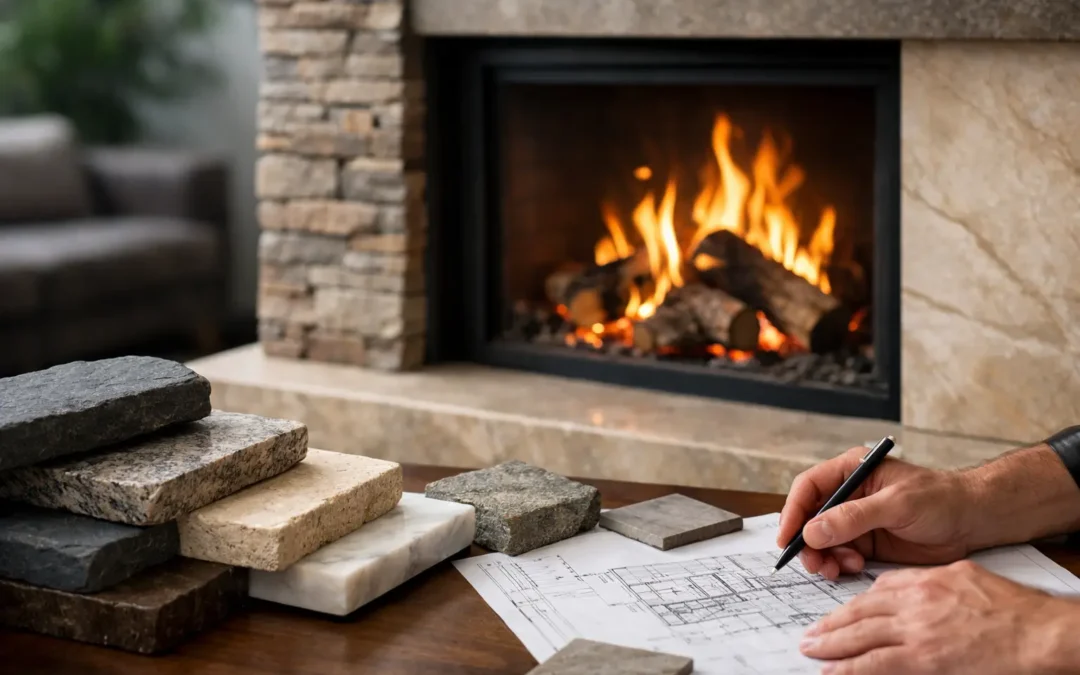
A fireplace can anchor an entire room, but the wrong surround material shows up fast. It can feel too busy, too flat, too delicate, or simply out of place once the heat, scale, and lighting of the room start doing their work. If you are researching pedra para lareira, the real decision is not just which stone looks good in a sample – it is which material will still feel right after fabrication, installation, and years of daily use.
For homeowners, builders, and designers, that choice usually comes down to a few practical questions. How much heat will the surface handle? How much movement and veining do you want? Do you want a quiet frame around the firebox or a statement wall that becomes the focal point of the home? And just as important, how precise does the fabrication need to be to make the finished fireplace look intentional rather than pieced together?
How to choose pedra para lareira
The best fireplace stone balances three things: performance, scale, and design intent. A beautiful slab that is perfect for a kitchen island may not be the right fit for a fireplace surround. Fireplaces have different sightlines, different proportions, and a very different relationship with light. Vertical applications tend to emphasize movement in the stone, so veining, color variation, and seam placement matter more than many clients expect.
Performance comes first. Natural stone is often an excellent choice around fireplaces because it handles heat well when properly specified and installed. But not every application is the same. A gas fireplace insert, a traditional wood-burning fireplace, and a decorative feature wall with an electric unit can all create different conditions. That is why material selection should always be tied to the actual fireplace system, clearance requirements, and fabrication plan.
Scale is the next factor. A small-format stone can work beautifully in a compact room, but on a tall fireplace wall it may create too many visual breaks. Large slabs often produce the cleanest result because they reduce seams and allow the natural pattern to read clearly. This is one of the biggest advantages of working with a showroom and fabrication team that can help you review the slab as a full design element rather than a small sample.
Best stone options for a fireplace surround
Granite remains one of the most dependable choices for fireplace surrounds. It is durable, heat-tolerant, and available in a wide range of colors and movement levels. If you want something classic and low-maintenance, granite is often a strong fit. It works especially well in homes where the fireplace sees regular use and the goal is long-term performance with minimal fuss.
Quartzite is another excellent option, especially for clients who want the natural drama of veining with impressive durability. Many quartzites offer the visual softness people associate with marble, but with greater resistance for demanding applications. This makes quartzite a strong candidate for statement fireplaces that need both elegance and strength.
Marble has a timeless presence that is hard to replicate. It brings depth, softness, and a refined architectural quality that suits traditional interiors, transitional homes, and many high-end contemporary designs. The trade-off is that marble is generally more delicate than granite or quartzite. Around a fireplace, that may be completely acceptable depending on the use case, the finish selected, and the client’s comfort with natural variation and maintenance.
Engineered quartz can be a fit in some decorative fireplace applications, but it is not always the first recommendation near higher heat. This is one of those areas where honest guidance matters. Some clients come in wanting a consistent, low-variation look, and quartz seems like the obvious answer because it performs so well in many interior settings. For fireplaces, though, the specific heat exposure and manufacturer guidelines need to be reviewed carefully before moving forward.
Limestone, soapstone, and other specialty stones can also create beautiful results. These materials tend to be more design-specific. They can add warmth, texture, and character, but they may also require more attention to finish, sealing, and long-term wear. When the aesthetic is right, they can be exceptional. The key is matching the material to the project instead of forcing a look that does not suit the application.
Finish matters as much as the material
Polished stone reflects light and often feels more formal. It can make darker stones look richer and lighter stones more luminous. Honed finishes create a softer, more understated look that many clients prefer for fireplaces because they reduce glare and feel more architectural.
Leathered and textured finishes can add depth, especially on rustic or organic designs, but they also change how the color reads from a distance. A heavily textured surface may be perfect for a feature wall and less ideal for a more tailored living room. This is why viewing the actual finish, not just the stone type, is part of a smart selection process.
Design considerations that affect the final result
A fireplace is rarely just a material decision. Edge detail, slab orientation, surround thickness, hearth design, and transitions to drywall or millwork all shape the finished look. Even a premium stone can lose impact if the proportions are off or if seams interrupt the pattern in visible areas.
Vein direction is one detail that deserves more attention than most people give it. On highly expressive marble or quartzite, running the veining horizontally can create a calm, expansive look. Vertical orientation can emphasize height and drama. Bookmatching can turn a fireplace into a sculptural centerpiece, but only if the slab selection and fabrication are handled with precision.
The room also needs to be part of the conversation. In an open-concept home, the fireplace stone should relate to surrounding finishes without feeling repetitive. It does not need to match the kitchen countertops exactly. In fact, a slightly different stone often creates a more layered and custom result. What matters is that the tones, movement, and finish work together.
Why fabrication quality is not a small detail
Fireplaces make precision visible. Long vertical lines, centered openings, tight returns, and clean transitions all draw attention to fabrication quality. If dimensions are off, seams are awkward, or edgework feels inconsistent, the eye catches it quickly.
That is why the process matters as much as the slab. Accurate field measurements, careful planning around the firebox, and thoughtful layout before cutting help avoid expensive surprises. A well-executed fireplace surround should feel calm and exact, even when the stone itself is bold.
For homeowners and trade professionals alike, this is where a coordinated showroom-to-fabrication approach adds value. Instead of selecting material in one place and hoping the execution lines up somewhere else, the project stays more controlled from selection through finishing. That reduces friction and usually leads to a cleaner final installation.
Common mistakes when selecting pedra para lareira
One common mistake is choosing from a small sample only. With natural stone, a sample may show color but not the full movement, tonal variation, or character of the slab. On a fireplace, those larger visual features are often the whole point.
Another issue is prioritizing appearance without thinking through heat exposure and installation details. A material can be beautiful and still be the wrong recommendation for the technical conditions of the project. Fireplace design always lives at the intersection of aesthetics and performance.
Clients also sometimes underestimate scale. A stone that feels dramatic on a handheld sample can become overwhelming on a floor-to-ceiling wall. The reverse is also true. A subtle material may disappear unless the finish, lighting, and detailing help bring it forward.
Finally, there is the temptation to overdesign the surround. Strong stone does not always need a complicated profile, contrast border, or multiple accent materials. In many of the most successful projects, restraint is what makes the result feel elevated.
What a smoother selection process looks like
The most efficient fireplace projects usually start with inspiration, then move quickly into real material review and technical planning. Instead of debating endless categories, it helps to narrow the direction first. Are you after quiet and architectural, warm and textured, or bold and expressive? Once that is clear, material options become easier to evaluate.
From there, the practical steps matter. Review the actual slabs when possible. Confirm the fireplace type and heat conditions. Discuss dimensions, seam strategy, edge details, and finish before fabrication begins. If the project includes matching hearths, wall panels, or nearby surfaces, make those decisions together so the final room feels cohesive.
At Stonhaus Design, this is where a curated showroom and in-house fabrication process make the experience more predictable. Clients are not left guessing whether the stone they selected will translate well once cut and installed. They can move forward with clearer guidance, better visibility into the process, and more confidence in the finished result.
A fireplace is one of the few surfaces in a home that people notice from across the room and up close. Choose a stone that earns both views.