
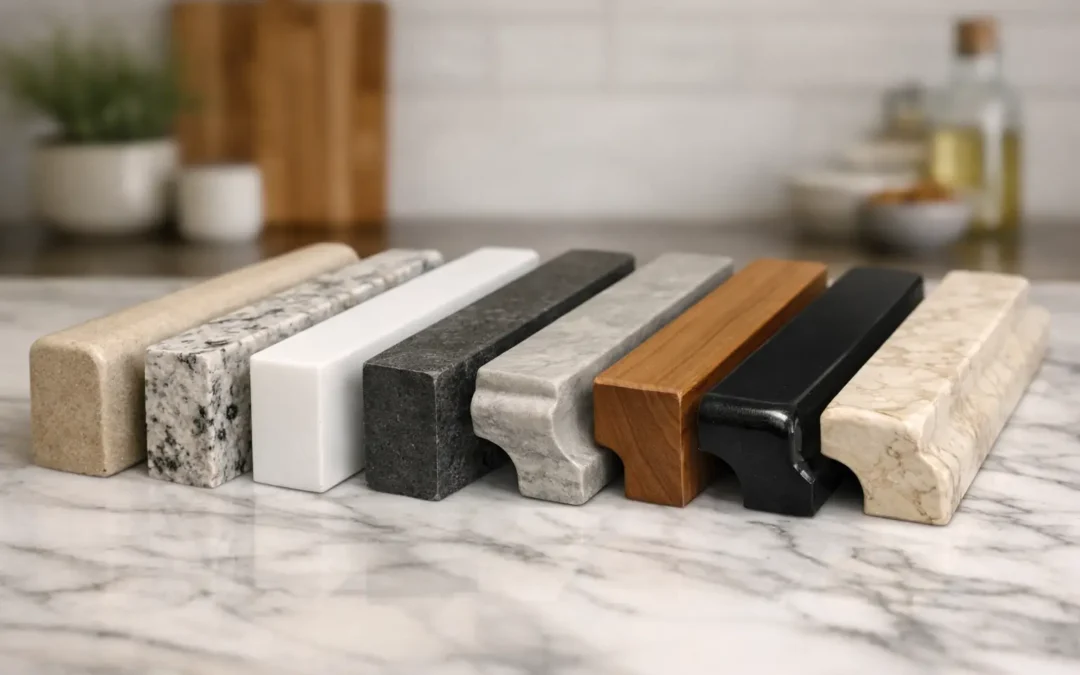
The edge profile is one of those decisions people tend to make in the last five minutes – right after choosing the slab, approving the layout, and thinking they are done. Then the question comes up: square, eased, bullnose, ogee? Suddenly a small detail starts carrying a lot of visual weight.
That is because the edge does more than finish a countertop. It changes how the stone reads, how formal or modern the room feels, how the light hits the surface, and even how the countertop wears over time. If you are trying to choose among the best countertop edge profiles, the right answer is rarely about what is most decorative. It is about what fits the material, the project, and the way you actually live in the space.
How to choose the best countertop edge profiles
A good edge profile should make the slab look intentional, not overworked. In a clean-lined kitchen with quartz or marble-look surfaces, a simple profile usually feels more current. In a traditional kitchen, or on an island meant to feel substantial, a more shaped edge can add the finished detail the room needs.
Function matters just as much. Families with young children often prefer softer corners. Busy kitchens benefit from edges that are easy to wipe down. Some profiles show chips less than others, and some are better suited to thicker builds or dramatic islands than everyday perimeter counters.
Material also plays a role. Not every profile is equally flattering on every stone. A quiet quartz with subtle veining may look best with a restrained edge. A bold granite or quartzite can handle more contour. Fabrication quality matters here too. A profile should feel crisp, consistent, and proportionate to the slab thickness.
Best countertop edge profiles for most homes
Eased edge
If you want the safest recommendation for a wide range of kitchens and bathrooms, start here. An eased edge is essentially a straight edge with the sharpness slightly softened. It looks clean, architectural, and current without feeling stark.
This profile works especially well with quartz, marble, quartzite, and many granites because it lets the material be the focus. It is also practical. There are no deep grooves to catch crumbs, and minor wear tends to be less noticeable than on sharper square cuts. For many projects, eased edges are the best balance of style, durability, and low-maintenance performance.
Pencil edge
A pencil edge has a softly rounded top corner with a flatter bottom. It is subtle, but it feels a little softer and more finished than an eased edge. In homes where clients want clean lines without a severe look, this is often a strong middle ground.
It is particularly appealing in transitional spaces – not ultra-modern, not heavily traditional. It also softens contact points around sinks and vanity tops, which can make the countertop feel a bit more forgiving in daily use.
Straight edge
People often ask for a straight edge when they want a minimalist look. In practice, a true sharp square edge is less common because very crisp corners are more vulnerable to chipping and feel harsher to the touch. What many homeowners call a straight edge is actually a slightly softened version.
Still, this look has a place. If the design depends on sharp geometry and thin visual lines, a straight-style profile can support that intent. It works best when fabrication is precise and the material is chosen with durability in mind.
Half bullnose
A half bullnose rounds the top of the edge while leaving the bottom more defined. It has a softer feel than eased or pencil edges and is often chosen for family kitchens and bathrooms because it removes the hard top corner.
There is a trade-off. Because the top rolls outward, spills can travel over the face more easily than with a flatter profile. Some homeowners also feel it reads a bit more traditional. But if comfort and softer lines matter most, it remains a practical option.
Full bullnose
A full bullnose is rounded from top to bottom, creating the softest edge in the group. It can be a smart choice where safety is the top concern, especially around children or in tighter bathroom layouts.
Design-wise, it tends to feel more classic than contemporary. It can also make a thick countertop look even softer and more substantial. That works in some homes, but not in every kitchen. If your overall style is tailored and modern, a full bullnose may feel less aligned with the rest of the room.
Beveled edge
A beveled edge introduces an angled cut along the top corner, creating a small line that catches light. It was especially popular in more traditional and late-20th-century kitchens, but it can still work well when used intentionally.
On the right slab, a bevel adds definition without the ornament of an ogee. It is often a good fit for granite in formal kitchens or bar tops where you want a little more detail. The caution is aesthetic dating. In a very current remodel, some bevels can feel tied to an earlier style unless the overall design supports it.
Ogee edge
An ogee edge has an S-shaped curve and is the most decorative profile on this list. It signals formality and craftsmanship right away, which is why it is still used on statement islands, furniture-style vanities, and traditional kitchens.
This is not usually the first choice for a simple, modern perimeter countertop. It asks for the right setting. On a heavily veined marble, dramatic quartzite, or richly patterned granite, it can look beautiful. It also tends to cost more because it requires more fabrication. If you want elegance and detail, it delivers. If you want visual quiet, it will likely feel like too much.
Dupont edge
A Dupont edge is a more elaborate profile with a square top and decorative drop detail below. It creates a substantial, furniture-like look and is often reserved for islands, bars, or luxury bath applications.
It is not the everyday answer for every project, but it can be exactly right in a home with classic architecture and layered detailing. Because it is more complex, the quality of fabrication is especially important here. A profile like this should look refined, not bulky.
Which countertop edge profile is best for your style?
For modern kitchens, the best countertop edge profiles are usually eased, pencil, or a softened straight edge. These keep the visual focus on the slab, cabinetry, and overall composition. They also age well, which matters if you want the space to feel current for years, not just at install.
For transitional homes, pencil and eased edges are still strong choices, but a subtle bevel or half bullnose can also work. It depends on the cabinet style, hardware, and the amount of movement in the stone.
For traditional or formal interiors, ogee, Dupont, and some beveled profiles can add the right level of finish. They tend to work best when repeated details exist elsewhere in the room, such as paneled cabinetry, decorative moldings, or furniture-style islands.
What matters beyond appearance
The best-looking edge profile is not always the best-performing one for your household. A few practical questions usually narrow the choice quickly.
If you cook often and wipe counters constantly, simpler profiles are easier to maintain. If you have children, softened corners can be worth prioritizing. If your slab is a showpiece with striking movement, a quieter edge often lets the material speak for itself.
Cost can vary too. Basic profiles like eased and pencil are generally more straightforward to fabricate. More decorative edges take more labor and can increase pricing. That does not mean they are not worth it – only that they should earn their place in the design.
Thickness matters as well. Some profiles look best on standard 3 cm slabs, while others are more impactful on built-up edges that create a thicker appearance. This is where expert guidance makes a real difference. The right profile should feel proportionate to the material and the scale of the room.
Getting the edge right from the start
The easiest way to avoid second-guessing is to choose the edge profile at the same time you finalize the slab and overall design direction. Looking at these decisions together helps prevent mismatch. A dramatic stone paired with an overly ornate edge can feel busy. A formal kitchen with a very minimal edge can sometimes feel under-finished.
In a showroom setting, this becomes much easier because you can compare profiles against actual materials instead of trying to imagine them from small samples. That is often where clients gain confidence in the decision. At Stonhaus Design, that consultative step is part of helping homeowners, designers, and builders move from a good choice to the right one for the space.
If you are deciding between multiple options, the most reliable choice is usually the one that still feels right after the initial wow factor fades. A countertop edge should support the room every day, not compete for attention. Pick the profile that makes the stone, the cabinetry, and the way you live work together cleanly.