
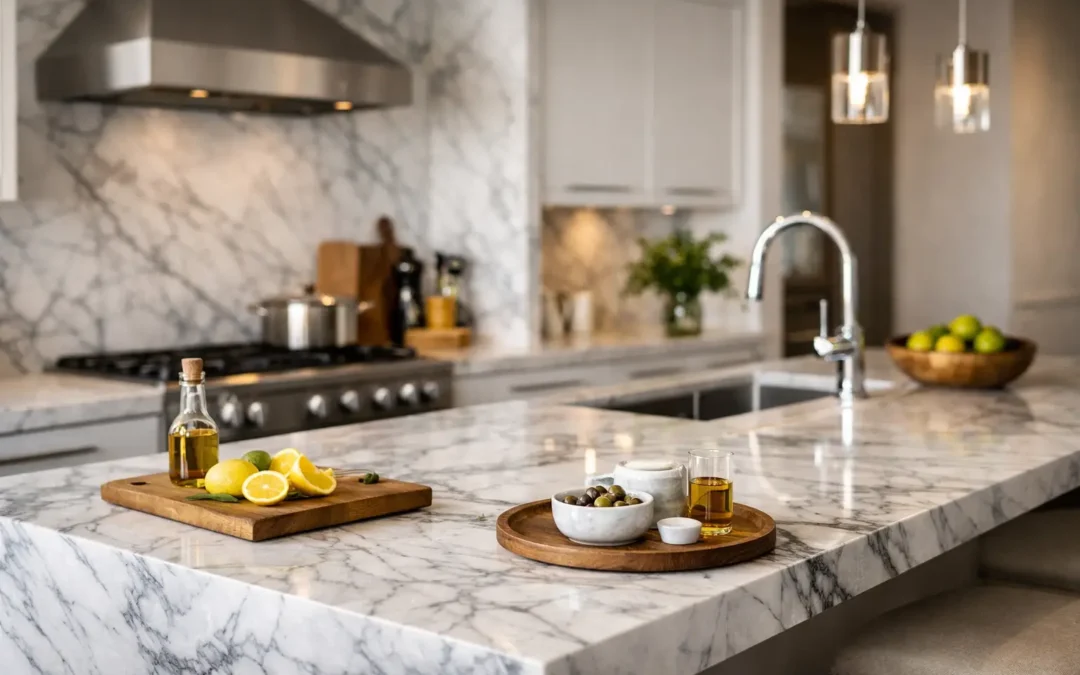
A white marble island can make an ordinary kitchen feel custom in a second. But when clients ask about mármore na cozinha, the real question usually is not whether it looks beautiful. It does. The question is whether it will still feel like the right choice after daily cooking, spills, heat, and years of use.
That is where marble deserves a more honest conversation.
Marble has a soft, luminous look that is hard to copy. It brings movement, depth, and a natural elegance that works especially well in kitchens designed to feel timeless rather than trendy. At the same time, it is not the most forgiving surface in every application. If you love marble, the goal is not to talk you out of it. The goal is to help you use it in the right way, in the right place, with clear expectations.
Why marble in the kitchen remains so desirable
There is a reason marble has stayed relevant for centuries. It has visual character that engineered patterns often struggle to replicate. Veining is rarely repetitive, the surface reflects light softly, and the material tends to make cabinetry, hardware, and paint colors look more elevated.
In kitchen design, that matters. Counters are not a small detail. They often occupy the largest uninterrupted visual plane in the room, so the material choice shapes the entire impression of the space.
Marble also fits a wide range of styles. In a classic kitchen, it feels established and refined. In a more modern setting, it adds warmth and variation that can keep clean lines from feeling flat. For homeowners investing in a remodel and for designers specifying materials for high-visibility projects, that versatility is part of the appeal.
Still, marble is not a one-answer material. Beauty is only part of performance.
The real trade-offs of mármore na cozinha
Marble is a natural stone, and like all natural materials, it comes with strengths and limitations. The biggest ones in a kitchen are etching, staining, and scratching.
Etching is what surprises most people. Acidic ingredients like lemon juice, vinegar, tomato sauce, and wine can react with the calcium carbonate in marble and leave dull marks on the finish. This is not the same as a stain. A stain changes the color from absorption. An etch changes the surface itself.
That distinction matters because many homeowners think sealing will prevent all damage. It will not. Sealer can help reduce staining, but it does not stop etching.
Marble is also softer than granite and many quartzites, so it can scratch or wear more easily in a busy kitchen. And because it is porous, it needs thoughtful maintenance. None of this means it is a bad choice. It means it is a better choice for some households than others.
If your kitchen is a high-output family workspace with constant meal prep, young kids, and little patience for maintenance, another material may be a better fit for primary countertops. If you cook often but appreciate natural aging and do not mind a surface that develops character, marble can still be exactly right.
Where marble works best in a kitchen
One of the smartest ways to use marble is selectively.
A full marble kitchen can be stunning, but not every project needs marble on every surface. In many homes, marble performs beautifully as a feature material rather than the hardest-working one. A waterfall island, baking station, backsplash, or coffee bar can give you the look you want while limiting exposure to the most punishing conditions.
That kind of planning often leads to better long-term satisfaction. You preserve the visual impact of marble while using a more durable surface in zones that take heavy wear.
For example, a designer may pair marble on the island with quartzite or quartz on the perimeter. Or use marble for a full-height backsplash where its veining can become a focal point without absorbing the daily abuse of chopping, spills, and appliances. There is no rule that says a kitchen has to be all one material to feel cohesive.
Finish matters more than many people think
If you are considering marble countertops, the finish can significantly affect both appearance and day-to-day experience.
A polished finish looks brighter and more reflective. It brings out depth and contrast in the veining, and many clients love that crisp, elegant look. But polished marble tends to show etching more clearly because the contrast between the glossy surface and a dulled etched area is easier to see.
A honed finish has a softer, matte appearance. It feels more relaxed and often hides etching better, which is one reason it is so popular in kitchens. Honed marble still etches, but the wear can look more blended and less disruptive.
This is one of those decisions where there is no universal best option. It depends on your design style, your tolerance for patina, and how the kitchen will be used. An experienced stone partner should walk you through slab selection, finish, edge profile, and application together, not as separate choices.
How marble compares to other premium surfaces
Marble is often considered alongside granite, quartzite, and quartz. Each has a different performance profile.
Granite is typically harder and more resistant to scratching and etching. It is a practical option for busy kitchens and now comes in many sophisticated patterns beyond the speckled looks some people associate with older installs.
Quartzite can offer a more marble-like appearance with stronger durability in many cases, though not every quartzite performs the same way. Some are exceptionally resilient. Others need more careful evaluation. This is where material knowledge matters.
Quartz is engineered rather than quarried in slab form, so it offers consistency and low maintenance. It does not etch like marble, which makes it appealing for households that want a cleaner ownership experience. But for clients drawn to the authenticity and natural movement of real stone, quartz may not create the same emotional response.
Choosing between them is rarely just about hardness. It is about matching the material to the lifestyle, aesthetic priorities, and the specific role that surface plays in the kitchen.
What to expect from maintenance
Marble is manageable, but it is not carefree.
Routine care is simple enough: wipe spills promptly, use a pH-neutral cleaner, avoid abrasive products, and use trivets and cutting boards. Periodic sealing is typically recommended, depending on the marble and how the kitchen is used.
The bigger question is mindset. If you expect your countertops to look exactly as they did on installation day forever, marble may frustrate you. If you appreciate materials that evolve and gain softness over time, marble often becomes more appealing with use, not less.
That is why honest guidance matters early. The right slab in the wrong household can feel like a mistake. The right slab in the right household can feel irreplaceable.
Why slab selection changes the outcome
Not all marble looks the same, and not all marble behaves the same. Background color, veining intensity, movement, and finish all change the final result. Even within the same named variety, slabs can vary significantly.
This is one reason showroom selection matters. Photos help narrow preferences, but they do not replace seeing full slabs in person. Scale changes everything. So does lighting. Veining that looks subtle in a sample may become dramatic across a large island. A creamy white may read warmer or cooler depending on cabinetry and flooring.
For homeowners and design professionals alike, being able to review materials closely and pair them with the project palette reduces expensive surprises later. It also helps with fabrication planning, especially if vein direction, bookmatching, integrated backsplashes, or waterfall edges are part of the design.
The fabrication side is just as important as the stone
A beautiful slab can still disappoint if fabrication and installation are not handled with precision. Marble demands careful measurement, thoughtful layout, and clean finishing.
Edge details need to suit the design and the material thickness. Cutouts for sinks and cooktops need proper support. Vein flow should be considered before cutting, not after. And because marble is a premium natural material, small execution issues tend to stand out more.
That is why many clients prefer a partner who can guide selection and manage fabrication under one roof. It creates more control over quality, timeline, and communication. At Stonhaus Design, that integrated process is a major part of how clients choose with more confidence and fewer surprises.
So, is marble the right kitchen choice?
Sometimes yes without hesitation. Sometimes yes, but only in selected areas. Sometimes no, and that is a valuable answer too.
Marble is right for clients who want authentic natural beauty and understand that part of its charm is how it lives with the home over time. It is less right for clients who want maximum resistance with minimal upkeep. Neither preference is wrong. The better decision is the one that fits how the kitchen is actually used, not just how it will look on reveal day.
If marble keeps pulling you back, pay attention to that instinct. Then pair it with honest material guidance, full-slab selection, and precise fabrication so the finished kitchen feels as good to live in as it does to photograph.