
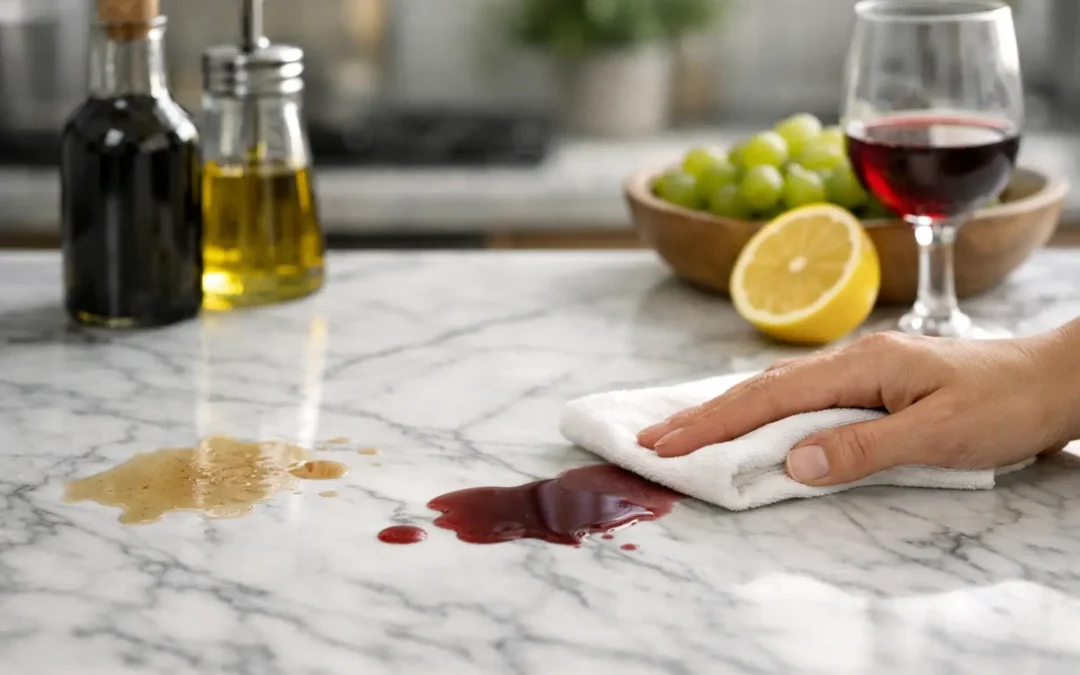
A marble countertop can look flawless for years, then one coffee ring, oil splash, or lemon wedge changes the conversation fast. If you are searching for How to Prevent Stains on Marble Countertops, the most useful answer is also the simplest: marble does best when the right material is specified, the surface is sealed properly, and daily habits match the stone’s natural behavior.
Marble is not fragile, but it is porous and calcium-based. That means it can absorb liquids and react to acids. Many homeowners call every mark a stain, but in practice there are two different issues. A true stain happens when a substance penetrates the stone. Etching happens when acidic ingredients like citrus, vinegar, or wine dull the finish chemically. The fix, the prevention plan, and even the product choices are different.
How to avoid stains on a marble countertop
The first step is understanding where marble performs well and where expectations need to be realistic. In a primary kitchen that sees heavy cooking, frequent entertaining, and lots of acidic ingredients, marble will require more care than quartzite or some granites. In a bathroom vanity, baking station, bar, or lower-impact kitchen, it can be an excellent choice. This is not a reason to avoid marble altogether. It is a reason to choose it with clear eyes.
If the look of marble is non-negotiable, prevention starts before installation. Slab selection matters because different marbles vary in density, veining, and absorption. Finish matters too. A polished surface often shows etching differently than a honed one. Polished marble tends to reflect light and can make dull spots easier to notice, while honed marble has a softer, more forgiving appearance. Honed is not stain-proof, but it can feel lower-maintenance in everyday use.
Fabrication details also play a role. Well-finished edges, a properly supported sink area, and accurate sealing help reduce weak points where moisture can linger. This is one reason many homeowners and designers prefer to work with one team from slab selection through fabrication and installation. The fewer handoffs, the fewer surprises.
The daily habits that make the biggest difference
Most marble staining happens through repetition, not one dramatic event. Oil near the cooktop, makeup around a vanity, standing water at the faucet, or coffee left beside the machine every morning can slowly create visible darkening. Good maintenance is less about special products and more about timing.
Wipe spills quickly, especially oils, wine, coffee, tea, tomato sauce, and anything acidic. Use a soft cloth or paper towel and blot first rather than rubbing the liquid across the surface. Then clean with a pH-neutral stone cleaner or a small amount of mild dish soap diluted in water. Finish by drying the area so moisture does not sit on the stone.
What should not go on marble is just as important. Avoid vinegar, bleach, ammonia, all-purpose cleaners with unknown acidity, bathroom sprays, and abrasive pads. Even products marketed as natural can be a problem if they contain citrus or acidic oils. A countertop can look clean while its finish is slowly being compromised.
Heat and moisture management help too. Use trays under oil bottles and soap dispensers. Put coasters under wine glasses and coffee mugs, especially on polished marble. Use a cutting board for prep and a trivet for hot cookware. These are small habits, but they reduce both absorption and surface wear.
Sealing helps, but it is not a force field
One of the biggest misconceptions around marble is that sealer makes it worry-free. It does not. A penetrating sealer slows absorption, which gives you more time to clean spills before they become stains. It does not stop etching, and it does not make marble maintenance-free.
That said, sealing is still essential. A quality impregnating sealer is one of the most effective ways to reduce staining risk. The right schedule depends on the specific marble, the finish, and how the surface is used. Some countertops need resealing more often than others. A simple water test can help: place a few drops of water on the surface and see whether they bead up or darken the stone after several minutes. If the stone darkens quickly, it may be time to reseal.
Application also matters. Too much product, poor prep, or the wrong sealer can create uneven results. For premium kitchens and baths, it is worth having sealing done or at least recommended by a knowledgeable stone professional. Prevention is always less expensive than stain removal or refinishing.
How to avoid common marble stain sources
If your goal is truly How to Prevent Stains on Marble Countertops, it helps to think by category rather than by generic cleaning rules.
Oil-based stains are common in kitchens. Cooking oils, butter, lotion, and cosmetics can soak into marble and leave darker patches. These are best prevented with quick cleanup and by keeping oily products on trays.
Organic stains come from coffee, tea, wine, fruit, and food residue. On lighter marble, these can leave yellow, brown, or pinkish tones if they sit too long. The risk is higher around beverage stations and prep zones.
Rust stains are less common but more stubborn. They can form when metal containers, shaving cream cans, or damp steel items are left on the stone. Marble and moisture are manageable. Metal plus trapped moisture is where trouble starts.
Soap buildup and hard water marks often get mistaken for stone damage, especially in bathrooms. These are easier to prevent with regular wiping and drying around faucets and backsplashes.
Design decisions that reduce maintenance
Good stone specification is part of stain prevention. If a client loves the veining and softness of marble but wants a lower-stress kitchen, the right answer may be using marble on the island and a more forgiving stone in the main prep perimeter. In other homes, a honed finish or a marble with more movement can make everyday marks less visually prominent.
Edge profile and layout can influence maintenance as well. Simple edge details are easier to wipe clean than ornate profiles. Fewer seams and thoughtful slab placement can help the surface look more consistent over time. Even sink choice matters. An undermount sink with tight fabrication and proper caulking helps control the areas where water tends to collect.
This is where experienced guidance changes the outcome. A beautiful slab is only part of the result. How it is finished, fabricated, installed, and used determines how well it ages in a real home.
What to do when a mark appears
Even with the best care, marble is a natural material and life happens. The key is identifying the problem correctly.
If the spot is darker than the surrounding stone, it may be a stain caused by absorption. If the area looks lighter, duller, or slightly rougher under light, it may be etching. Stains can sometimes be treated with a poultice designed for the type of contaminant. Etching usually requires polishing or professional refinishing, depending on severity and finish.
Trying random cleaners is where small issues become expensive ones. Abrasive scrubbing, acidic DIY solutions, and harsh degreasers can worsen the finish quickly. When in doubt, stop, identify the mark, and use a stone-safe method.
When marble is still the right choice
Marble remains one of the most requested surfaces for a reason. It brings depth, movement, and a natural elegance that engineered materials do not replicate exactly. For many homeowners and designers, a little maintenance is a reasonable trade-off for that character.
The important part is honest alignment between lifestyle and material. If you want a perfectly uniform, no-patina surface in a busy family kitchen, marble may not be the best fit. If you appreciate natural variation and are comfortable with a surface that develops some lived-in character, marble can be a deeply satisfying choice.
At Stonhaus Design, that is often where the best projects start – not with a hard sell, but with the right material in the right application, fabricated with precision and cared for correctly from day one.
Marble rewards owners who respect what it is. A little attention, the right sealer, and realistic expectations go much further than any miracle cleaner ever will.