
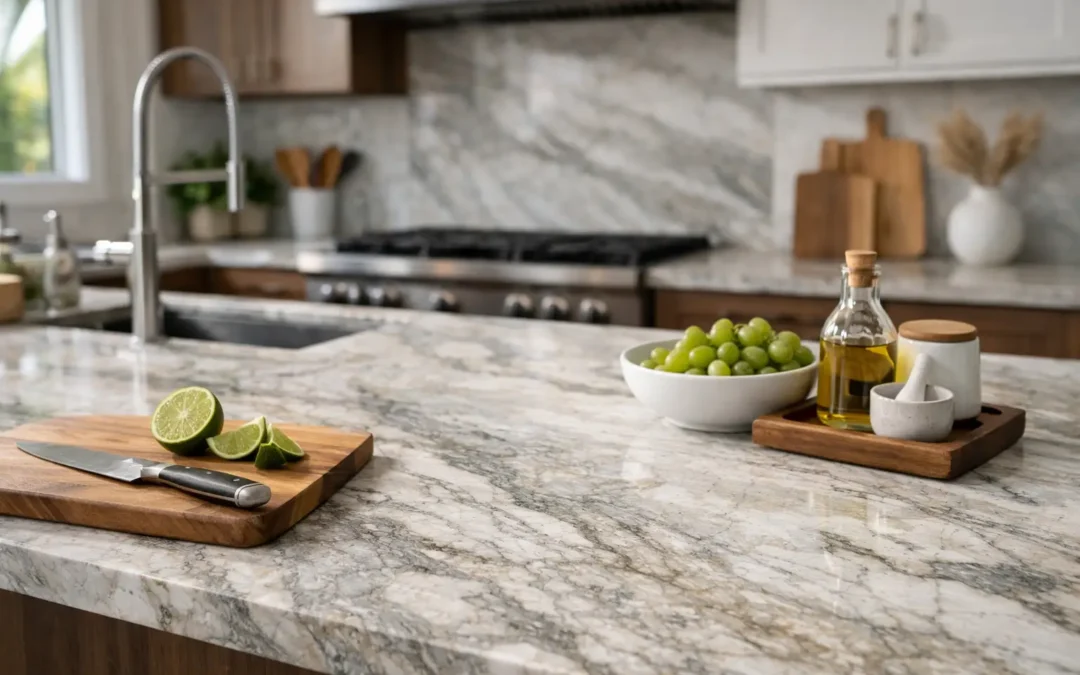
You notice quartzite the moment you see it in person. It has the movement and depth many homeowners love in marble, but with a harder-wearing profile that often makes more sense for a working kitchen. So, is quartzite good for kitchens? In many cases, yes – especially if you want a natural stone surface that balances beauty, durability, and long-term value.
That said, quartzite is not the right answer for every project. The best countertop material depends on how you cook, how much maintenance you want to take on, and the specific slab you choose. With natural stone, the details matter.
Is quartzite good for kitchens or just beautiful?
Quartzite earns its place in kitchens because it performs well in the areas that matter most: scratch resistance, heat resistance, and everyday durability. It starts as sandstone and changes under heat and pressure into a much denser stone. That process gives it strength many homeowners and designers appreciate in high-use spaces.
In practical terms, quartzite is generally harder than marble and often holds up very well against daily wear. If your kitchen sees constant meal prep, entertaining, kids doing homework at the island, or heavy cookware moving across the surface, quartzite can be a smart choice.
Its visual appeal is a major reason people choose it, but that is not the whole story. A good quartzite slab can deliver the refined, natural character clients want without making them feel like they have to baby the space.
What quartzite does well in a kitchen
One of quartzite’s strongest advantages is scratch resistance. Compared with softer natural stones, it is less likely to show wear from normal kitchen use. That does not mean it is indestructible – cutting directly on any countertop is still not a good habit – but it tends to handle daily life well.
Heat resistance is another reason quartzite is popular. Kitchens are full of hot pans, baking trays, and warm serving dishes, and natural quartzite generally tolerates heat better than many engineered materials. Even so, trivets and hot pads are still the safer practice. Good materials last longer when they are treated well.
Quartzite also offers a distinctly natural look. Every slab is different, which matters to homeowners and design professionals who want a kitchen to feel considered rather than mass-produced. Some slabs are calm and soft, while others have dramatic veining and stronger contrast. That range makes quartzite versatile across design styles, from clean transitional kitchens to warmer, more layered interiors.
Where quartzite requires more thought
The main trade-off with quartzite is maintenance. Like most natural stone used for countertops, it should be sealed to help resist staining. Once properly sealed, many quartzites perform very well, but they are not maintenance-free in the way some buyers expect.
This is where honest guidance matters. Not every slab sold as quartzite behaves the same way. Some materials on the market are softer or more porous than true dense quartzite. Others may etch or stain more easily than expected, depending on mineral composition and finish. That is why stone selection should go beyond color alone.
For kitchens that see heavy use with oils, wine, coffee, tomato sauce, citrus, and frequent cleanup, understanding the specific slab is important. A beautiful surface is only a good investment if it suits the way you actually live.
Quartzite vs. marble in kitchens
Many clients arrive at quartzite after falling in love with marble. They want the soft veining and elevated look, but they are concerned about etching, scratching, or a faster-wearing surface.
Quartzite is often the practical compromise. It can offer a similarly elegant aesthetic while generally giving you better resistance to scratching and better overall durability for a busy kitchen. For households that cook often or want a polished look that stays cleaner over time, quartzite usually asks for fewer concessions than marble.
That said, marble still has a place. Some clients prefer the way marble ages and are comfortable with patina. Others want a kitchen that stays closer to its original finish with less visible wear. That is often where quartzite has the advantage.
Quartzite vs. granite and quartz
If you are comparing materials seriously, quartzite should not only be measured against marble.
Against granite, the decision often comes down to look and slab preference. Granite is also durable and well-suited to kitchens, and some granites require very little fuss. Quartzite tends to appeal to clients who want a lighter, more contemporary natural pattern or a marble-like visual with stronger performance.
Against engineered quartz, the conversation shifts. Quartz offers consistency, lower day-to-day maintenance, and broad design control. Quartzite offers uniqueness, natural depth, and stronger heat tolerance. If you want a one-of-a-kind natural material, quartzite has the edge. If your top priority is uniformity and minimal maintenance, quartz may be the better fit.
Neither choice is universally better. The right decision depends on your priorities.
Is quartzite good for kitchens with heavy daily use?
For many busy households, yes. Quartzite can be an excellent option for kitchens used every day, provided the slab is properly selected, fabricated, and sealed. That last part matters more than people realize.
Performance is not just about the stone itself. It is also about how the slab is inspected, how it is cut, how sink and cooktop areas are reinforced, and how the finished counters are installed. A premium material still needs precise fabrication to deliver a premium result.
This is especially true in large islands, waterfall edges, detailed backsplashes, and projects where the veining layout matters. The best outcomes come when design selection and fabrication planning happen together, not as separate steps.
What to ask before choosing quartzite
Before committing to quartzite, ask a few straightforward questions. Is the material a true quartzite, and how has it performed in kitchens? What level of porosity should you expect? What sealer is recommended, and how often should it be reapplied? Will the finish you want – polished, honed, or leathered – affect maintenance or visibility of marks?
These questions help avoid surprises. They also make it easier to choose a slab based on performance as well as appearance.
For homeowners, this means more confidence before a major investment. For designers and builders, it means fewer issues after installation and a smoother client experience.
Design considerations that make quartzite stand out
Quartzite works well in kitchens because it can move in different design directions without losing its sense of authenticity. Some slabs feel quiet and architectural. Others become the focal point of the room. It pairs easily with painted cabinetry, warm wood tones, brass hardware, black fixtures, and a wide range of flooring materials.
In open-concept homes, quartzite can also help bridge the kitchen with adjacent living spaces. It has enough visual richness to feel elevated, but it usually reads more grounded and organic than highly patterned engineered surfaces.
If you are designing for resale, quartzite often lands in a very appealing middle ground. It feels premium and distinctive, but it is still practical enough for everyday use. That combination matters in kitchens, where buyers tend to notice both style and function immediately.
When quartzite may not be the best choice
Quartzite may be less ideal if you want the lowest-maintenance countertop possible and do not want to think about sealing at all. It may also be the wrong fit if your budget is tight and you are comparing it with more economical options that still meet your design goals.
It can also be a poor fit when material selection happens too quickly. Because quartzite varies from slab to slab, it benefits from in-person review and informed guidance. Photos alone rarely tell the full story of tone, movement, finish, and performance.
That is one reason many clients prefer a curated showroom experience with expert support. Seeing real slabs, comparing options side by side, and understanding how fabrication will affect the final look can make the decision far easier.
The real answer: quartzite is good for the right kitchen
Quartzite is a strong choice for kitchens when you want natural beauty, solid daily performance, and a surface that feels distinctly high-end without being overly delicate. It suits homeowners who value real materials and want confidence that their counters can keep up with real life.
The key is choosing carefully. Not all quartzite is equal, and not all kitchens ask the same things from a countertop. With the right slab, proper sealing, and precise fabrication, quartzite can be one of the most rewarding materials you can bring into a kitchen.
If you are weighing quartzite against marble, granite, or quartz, the smartest next step is to compare real slabs in person and ask the practical questions early. A good kitchen surface should do more than look impressive on install day – it should keep making sense every time you use the room.