
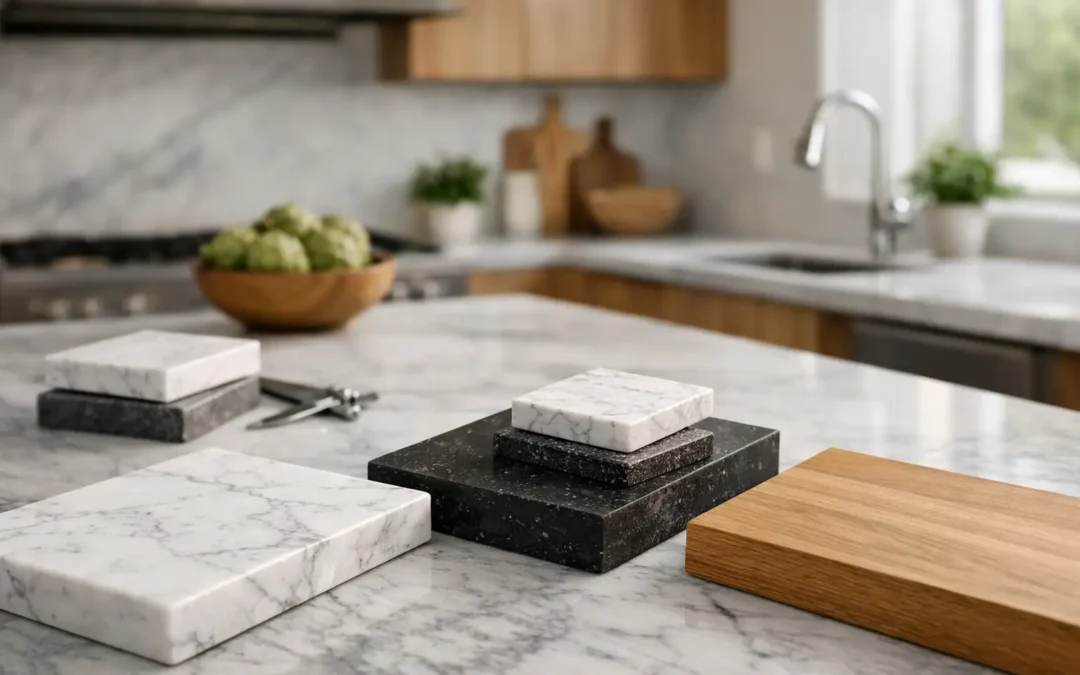
A countertop can make a kitchen look finished in a single day – or create years of regret if the material, finish, or fabrication details were chosen too quickly. This premium kitchen countertop buying guide is built for homeowners and design professionals who want a surface that looks exceptional, performs well, and feels right in the space long after install day.
At the premium end of the market, the decision is rarely just about color. It is about how the slab reads in natural light, how the veining moves across an island, how the edges are fabricated, and how the material will live with real cooking, real cleaning, and real wear. The best choice is the one that fits your design goals and your daily habits at the same time.
What makes a countertop truly premium?
A premium countertop is not defined by price alone. It comes from a combination of material quality, slab selection, fabrication precision, and installation control. A beautiful stone can lose its impact if the seam placement is awkward or the overhang support is handled poorly. A simpler material can look elevated when the proportions, finish, and detailing are done correctly.
This is why showroom selection matters. Seeing full slabs in person tells you more than a small sample ever can. You can judge movement, background tone, variation, and whether the material feels calm, dramatic, warm, or architectural. In premium projects, those details drive the result.
Premium kitchen countertop buying guide: start with how you use the kitchen
Before comparing granite, marble, quartzite, or quartz, clarify what the kitchen needs to do every day. A statement island in a low-traffic entertaining kitchen can prioritize visual drama. A family kitchen with heavy cooking may need more forgiveness around etching, scratching, and routine cleanup.
There is no universal best material. There is only the right fit for the project.
If you cook often, set hot pans down casually, or want lower maintenance, durability may lead the conversation. If the kitchen is more design-led and you are comfortable with patina, a softer or more reactive stone may still be the better choice. Premium buying is less about chasing perfection and more about making an informed trade-off.
Granite
Granite remains one of the most practical premium choices. It is durable, generally resistant to heat, and well suited to busy kitchens. It also offers a broad design range, from subtle patterns to bolder movement.
The main advantage is performance without sacrificing natural character. The trade-off is aesthetic preference. Some granites read more traditional, while others feel crisp and contemporary. That depends heavily on the specific slab, not just the category.
Marble
Marble has a softness and depth that many materials try to imitate and few match. For bakers, it can also be appealing from a functional standpoint. Visually, it brings a refined, timeless quality that works in classic and modern kitchens alike.
Its trade-off is maintenance. Marble can etch from acidic substances and may show wear more quickly than harder stones. For some clients, that lived-in character is part of the appeal. For others, it becomes a frustration. Honest expectations matter here.
Quartzite
Quartzite is often the answer for clients who want the elegance of marble with greater durability. It can offer striking movement, light tones, and a high-end look while standing up better to daily use.
That said, not all quartzites perform the same way. Some are denser and less porous than others. This is where expert guidance matters, because the label alone does not tell the full story.
Quartz
Quartz is engineered rather than quarried in slab form, and it appeals to buyers who want consistency, lower maintenance, and a controlled look. It works well in many premium kitchens, especially when the design calls for clean lines and predictable patterning.
Its strengths are ease and uniformity. Its limitations are also worth noting. It may not have the depth or natural variation of stone, and heat tolerance is not the same as granite or many quartzites. In a serious cooking kitchen, that should be part of the conversation.
Slab selection matters more than most buyers expect
Two slabs in the same material family can produce completely different kitchens. Background tone might lean warmer or cooler. Veining may be soft and linear or bold and expressive. Some slabs are ideal for a full-height backsplash or waterfall edge because the movement feels continuous. Others are better for more restrained applications.
This is one reason premium projects benefit from a curated showroom experience. Full-slab viewing helps avoid surprises and improves confidence. It also makes it easier to coordinate cabinets, flooring, hardware, and wall color before fabrication begins.
For designers and homeowners alike, this is where the project often becomes real. The right slab does not just match the plan. It elevates it.
Edge profiles, finishes, and thickness change the final look
Material selection gets most of the attention, but fabrication details shape the finished kitchen just as much. A polished finish can feel more formal and reflective. A honed finish softens the surface and can read more understated. Leathered textures can add depth and help certain stones feel more tactile and relaxed.
Edge profile matters too. A simple eased edge suits many contemporary kitchens because it feels clean and quiet. A mitered edge can create the look of a thicker slab and add visual weight to an island. More decorative profiles may suit traditional spaces, but they should align with the overall architecture of the room.
Thickness also affects perception. Thicker-looking edges often feel more substantial, but they can shift the balance of the design if cabinetry and scale are not considered carefully. Premium results come from proportion, not excess.
Budgeting for a premium countertop means looking beyond the slab
Clients often start with price per square foot, but premium countertop budgets are shaped by more than raw material cost. Fabrication complexity, edge treatment, sink cutouts, cooktop cutouts, backsplash height, bookmatching, waterfall panels, and seam strategy all affect the final number.
Installation conditions matter as well. A large island in an easy-access first-floor kitchen is one scenario. A tight remodel with delivery constraints and detailed wall conditions is another. Both may use the same stone, yet require very different levels of labor and planning.
The better question is not just, “What does this material cost?” It is, “What does this complete scope require to be executed well?” That is where many expensive mistakes are avoided.
Why fabrication quality is not a detail
In premium kitchens, fabrication is where design intent either holds together or falls apart. Accurate digital measurements, thoughtful seam placement, precise cutouts, and clean edge finishing all contribute to the result. Even a high-value slab can look average if the fabrication is rushed.
This is also why an integrated process is valuable. When material selection, measurements, fabrication, and installation are coordinated under one roof, there are fewer handoff issues and more accountability. At Stonhaus Design, that end-to-end control is part of how clients move through the process with more clarity and fewer surprises.
For professionals managing schedules and homeowners making a significant investment, that consistency has real value.
Common mistakes this premium kitchen countertop buying guide can help you avoid
One common mistake is choosing from a small sample only. Another is falling for a look without discussing maintenance honestly. A third is underestimating how much seams, overhang support, and backsplash decisions affect the finished appearance.
There is also the tendency to treat every white stone as interchangeable. It is not. Some whites are crisp, some creamy, some quiet, some dramatic. In a premium kitchen, those differences are not minor.
Rushing the process can be costly too. When slab selection, layout approval, and fabrication details are handled carefully, the final result feels intentional. When they are hurried, even expensive materials can feel mismatched to the room.
How to make the final decision with confidence
Start by narrowing the field to two or three materials that genuinely suit your kitchen, not just your inspiration images. Then compare them against your real priorities: maintenance tolerance, design style, cooking habits, and budget range. If one option is more beautiful but more reactive, ask yourself whether you will appreciate that character or resent it six months from now.
Once you are looking at actual slabs, trust what you see in person. Pay attention to tone, movement, and scale. Ask how the slab will be laid out on the island and perimeter runs. Discuss finish, edge profile, and any special details before fabrication begins, not after.
A premium countertop should feel like a confident choice, not a gamble. The right partner helps you understand the trade-offs clearly, refine the design, and execute the work with precision.
The best kitchens are not built around the most expensive slab in the room. They are built around the right material, selected with care and finished with discipline – so the surface still feels right every time you walk into the space.