
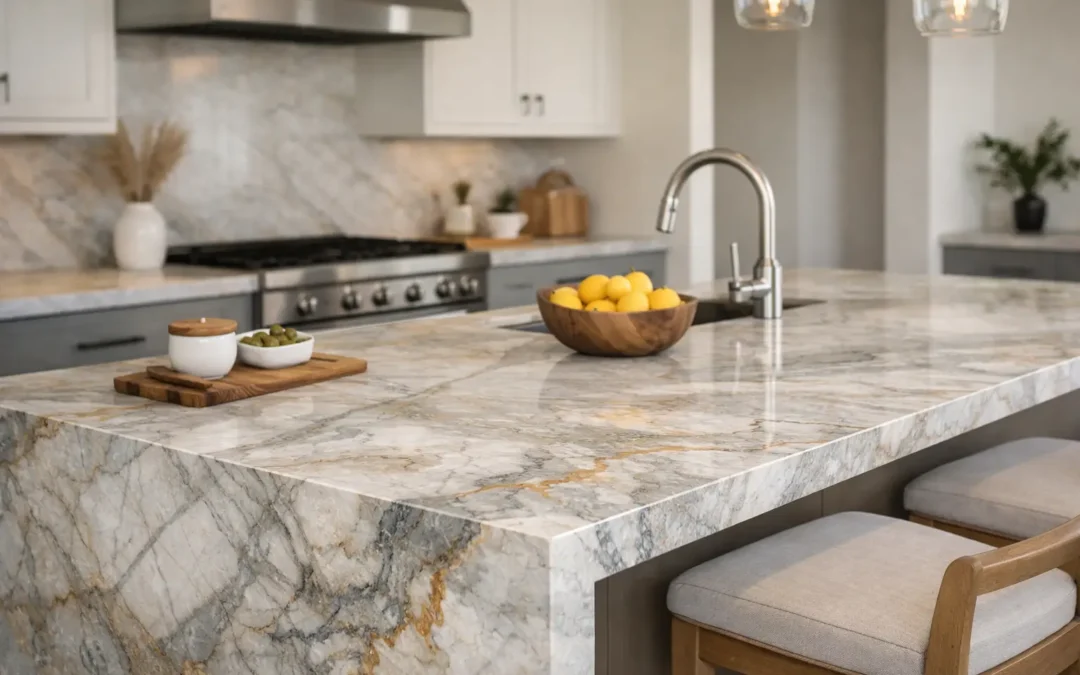
A quartzite island can be the visual anchor of a kitchen or the one decision that throws the whole room off balance. The difference usually comes down to selection. If you are wondering how to choose quartzite island slab material that looks right, performs well, and works with your layout, the best approach is to evaluate the stone in person and weigh design against fabrication realities.
Quartzite earns its reputation for a reason. It offers the movement and depth many homeowners love in natural stone, but it also brings strong day-to-day durability. Still, not every slab is right for an island. The piece that looks stunning on a rack may feel too busy at full scale, too cool under your lighting, or too fragmented once cut around sinks, cooktops, or seams.
How to Choose Quartzite Island Slab for the Space
Start with the island itself, not the slab. Size, shape, overhangs, seating, sink placement, and edge profile all affect which quartzite will work best. A large uninterrupted island gives dramatic stones room to breathe. A smaller island often benefits from softer movement or a cleaner pattern so the surface does not feel crowded.
Scale matters more than most people expect. Tight veining on a sample can read as texture, while bold sweeping movement on a full slab can become the main design feature in the kitchen. If you want the island to be the star, high movement and strong color variation may be exactly right. If you already have statement cabinetry, bold hardware, or a striking backsplash, a calmer slab may create a better balance.
It also helps to think about sightlines. In many homes, the island is visible from the living room, dining area, or entry. That means the slab is not just a countertop choice. It is part of the broader architectural view.
Decide whether you want statement or support
Some clients want a quartzite island that immediately draws attention. Others want it to support the room quietly while letting millwork, lighting, or flooring lead. Neither approach is better, but clarity early on prevents second-guessing later.
A dramatic slab with bold veins can be spectacular on a waterfall island. It can also compete with other finishes if too many focal points are already in play. A more consistent quartzite may feel understated in the showroom, yet look sophisticated and expensive once installed in a layered kitchen design.
Color, Movement, and Background Tone
Most people begin with color, but background tone is often the smarter place to focus. Ask whether the slab reads warm, cool, or neutral. That undertone should relate to your cabinetry, flooring, wall color, and metal finishes. In Charleston-area homes especially, natural light can shift throughout the day, so a slab that feels crisp white at noon may look gray or beige by evening.
Quartzite also varies in movement. Some slabs have linear veining that suits modern kitchens and elongated island shapes. Others have cloud-like patterning or dramatic directional flow. Direction matters because the slab can be fabricated to run lengthwise, crosswise, or down a waterfall leg, and each choice changes the look.
This is where viewing the actual slab becomes essential. A small sample cannot show how the veining travels or where stronger features sit. It also will not reveal whether one end of the slab is calmer than the other, which can matter if you are trying to place the cleanest section around a sink cutout or seating area.
Match the slab to the room’s fixed finishes
Before selecting a slab, bring cabinet samples, flooring, paint references, and hardware finishes. Doing so makes the decision more precise. White cabinets, for example, can lean warm or bright, and quartzite that works with one white may clash with another.
Natural wood cabinetry introduces another variable. Warm woods often pair beautifully with quartzite that has soft taupe, cream, or gold notes. Cooler painted cabinetry can support cleaner grays or blue-gray veining. There is no universal rule, but there should be a clear relationship between the slab and the room around it.
Performance Matters as Much as Appearance
Quartzite is often chosen for its strength, but performance still depends on the specific material and the application. Not every stone sold as quartzite behaves the same way, and some slabs are denser or more porous than others. This is one reason working with an experienced showroom and fabrication team matters.
For an island, think about how the surface will actually be used. If it will handle heavy meal prep, kids’ homework, entertaining, and frequent cleanup, you want a slab that offers durability without asking for constant attention. If the island is primarily decorative and used lightly, your options may widen.
Finish also affects performance. A polished surface reflects more light and tends to emphasize depth and color. A leathered or honed finish can soften glare, add tactile interest, and make fingerprints or water spots less obvious on some colors. The trade-off is that the visual intensity of the veining may shift, and maintenance expectations can vary slightly by finish.
Fabrication Details That Influence Your Choice
One of the most overlooked parts of how to choose quartzite island slab material is understanding what happens after selection. Fabrication determines whether the final result feels clean and intentional or compromised.
If your island requires a seam, slab pattern becomes even more important. Some quartzites are easier to seam discreetly because they have more consistent movement. Others need careful planning so major veins align in a way that looks natural. The same goes for waterfall edges. A waterfall can be stunning, but only if the pattern direction and miter execution are considered early.
Thickness matters too. A 2 cm slab with a built-up edge can achieve a certain look, while a 3 cm slab offers a different visual weight. Neither is automatically better. It depends on the design language of the kitchen and the structural requirements of the overhang.
Cutouts and corner treatments also affect slab use. A sink cutout placed through the most attractive area of the stone is usually a missed opportunity. Good planning preserves the strongest visual section where it will have the most impact.
Ask to review the slab layout
This is one of the most valuable steps in the process. Reviewing the layout lets you see exactly how the island will be cut from the slab, where seams may land, and how veining will flow. It removes guesswork and helps avoid surprises on installation day.
For designers and builders, this step also creates a cleaner coordination point with cabinetry, plumbing, and appliance placement. For homeowners, it adds confidence that the slab you loved in the showroom is the one you will recognize in your kitchen.
Lighting Changes Everything
Quartzite can shift noticeably depending on natural and artificial light. A slab that feels soft and warm under showroom lighting may appear brighter, cooler, or more active in a sun-filled kitchen. That does not mean the slab is wrong. It means lighting has to be part of the decision.
If your island sits under decorative pendants, consider how those fixtures will cast light across the surface. If the kitchen gets strong morning or afternoon sun, look at the slab from different angles. Stones with reflective mica or crystalline structure can become more dynamic under direct light, which some clients love and others find distracting.
This is another reason not to rush the choice. Good stone selection is part design instinct and part technical review.
What to Look for in Person
Photos are useful for narrowing options, but they should not make the final decision for you. When viewing a slab in person, step back and look at the whole piece first. Then move closer to inspect color variation, fissures, texture, and transitions in the pattern.
Ask practical questions. Has the slab been resin-treated? What finish options are available? Is the material suitable for the intended edge detail and overhang? How much of the slab will be used for the island, and what happens to the remainder? These are not minor details. They shape cost, performance, and final appearance.
A guided showroom experience is especially helpful here because the strongest recommendation is not always the most expensive slab or the most dramatic one. It is the one that fits your kitchen as built, your design goals, and your tolerance for maintenance and variation.
Avoid Choosing on Trend Alone
Natural stone should feel personal and architectural, not just current. If you are selecting a quartzite solely because you have seen it repeatedly online, pause and ask whether it fits your home. The most successful island slabs tend to have staying power because they relate to the room’s materials, scale, and light, not because they mimic a trend.
At Stonhaus Design, that is why the selection process starts with listening and looking closely, not pushing a one-size-fits-all answer. A curated slab, reviewed with fabrication in mind, almost always produces a better result than a quick decision made from a sample alone.
The right quartzite island slab should still feel like the right choice years from now when the kitchen is being used the way it was meant to be used – daily, beautifully, and without regret.