The most common way to get a quartzite island wrong is to choose it from a sample. A chip the size of your hand cannot show how a vein travels across an island that may be the largest single piece of stone in the house.
To choose a quartzite island slab well, start from the island: its size, its sink and its seating. Then look at the full slab you will actually get, confirm it behaves like real quartzite, and decide where the cuts go before anything is cut.
Our page on quartzite countertops in Charleston explains how a slab viewing works. Below are the seven mistakes that cause most regrets, and how to avoid each one.
Mistake 1: Approving the stone from a sample
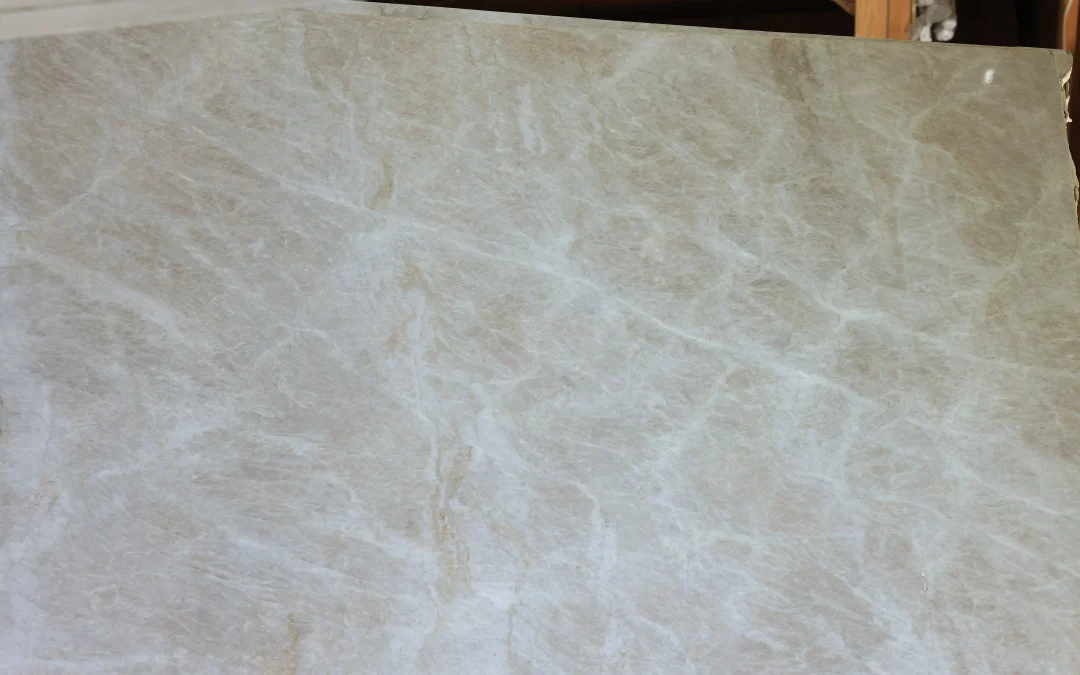
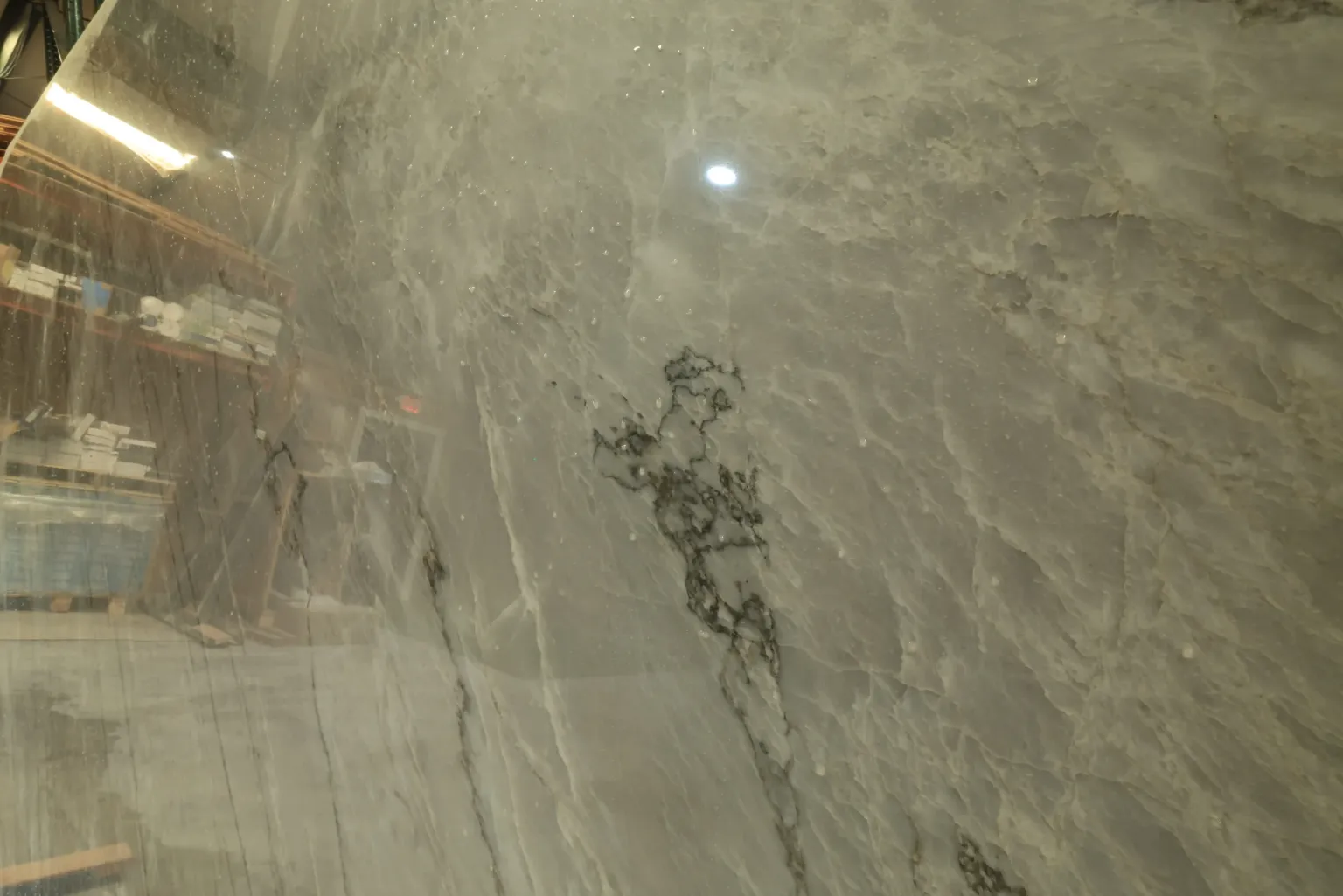
A slab like the one above shows what a sample hides: a web of veins that changes direction and density from one end to the other. Tight veining can read as texture up close and as strong movement from across the room. Stand back first, then walk the slab, and note where the busiest and calmest areas are.
The Natural Stone Institute (NSI) warns that stones of the same family can behave differently, and recommends testing the actual stone before committing. So ask to see the slab, or the slabs, that will be cut for your island, not a “similar one”.
Mistake 2: Picking the stone before measuring the island
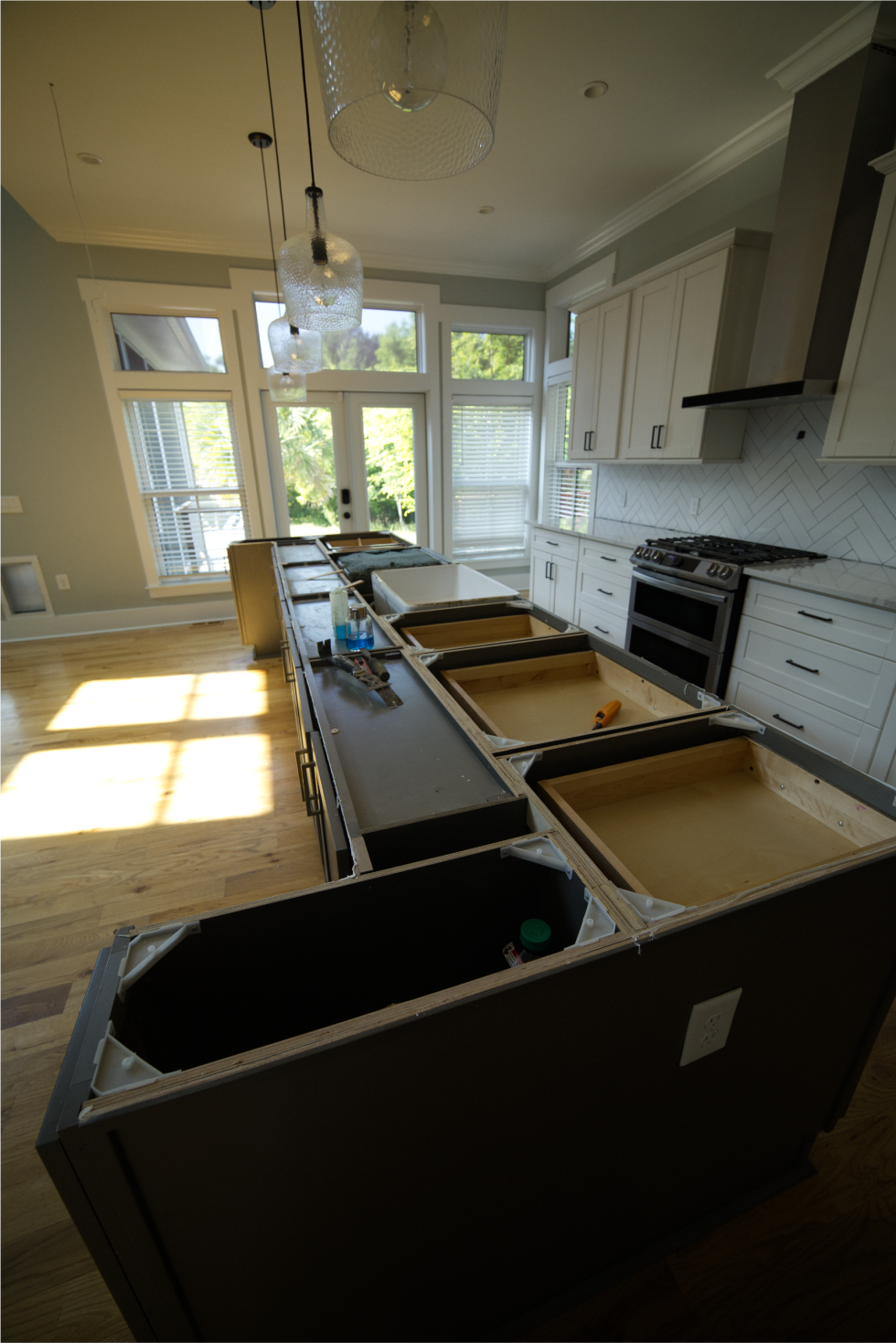
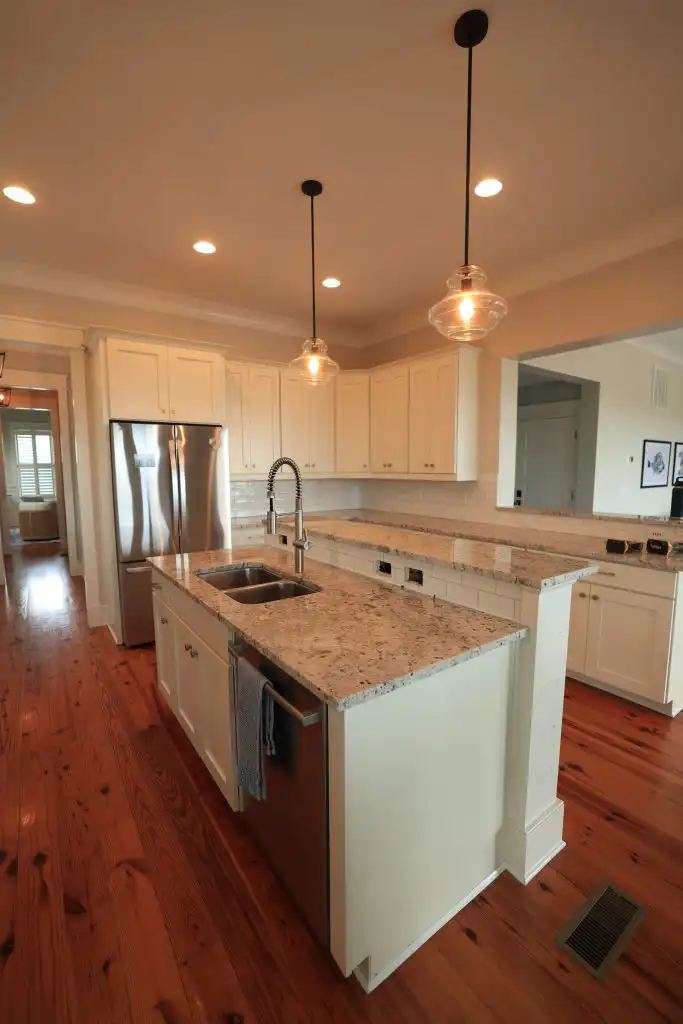
This island appears in the gallery of our Moncks Corner kitchen project, photographed before its top went on. It shows the moment the slab question becomes concrete: the base cabinets are set and the length of the run is fixed.
Measure the island at this stage, including any seating overhang, and compare it with the usable size of the slab you like.
If the island is longer than the slab, there will be a seam, and you want to decide where. Our notes on where seams can go on a stone top help with that call. A deep seating overhang also needs support, which is worth settling with your cabinetmaker early.
Mistake 3: Putting the sink through the best part of the stone
Ask for the layout on the slab before cutting. A sink or cooktop cut through the most striking area of the stone wastes it.
A layout drawn over a photo of your slab shows where the island will be cut, where any seam falls and where the cutouts land, so the strongest movement ends up where people see it: the seating side, the end facing the living room, the waterfall leg.
The same review helps your builder or designer coordinate plumbing and appliances with the stone, rather than the other way around.
Mistake 4: Ignoring which way the veins run
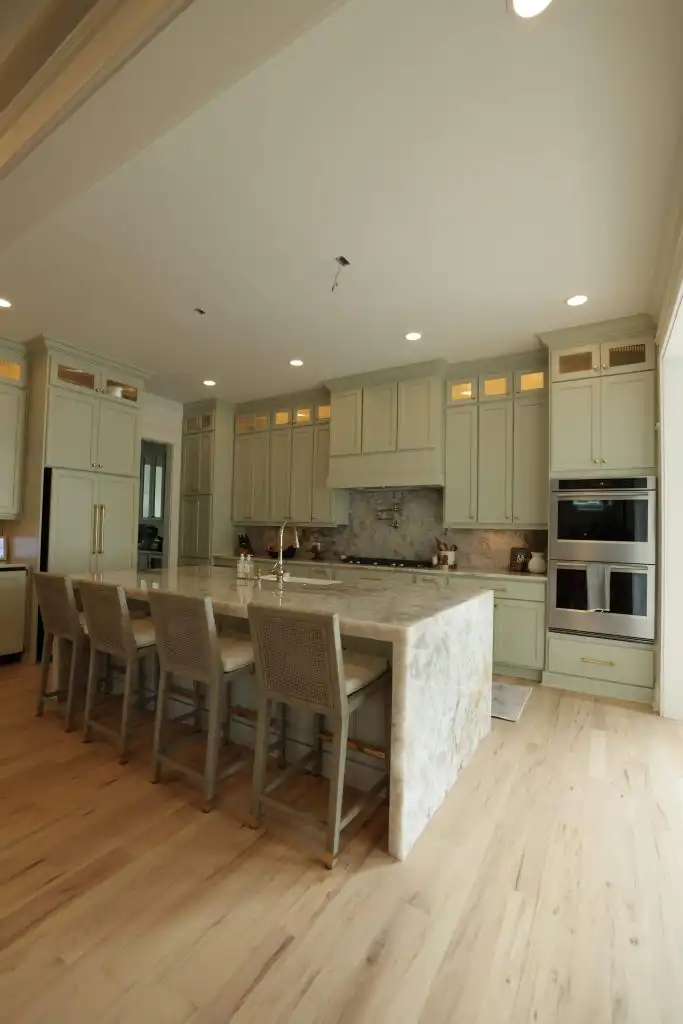
Linear veining can run along the island or across it, and each choice changes the look. On a waterfall end, the veins can turn the corner and continue down the side if the miter and the cut sequence are planned for it. That planning is the subject of our article on matching slabs for bookmatching.
If you are still deciding whether the island should have a waterfall at all, our pros and cons of waterfall edges cover the trade-offs, and a separate guide looks at the stones that suit a waterfall island.
Mistake 5: Trusting the label without testing the stone
NSI says quartzite is frequently mislabeled, and that some stones sold as quartzite are marble or dolomitic marble, which etch from lemon juice. Two quick checks on an offcut settle it: real quartzite scratches a glass tile, and lemon juice left for about 15 minutes will not dull it.
Real quartzites still differ in porosity. NSI’s geology guide names Taj Mahal and Sea Pearl among the tightly bonded ones, and White Macaubas and Calacatta Macaubas as more porous stones that benefit from sealing. On an island where people eat and spill, that difference matters.
Mistake 6: Judging the color under one kind of light
Warehouse lights, morning sun and warm pendants make the same stone read differently. A slab that looks creamy in one light can look gray in another, and stones with a crystalline or translucent body come alive under direct light, which some people love and others find busy.
Bring a cabinet door, a hardware sample and a photo of your floor to the viewing. Look at the slab from several angles and, if you can, near a window.
Mistake 7: Choosing on a trend instead of the room
A stone you have seen in a hundred photos may still be wrong for your kitchen. Decide first whether the island should lead or support: a bold slab works when the cabinets, hood and backsplash are quiet, and a calmer one when something else already draws the eye.
Our materials pages show a range to start from. Taj Mahal quartzite is warm and creamy, and our guide to Taj Mahal in kitchens and baths covers it in depth. Crystallo is translucent and can be backlit, and Sequoia Brown has long linear bands that need careful layout on a long island.
What changes the price of a quartzite island top
Stone prices move, so we explain the price instead of printing one. These are the things that move it on an island:
- The stone itself: rarity and demand separate one quartzite from another.
- Whether the island needs a full slab, part of a second one, or slabs bookmatched for a continuous pattern.
- A waterfall end, which adds mitered pieces cut from the same slab.
- Edge profile and thickness, including a built-up edge.
- Cutouts for a sink, a prep sink or a cooktop.
- Support for a deep seating overhang, and access for carrying a long piece into the house.
NSI also notes that quartzite’s hardness makes it slower to cut and harder on tooling, which shows up in fabrication time.
Your next step
Measure the island, take a photo of the cabinets as they stand, and note where the sink and seating go.
Bring that to a slab viewing in North Charleston, pick two candidate slabs, and ask to see the layout drawn on each before you approve one. When you have the measurements, book a time to see quartzite slabs for your island.