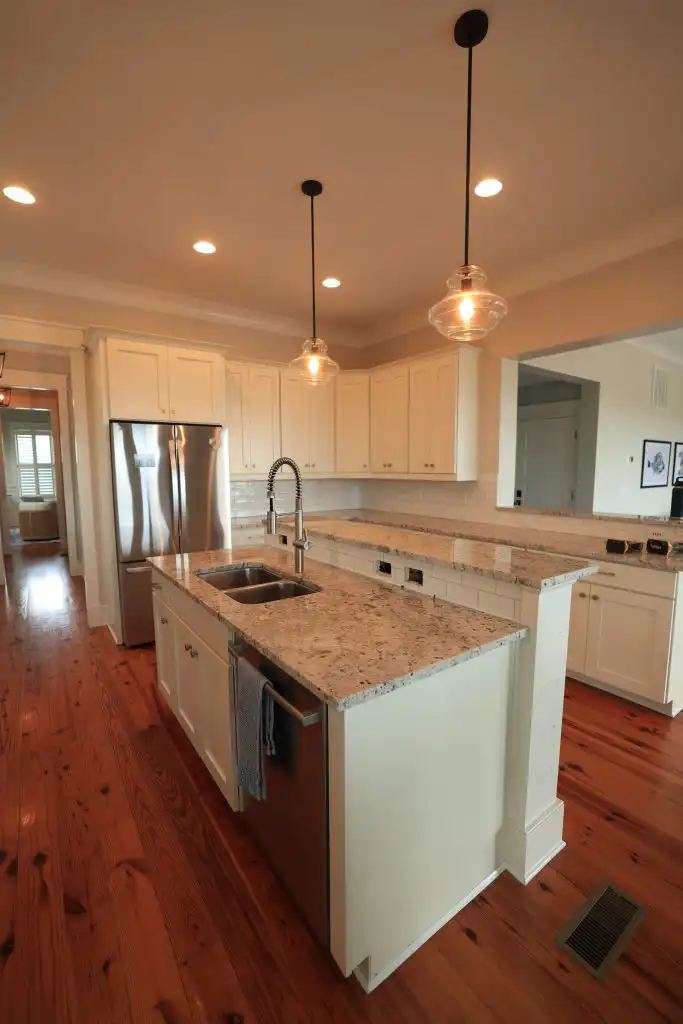
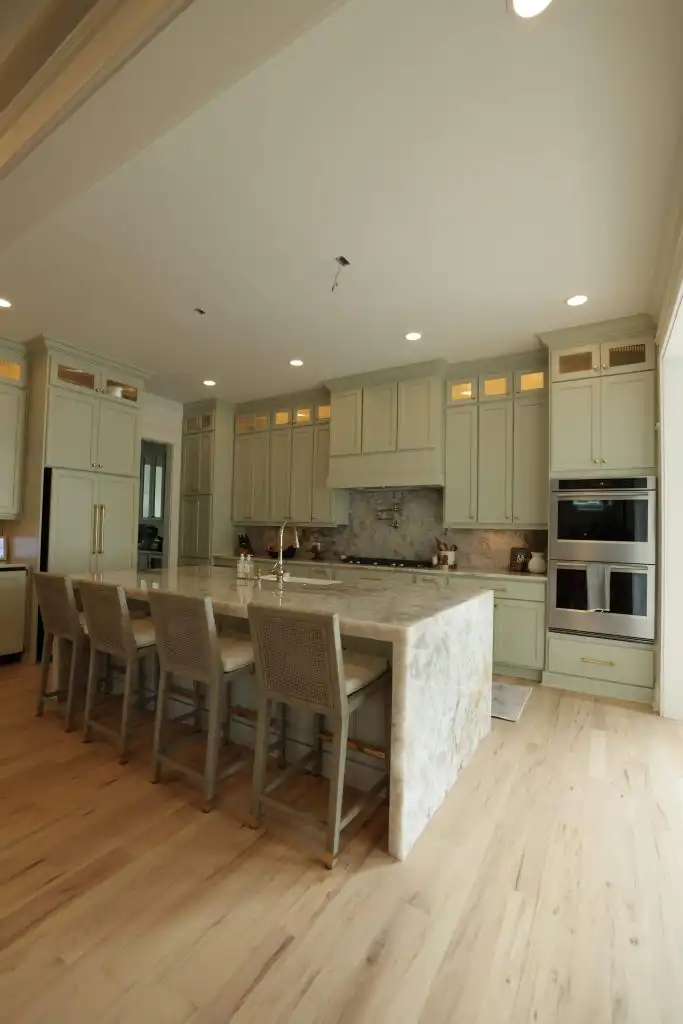
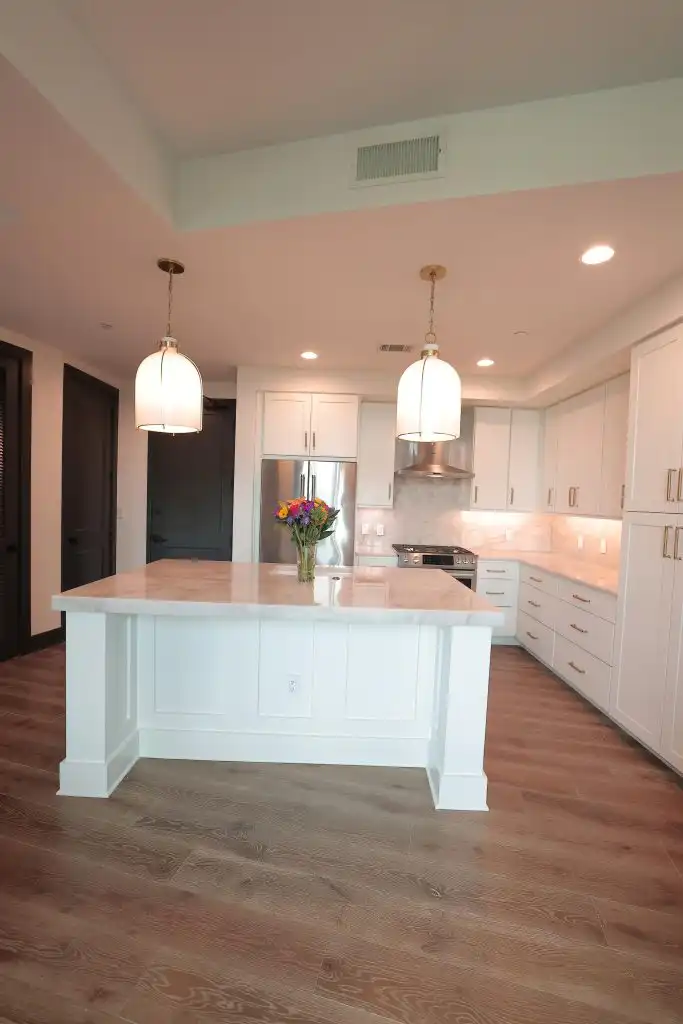
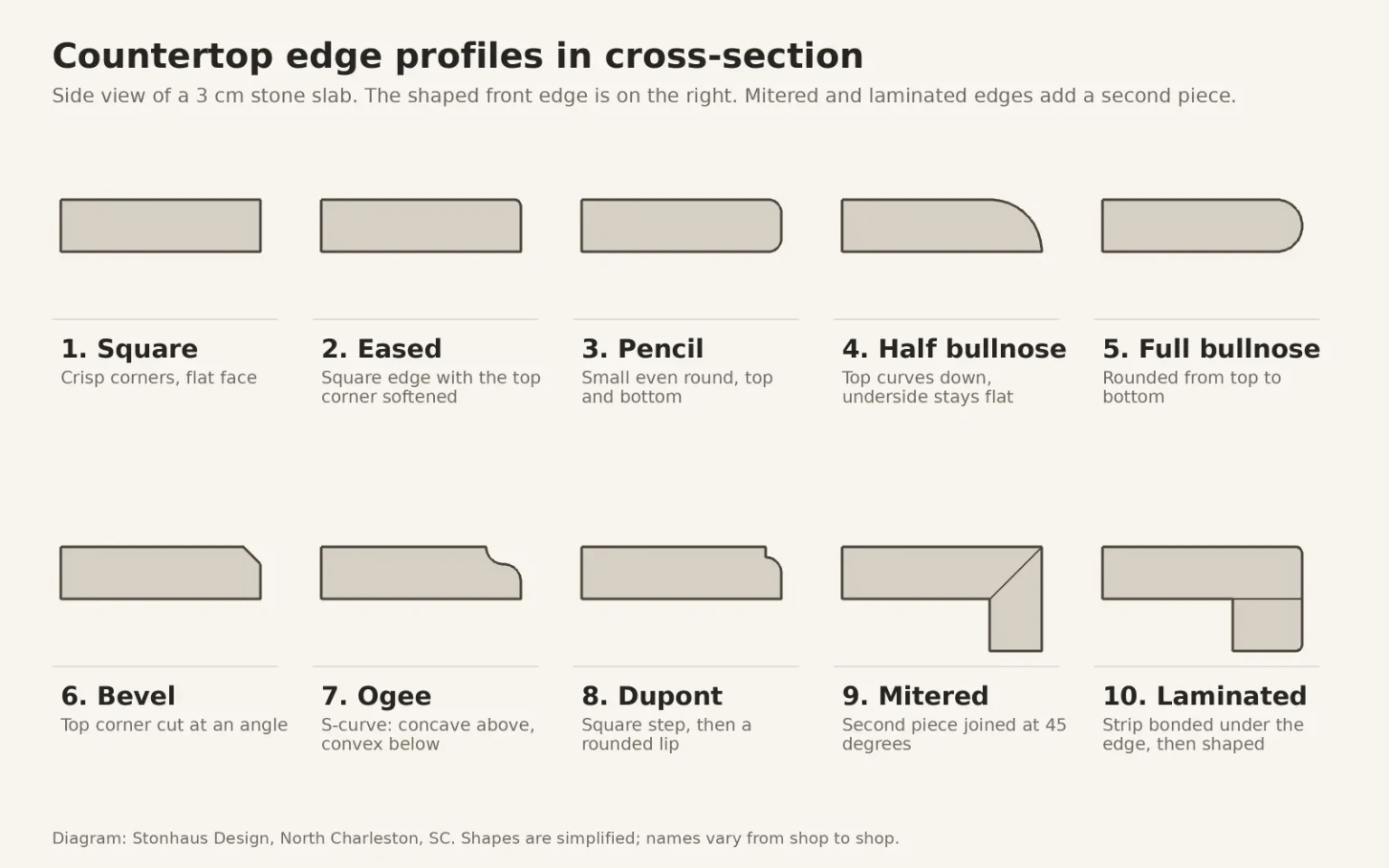
Countertop edge profiles are the shapes ground into the exposed edge of a stone top. Four of them show the range: eased (a square edge with the corner softened), half bullnose (rounded on top, flat underneath), ogee (an S-curve) and mitered (a second strip joined at 45 degrees so the edge looks thick).
An edge does for a countertop what a frame does for a painting: nobody comes to look at it, yet the wrong one changes how everything inside it reads. The choice comes down to the room, the wear and the stone.
Square and pencil edges join eased and half bullnose as the everyday shapes; bevel, ogee and Dupont add detail for traditional rooms. Caesarstone calls the eased edge one of the most popular on quartz and granite; it softens the corner without drawing the eye.
For Charleston stone countertops we settle the edge profile and the finish at templating, once the cabinets are set and before anything is cut. That makes the edge an early decision, not a last-minute one.
Ten edge shapes side by side
The drawing above shows each profile from the side, and the table compares them on four things: what it looks like, where it works, which stones suit it, and what it asks of you once the kitchen is in use.
| Edge | What it looks like | Where it works | Stone notes | Care and wear |
|---|---|---|---|---|
| Square | Flat face with crisp corners, usually softened just slightly | Modern, slab-forward kitchens | Best on hard stones that hold a sharp line | The sharpest corner of the group, so the most exposed to knocks |
| Eased | A square edge with the top corner gently rounded; “double eased” rounds the bottom too | Almost anywhere, modern to transitional | Suits every stone; lets bold veining lead | Easy to wipe, kinder to hips and elbows |
| Pencil | A slightly larger, even round on the corners | Transitional kitchens, vanities | Any stone | Soft to the touch, nothing to trap crumbs |
| Half bullnose | Top curves down, underside stays flat | Family kitchens, softer looks | Any stone; reads lighter on thinner slabs | One smooth curve on top, nothing to catch a cloth |
| Full bullnose | Rounded from top to bottom | Classic rooms, homes with small children | Shows best on thicker or built-up edges | No corners at all; drips run underneath |
| Bevel | The top corner cut at an angle, close to 45 degrees | Transitional and traditional rooms | Works on quartz and granite alike | The angled strip catches light and takes the edge off a square corner |
| Ogee | An S-shaped curve, concave above and convex below | Traditional kitchens, furniture-style islands | Needs thickness; competes with busy veining | More curves to wipe; more shaping in the shop |
| Dupont | A flat top and square face that steps down into a rounded lip | Formal islands, bars | Needs a 3 cm slab or a built-up edge | The step can hold crumbs |
| Mitered | A second piece joined at 45 degrees so the edge looks thick and solid | Modern islands, waterfall ends | Veined stone needs the veins carried around the corner | Depends on a tight, well-matched joint |
| Laminated | A strip bonded under the edge, then profiled; allows stacked or double bullnose looks | Thick-looking edges on thinner stone | Glue line can show on some stones | Behaves like the profile it is shaped into |
A note on names: shops do not all use the same words, so ask to see the shape on a piece of stone. The short strip at the back of the counter is a backsplash, a separate piece.
Two rough looks get confused: a live edge keeps the natural, unworked outer edge of the stone, while a chiseled or rock-pitched edge is chipped by hand to look like raw rock. Both are specialty finishes to see in person first.
Eased, square and pencil: the quiet edges
These three differ only in how much the corner is rounded. A square edge keeps the crispest line, an eased edge takes off just enough to feel comfortable, and a pencil edge rounds a little more. In practice a “square” stone edge is usually eased slightly, because a truly sharp corner is unpleasant to bump into.
All three suit a stone with strong movement, because they do not compete with it. They are also the simplest to keep clean: no grooves, no steps, nothing for crumbs to settle in.
Ogee or Dupont for a traditional island?
Both bring the detail a paneled, furniture-style kitchen asks for, but they read differently. An ogee is one continuous S-curve; Caesarstone compares it to a staircase of two rounded steps. A Dupont keeps a flat top and a square face, then drops into a rounded lip near the bottom.
| Ogee | Dupont | Half bullnose | |
|---|---|---|---|
| Shape | One S-curve, concave above and convex below | Flat top and square face, then a rounded lip | Top rounds down, underside flat |
| Look | Classical, ornamental | Tailored, with the detail sitting low | Soft, unfussy |
| Thickness | 3 cm slab or built-up edge | 3 cm slab or built-up edge | Works on 2 cm or 3 cm |
| Cleaning | Curves to wipe | The step can hold crumbs | One smooth curve, easy to wipe |
| Best fit | Paneled kitchens, furniture-style islands | Formal islands, bars | Family kitchens |
Pick the ogee if you want the softer, more classical outline. Pick the Dupont if you want the top to keep a crisp, tailored line and the detail to sit lower. Both need real thickness to look right, and both take more passes in the shop and a little more wiping at home.
Edges that suit a modern kitchen
Modern rooms usually want the stone to read as a thin, clean plane or as a solid block. Square and eased edges give the first; a mitered edge gives the second. On a waterfall island, the miter is what carries the top down the side of the cabinet as if it were one piece of stone.
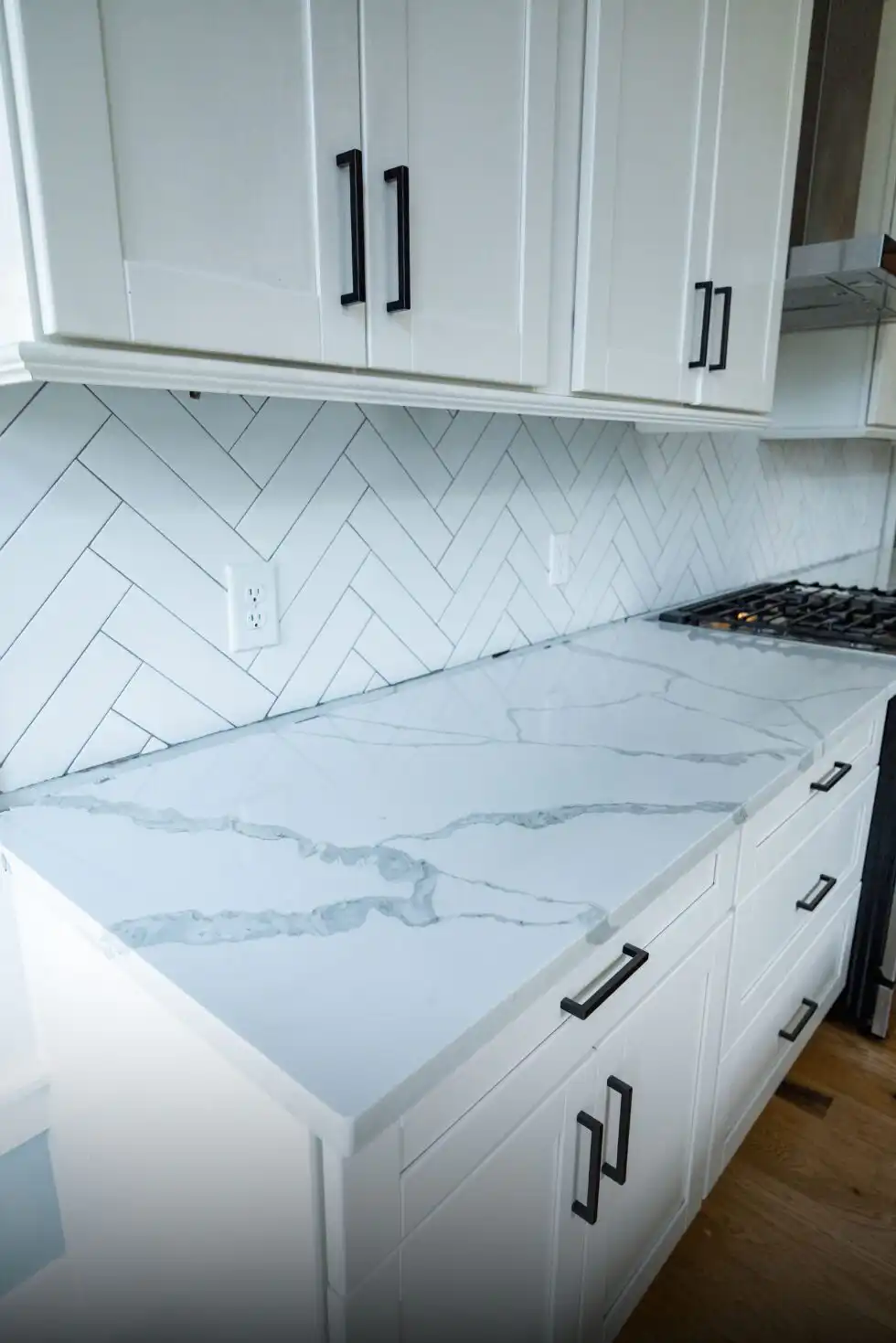
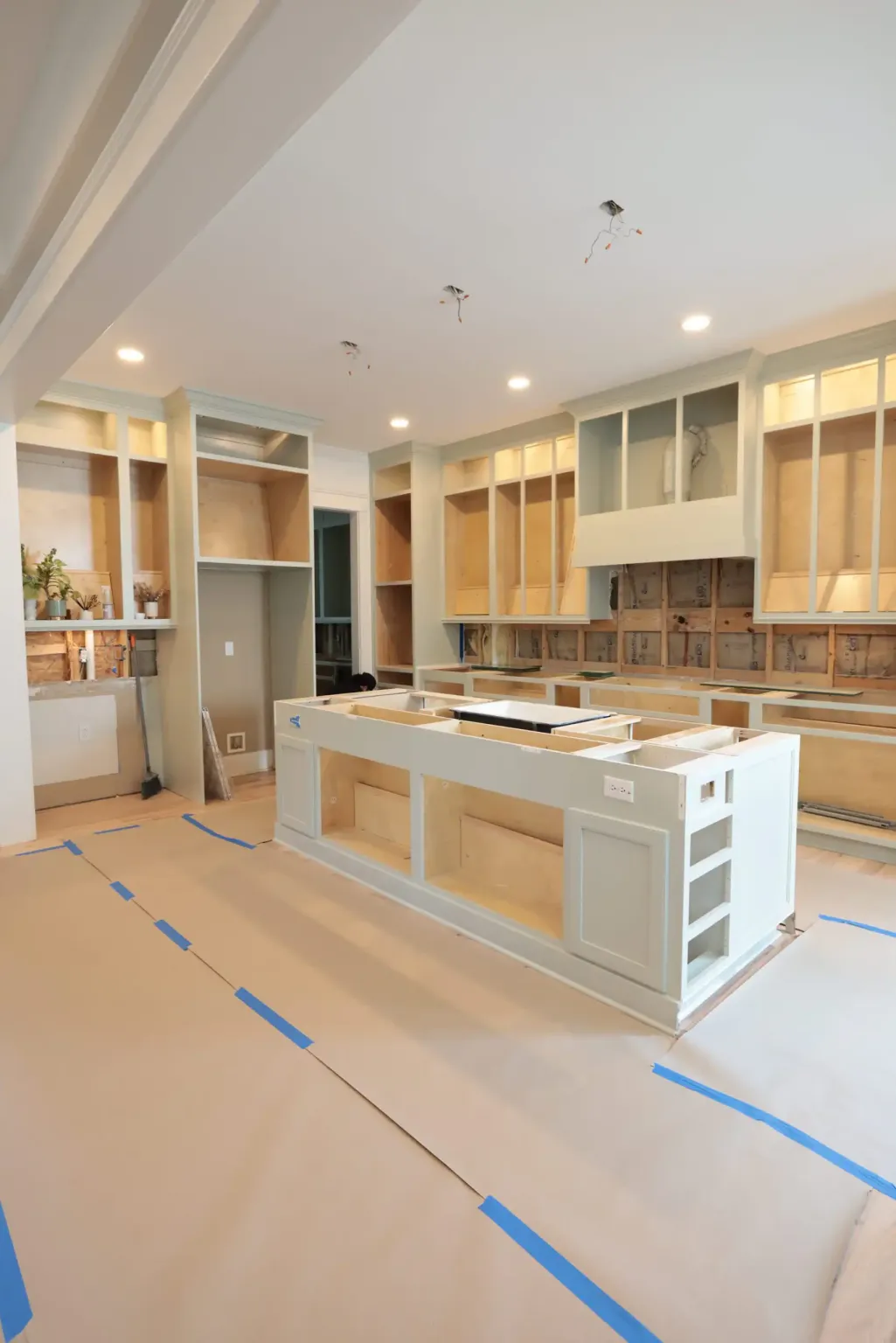
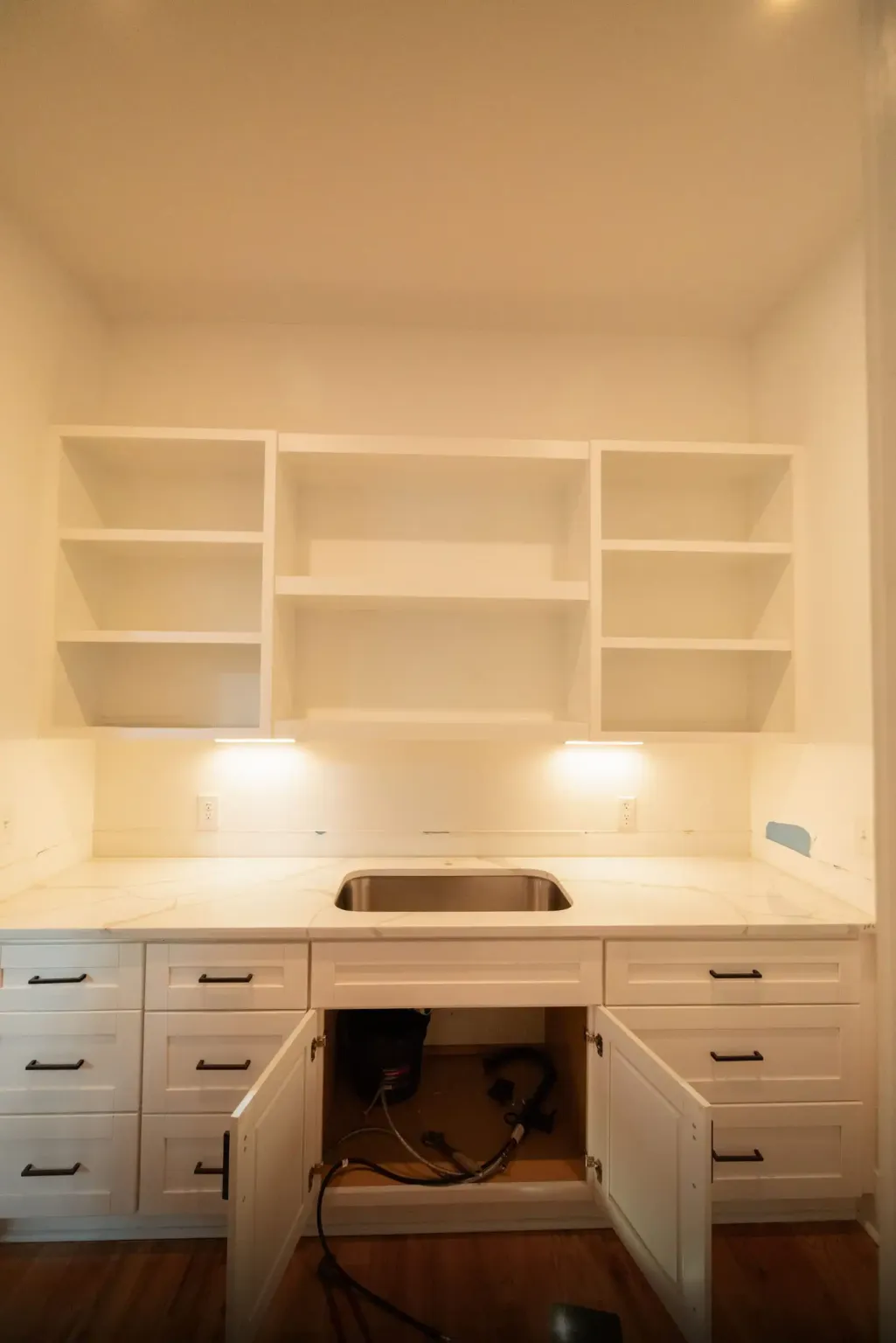
In our Moncks Corner kitchen, we fabricated and installed the main run, the cooktop wall and a pantry wet bar, and the white veined tops keep a slim, straight edge.
The room already has plenty going on: white shaker doors, matte-black pulls and a herringbone tile backsplash. With veining that strong and that much detail around it, a plain edge is what lets the stone do the talking.
A waterfall end is a bigger decision than an edge, because it uses extra stone and a precise mitered joint. Our notes on what a waterfall end asks of you weigh it up.
Does the stone limit which edge you can choose?
Less than people expect. Caesarstone says quartz is compatible with all the popular edge types, so quartz countertops in Charleston can take any profile in the table. Granite and quartzite are hard enough to hold a crisp square line well.
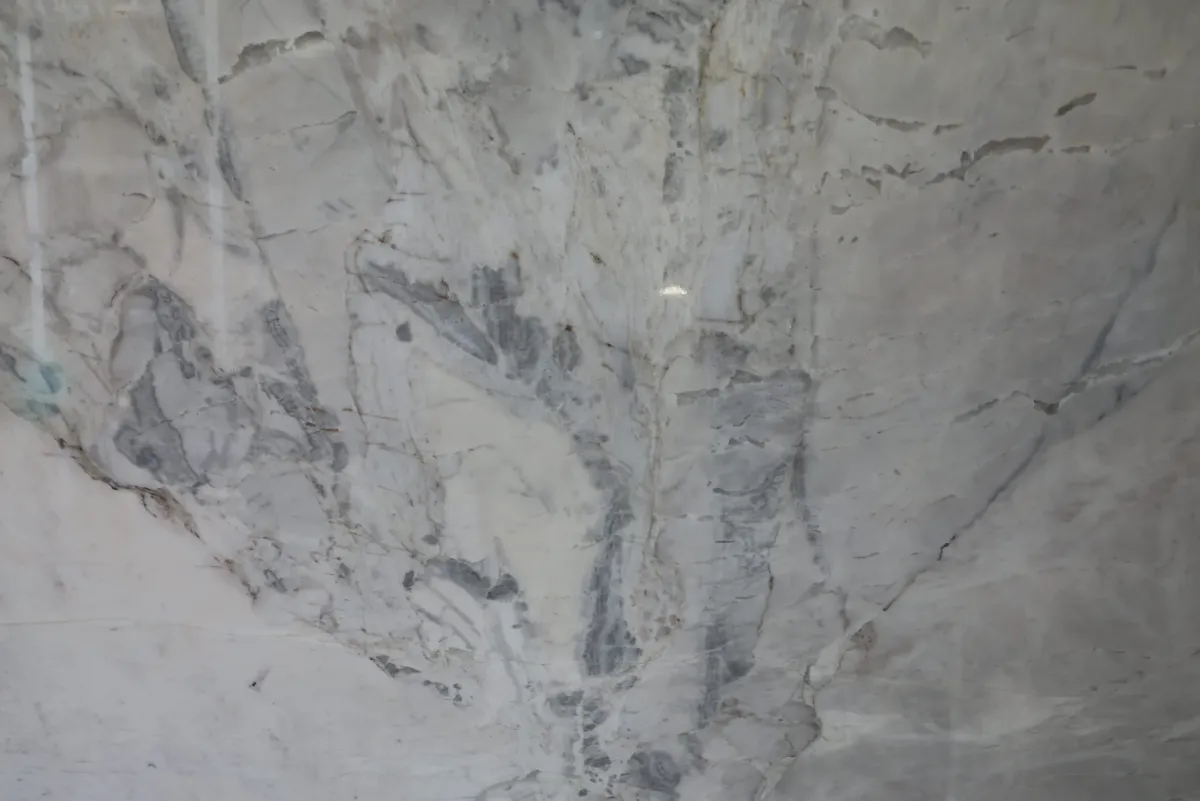
Marble is the one to think about. The Natural Stone Institute notes that marble is softer than granite and scratches more easily, so a rounded profile hides daily wear better than a sharp corner. On strongly veined stones, plan a mitered edge with the fabricator so the veins continue around the corner rather than stopping at the joint.
Thickness changes how every profile looks
The same profile looks different on a 2 cm and a 3 cm slab: an ogee or Dupont needs the depth of the thicker stone, while a slim eased edge can make even a 3 cm top look lighter. When a slab is thinner than the look you want, a laminated or mitered strip builds the edge up.
We explain the difference between 2 cm and 3 cm slabs and how a built-up edge works in a separate guide.
Where edges take the knocks
Chips start where hard things meet the edge. Cambria’s care guide points to the edges around sinks and dishwashers as the places where chips can happen. Caesarstone adds that chipping depends more on the material than on the edge shape itself.
So the edge can change from one part of the kitchen to another. The table maps each zone to the profiles that cope with it.
| Where | What happens there | Edges that cope | Why |
|---|---|---|---|
| Sink and dishwasher run | Pots and dishes meet the edge all day | Eased, pencil or half bullnose | Cambria’s care guide names the edges around sinks and dishwashers as places where chips can happen; a rounded corner gives a knock less to catch |
| Island in a walkway | Hips, bags and chairs brush the corners | Eased or pencil, with rounded outside corners | A softened corner is kinder to hips and elbows |
| Seating overhang | Forearms rest on the edge for long stretches | Pencil or half bullnose | The round is comfortable under the arm |
| Long run of bold veining | The stone is the feature | Square or eased | A quiet edge does not compete with the veins |
| Homes with small children | Heads at counter height | Half or full bullnose | No sharp corner at all on a full bullnose |
| Marble anywhere | Softer stone shows daily wear | Rounded profiles | The Natural Stone Institute notes marble scratches more easily than granite |
The shaping itself happens in the shop after cutting, as we describe in how a countertop is fabricated.
Standard, timeless or pricier: short answers
What is the standard countertop edge?
There is no single industry standard, but the eased edge is the usual starting point, and Caesarstone lists it among the most popular edges on quartz and granite. If a quote does not name the profile, ask which one it includes.
What is a rounded countertop edge called?
A bullnose. A half bullnose rounds the top and leaves the underside flat; a full bullnose is rounded from top to bottom. A smaller, even round on both corners usually goes by pencil edge.
Which edge is most timeless, and is the ogee outdated?
The plain shapes date least because they carry no period detail: square, eased and pencil edges sit comfortably in modern and transitional rooms alike. The ogee is not outdated so much as specific. It belongs with paneled doors and furniture-style islands, and on flat slab cabinets it can look borrowed from another house.
Is an ogee or Dupont edge more expensive?
It usually adds to the quote, because edge cost follows shop time: each extra curve or step means more passes of the profiling tool and more hand polishing, and both shapes need a 3 cm slab or a built-up edge. Mitered and laminated edges add a second strip of stone and a joint to match.
The profile is one line among several, alongside thickness, cutouts and slab count, as our notes on what changes a stone countertop quote explain.
Will the edge change where the seams go?
Seams fall where one slab ends and the next begins, whatever the profile, and their positions are set at templating with the slab layout in hand. A mitered edge adds its own joint along the front corner, so on a veined stone that joint and the seams are planned together.
Our guide to where seams usually sit covers the layout side.
Three questions that settle it
- Is the stone the star? Bold veining usually wants a quiet edge.
- Who leans on this counter, and how often? Busy family kitchens favor rounded corners.
- Does the room already have detail, such as paneled doors or crown molding? A decorative edge looks planned when it has company.
Put the answers together and the ten shapes shrink to two:
| If your answers are | Start with |
|---|---|
| Bold stone, plain room, light use | Square or eased |
| Bold stone, busy family kitchen | Eased or pencil |
| Quiet stone, plain modern room | Eased, or mitered on the island |
| Quiet stone, paneled or traditional room | Ogee or Dupont, on a 3 cm slab |
| Small children or a crowded walkway | Half or full bullnose |
So which matters more at your counter: a crisp line or a forgiving corner? Once you have your two shapes:
- Check the slab thickness first, because ogee and Dupont need 3 cm or a built-up edge.
- Use the zone table to see whether the sink run or the island needs a softer edge than the rest.
- Ask for the profile to be named on every quote, so two quotes compare.
- Before templating day, bring the drawing above to the Stonhaus showroom at 7389 Industry Dr, North Charleston, and ask to see your two shapes on stone next to the slab you have chosen.
Updated October 14, 2026: added a cross-section drawing of all ten profiles, tables by kitchen zone and by style, and short answers on standard, timeless and costlier edges.