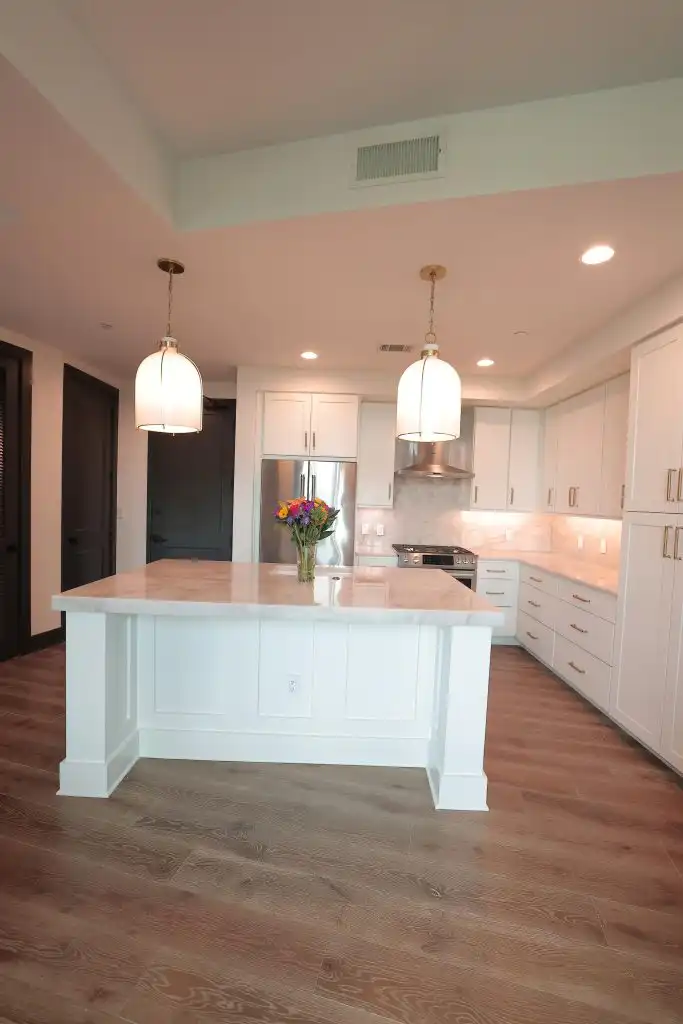
Search for help with a countertop budget and Google surfaces a blunt related question: “How do you price countertops?” For stone, the price is built from the specific slab and from the work it takes to turn that slab into your kitchen. So a useful countertop budget starts with those factors, not with a number.
The factors are the stone and its rarity, how many slabs the layout uses, veins that must line up, the edge, the cutouts, the thickness, any waterfall end, tear-out of the old tops and access to the house. There is no price list below: stone costs move, and a printed figure goes stale long before the page does.
What you can decide is which of those factors you spend on. When you want a real number, request a quote with the details listed at the end of this guide; our team answers within 24 hours.
The slab: which stone, and how many
The stone itself is usually the biggest variable. An everyday color and a rare, sought-after slab are priced in different worlds, and a rare slab is chosen precisely because it is not ordinary.
The number of slabs matters as much as the square footage. Pieces are cut from whole slabs, so the layout decides how many the job uses: a long island may need its own slab, and a consistent pattern can call for slabs from the same lot.
Our page on quartzite countertops in Charleston shows how this plays out for that stone.
Veins that have to line up
Matching costs stone and time. A bookmatched island, veins carried across a joint, or a pattern that wraps continuously down a waterfall end all limit where each piece can come from, and the layout takes longer to plan. Directional stones raise the stakes: our Sequoia Brown page notes that its linear veining reads best in long bookmatched runs.
If you love a strongly veined stone, decide early whether you want the veins matched or simply well placed. If the difference is unclear, how bookmatched slabs are laid out walks through it.
Work on each piece: edge, cutouts and thickness
Every piece passes through the shop, and some details take more of that time. An eased edge is a few quick passes; an ogee, a Dupont or a mitered build-up takes many more. The ten edge profiles we compare elsewhere show what each involves.
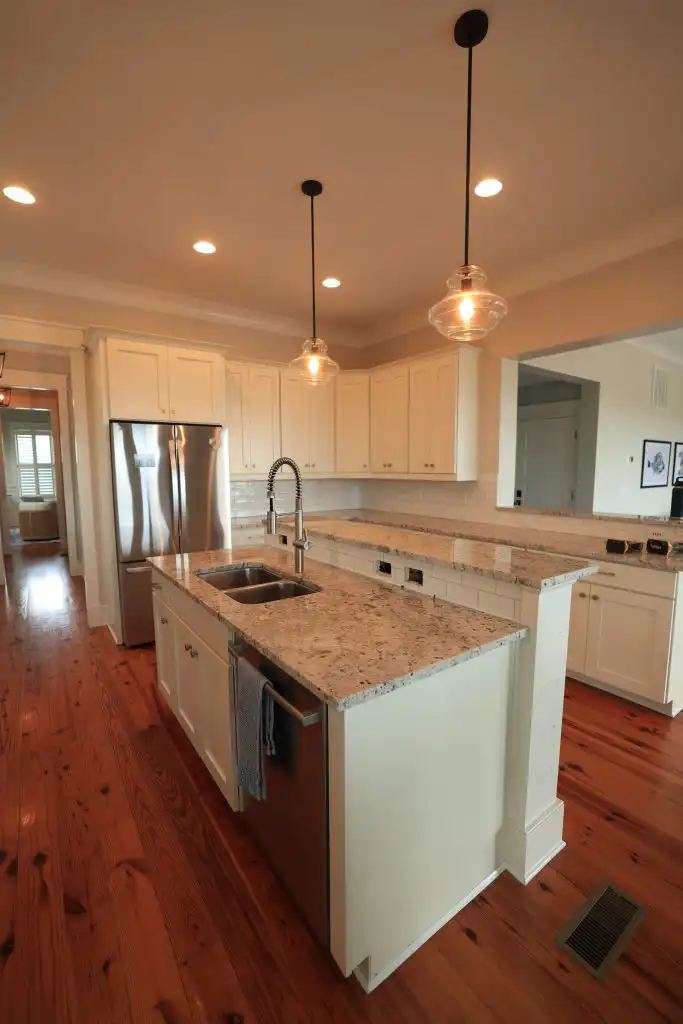
Cutouts add up the same way: an undermount sink opening with a polished edge, a cooktop, faucet holes, and outlet openings if the stone runs up the wall. Thickness is the third lever, either a 3 cm slab or a thinner one with a built-up edge; we compare 2 cm and 3 cm slabs in detail.
With engineered quartz, the brand, collection and color you pick join the list; for that material, see quartz countertops in Charleston.
Waterfall ends and tall backsplashes
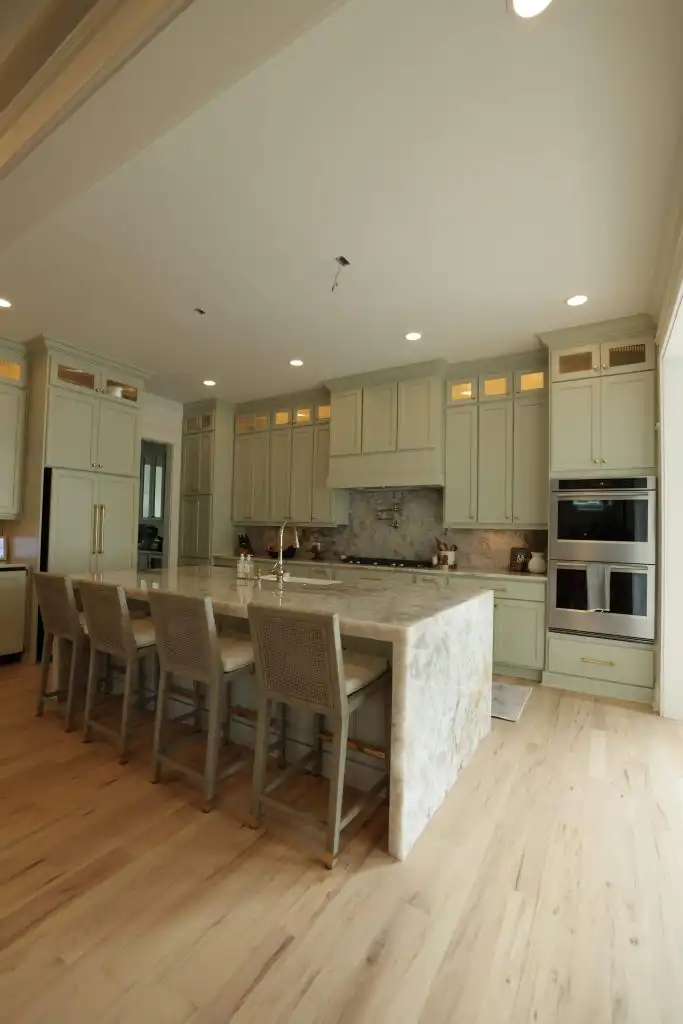
These are the two features that use the most extra stone. Caesarstone notes that a waterfall edge needs additional material and fabrication: the top turns down the side of the cabinet with a mitered joint that has to close tight and, on veined stone, keep the pattern going.
A full-height backsplash does the same on the wall, with more stone and an opening for every outlet. Both can be worth it on the piece people see first; our look at the trade-offs of a waterfall island helps decide.
The house: tear-out, access and changes
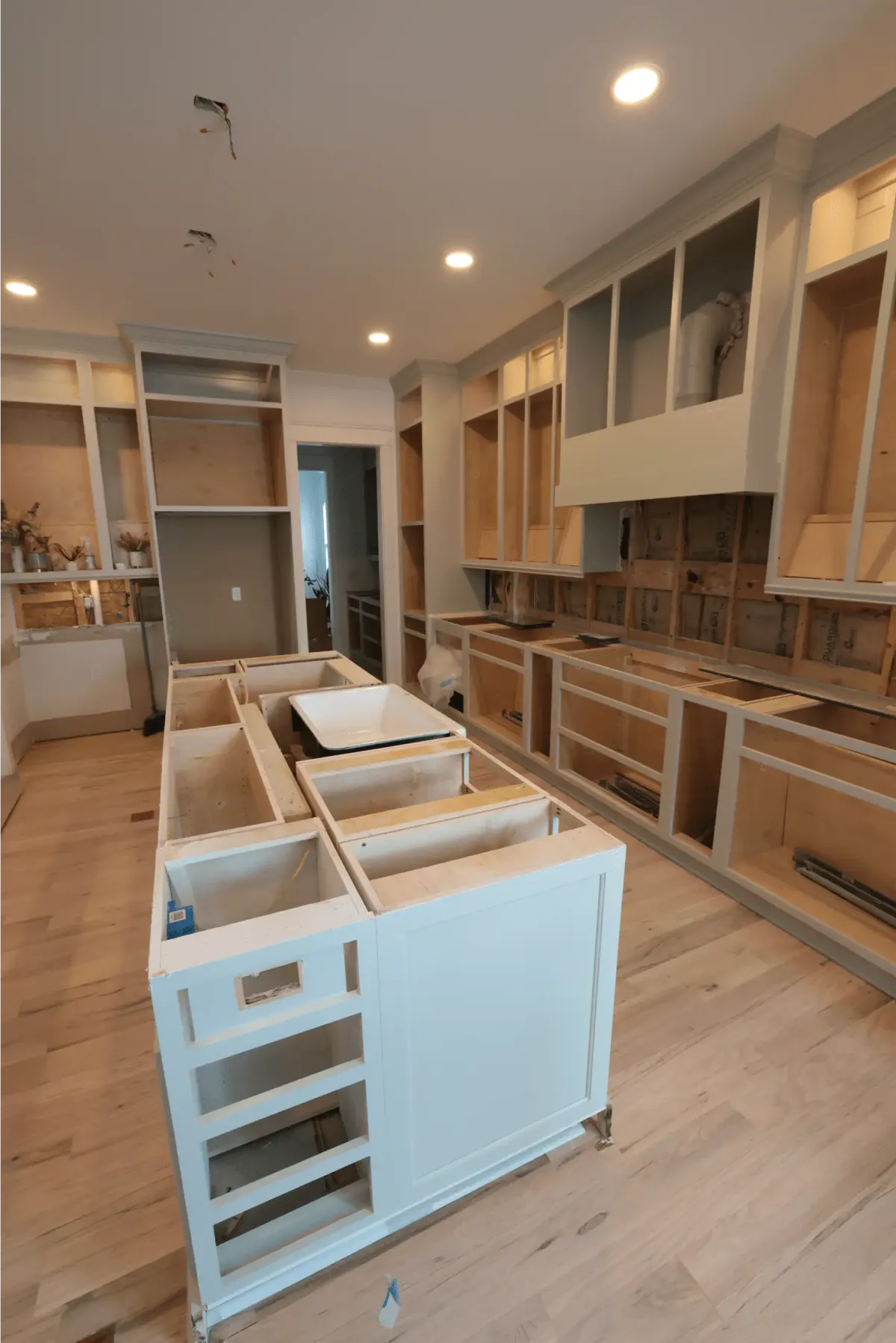
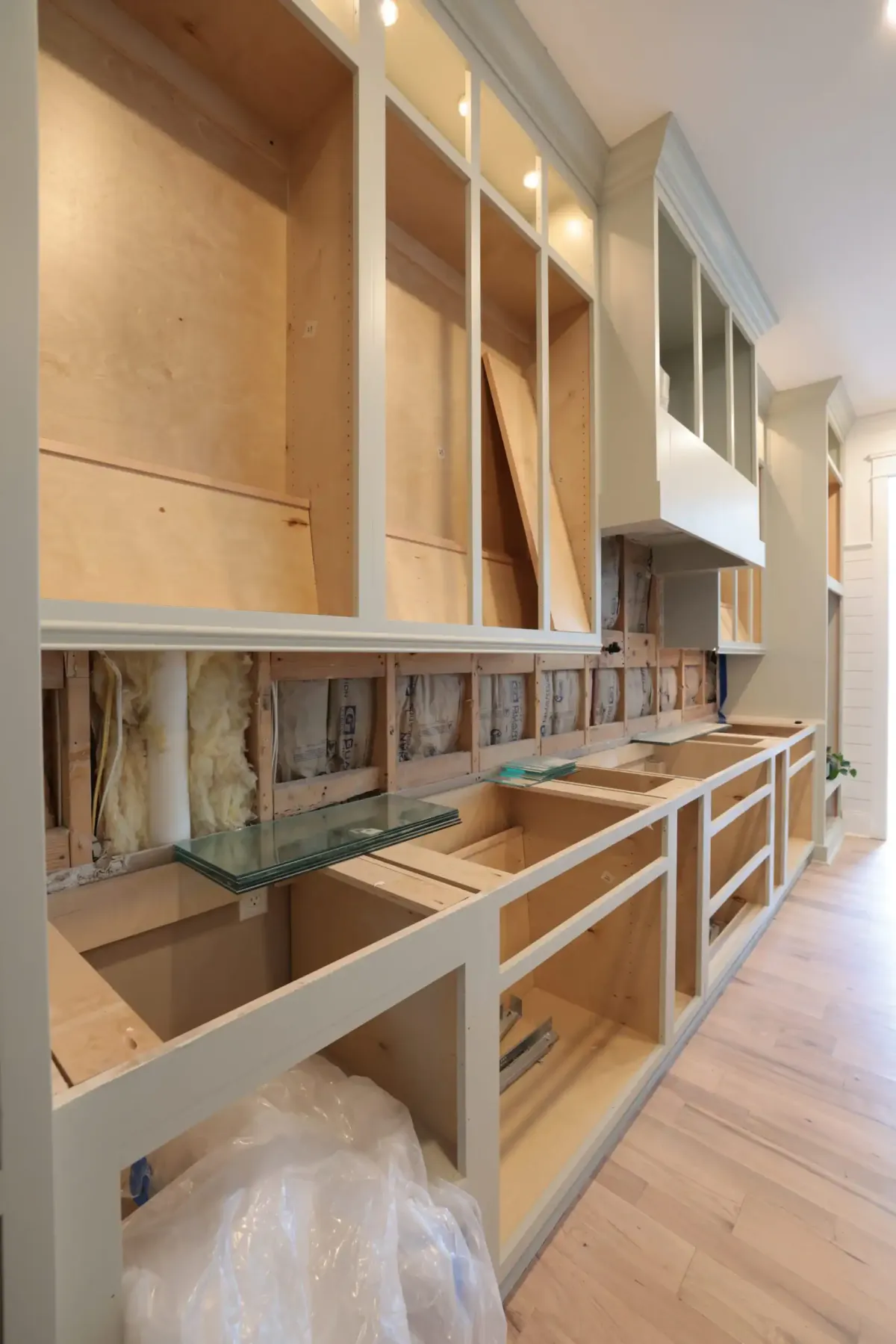
Some of the budget is set by the building, not the stone. Old countertops have to come out, and the Natural Stone Institute advises removing them ahead of installation so there is time to repair any cabinets damaged in the process. Slabs are heavy: stairs, tight turns and a long carry from the driveway all add labor.
Changes after measuring are the avoidable item. A new sink model or a moved cabinet can mean measuring again. Our page on granite countertops in Charleston lists the access issues common in older local houses, and our install checklist covers what to settle before the crew arrives.
A budget you control: target, stretch and one non-negotiable
Instead of one ceiling, write down three things. A target scope you are comfortable with, a stretch scope you would accept for the right stone, and the one item you will not trade away, whether that is a seam-free island, a particular slab or a full-height backsplash.
Spend where people look, simplify where they work. The island usually carries the statement stone and the detailed edge; the perimeter can take a quieter stone and a simple eased profile without the kitchen looking any less finished. Keep a contingency for what turns up when the old tops come off.
What to send for quotes you can compare
Two quotes only compare when they price the same scope. Send each fabricator the same package:
- a plan with measurements, or the cabinet drawings;
- photos of the kitchen and of the way in, including steps and doorways;
- the slab you chose, or your two finalists;
- the sink, faucet and cooktop models;
- edge profile, thickness and backsplash height;
- island details, such as overhang and any waterfall end;
- whether the old tops come out, and what they are made of.
Then ask every quote to spell out the number of slabs, the edge, each cutout, the backsplash, removal and installation. A quote that leaves half of those open is not a better deal, just a shorter list. Our about page puts transparency from pricing to process among our principles, so ask us to itemize.
Ready to turn the list into a number? Send it, with a photo or two, through our contact page for a stone countertop estimate, and our team will come back with questions or a quote.