Among the questions people ask Google about this, one stands out: “What is the downside of granite countertops?” The short answer: some slabs need sealing, every kitchen has a few seams, and no two slabs look alike. Against that, granite takes hot pans, resists scratches and ignores the acids that mark marble.
So are granite countertops worth it? For most kitchens that get cooked in every day, yes, as long as you choose the actual slab rather than a color name. If you want to see granite slabs in person, our page on granite countertops in Charleston explains how the selection works.
Granite countertops pros and cons, with the source for each
| What it means in a kitchen | Source | |
|---|---|---|
| Pro: heat | Will not melt or blister; a pan can go from the oven onto the stone. A trivet is still advised under slow cookers. | Natural Stone Institute (NSI), Pros and Cons of Granite |
| Pro: scratches | Made mostly of feldspar and quartz, which rate 6 and 7 on the Mohs scale, above a knife blade at 5.5 | National Park Service |
| Pro: kitchen acids | Lemon, vinegar and wine do not etch it, unlike marble | NSI, Caring for Granite |
| Pro: low absorption ceiling | The ASTM C615 standard caps absorption for granite dimension stone at 0.40% by weight | ASTM International |
| Con: some slabs need sealing | Light-colored granites can be porous and stain; dark ones are dense | NSI, Granite: What’s in a Name? |
| Con: seams | Slab size limits how long one piece can be, so most layouts have joints | NSI, Pros and Cons of Granite |
| Con: variation | One stone name can cover slabs that look quite different | NSI |
| Con: chips at cutouts | Rare, but the edge of an undermount sink opening is the usual spot | NSI, Pros and Cons of Granite |
None of the cons is a deal breaker on its own. Each one is something you can check or plan for before the stone is cut, which is where the rest of this page goes.
Where granite earns its keep
NSI describes granite as nearly complete as a countertop material in its natural state: cut, polish, install. There is no resin binder in it, and the same stone family is used for building facades, monuments and curbs. For a busy cook, that means fewer rules: hot pans, citrus and wine are ordinary events rather than emergencies.
The finish lasts, too. A stone-cleaning company owner quoted by NSI says polished granite rarely loses its shine. Daily care is a neutral, stone-safe cleaner; NSI’s experts advise against dish soap, which leaves a film that dulls the surface over time.
The downsides, and how much each one matters
Sealing depends on the slab, not on the word “granite”
NSI geologist Karin Kirk gives a simple check: put a splash of water on the stone. If it stays in a bead, the stone does not need sealing; if it soaks in and leaves a darker spot, it does. Dark granites sit at the other extreme: they are so dense that a sealer can leave a cloudy film.
When a slab does need it, the job is modest. NSI’s granite guide notes that a good sealer can last up to 10 years with the right daily cleaner. We don’t sell sealing as a service, but our guide to sealing natural stone explains the routine.
Seams and weight
A slab has a finite size, so long runs and L-shaped layouts need joints. Where they fall is a design decision you can make before cutting; our notes on planning seam placement cover it.
Granite is also heavy stone, and a seating overhang needs support beyond a certain depth. Slab thickness is part of that conversation, as our article on 2 cm and 3 cm slabs explains.
No two slabs match
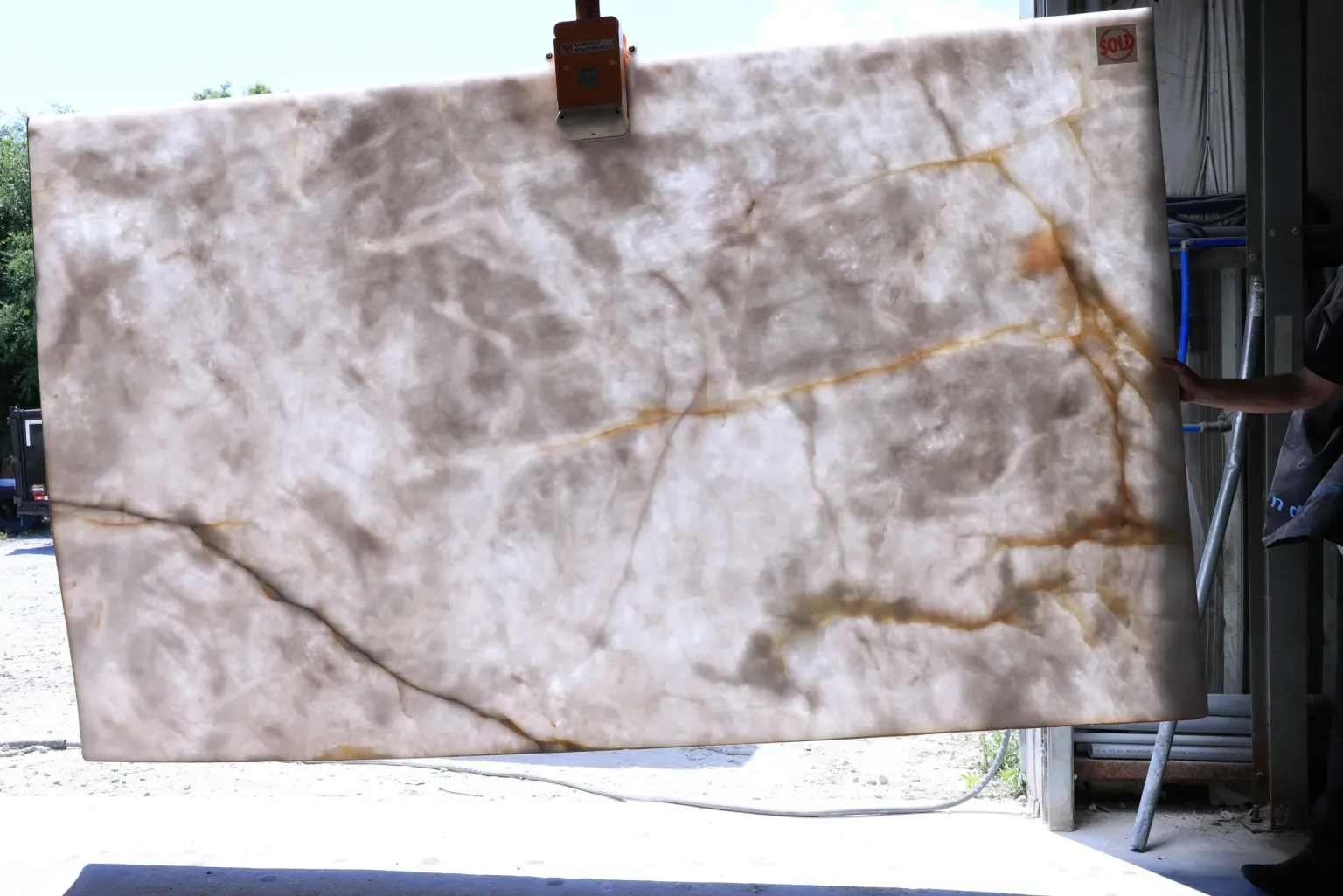
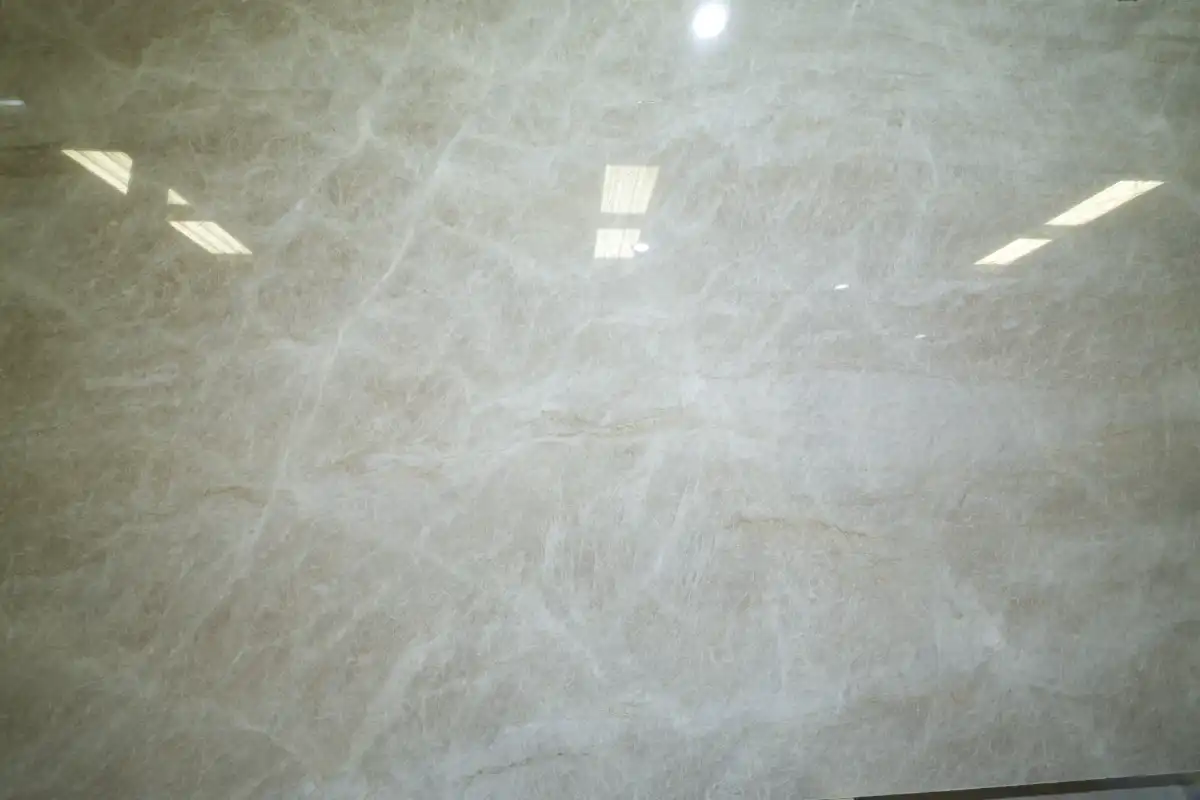
The sample is not the countertop. Granite from one quarry can vary in color and texture, and some slabs carry large veins or crystals that a small chip cannot show. Judge the full slab, under daylight if you can. If you are still narrowing colors, our decision path for granite color helps you get to two or three finalists.
Small marks on dark stone
NSI notes that some dark granites can become spotted by the minerals in tap water. Wiping around the faucet each day prevents most of it, and one of the experts in NSI’s care guide warns that skipping that step lets the water calcify into white marks.
Two worries that should not decide it
The first is style. Whether a look feels dated depends on the slab you pick and on taste, not on the stone family. The part you can measure is resale, and our look at what buyers expect from countertops covers it with survey data.
The second is radiation. The U.S. Environmental Protection Agency says granite, like any stone, may contain traces of naturally radioactive elements. It also says a granite countertop is extremely unlikely to raise anyone’s yearly dose above normal background levels.
EPA adds that radon from the soil under a house is the far larger risk, and recommends testing every home for it, with or without granite.
What makes one granite kitchen cost more than another
Stone costs change, so a printed figure would mislead you within months. What actually separates two granite quotes is this:
- The stone itself: common colors and rare, exotic ones sit far apart.
- Square footage, and how many slabs it takes to keep the pattern consistent.
- Edge profile, thickness, and cutouts for the sink and cooktop.
- Backsplash pieces, a waterfall end or an oversized island.
- Removing the old tops and getting the slabs into the house.
When another stone may suit you better
If you want a light, marble-like look with similar toughness, read how granite and quartzite compare on hardness and stains. If you love marble itself and accept that it etches, our page on living with marble countertops is honest about the trade.
And if you want one even color from end to end, an engineered surface will be easier to match than any natural stone.
So, three questions for you. Do hot pans and lemon juice touch your counters most days? Would a seam, or a slab that differs from the sample, bother you? Will you wipe the sink area daily? Yes, no and yes means granite is very likely worth it.
Our materials pages show quartzites and marbles, so granite is chosen in person: ask to see granite slabs at our North Charleston showroom.