Our North Charleston showroom lists more than 200 slabs in stock. For most buyers that number is the hard part, and the way through it is to rule stones out by how the kitchen works before falling for a color. This natural stone countertops buying guide follows that order.
In short: decide how much care you will really give the surface, match the stone family to how you cook, then judge the actual slab, its finish and its layout in person. Granite and quartzite suit hard daily cooking; marble suits cooks who welcome a patina; the specific slab settles the rest.
If you like to arrive with a shortlist, browse the materials we stock first. The steps below tell you what to look for once you are standing in front of them.
Start with the care you will actually give
Every natural stone asks for something. A design-build partner quoted by the Natural Stone Institute puts porosity first among the questions to ask, because it decides how easy a stone is to maintain. Porous stones drink in oil and wine unless they are sealed and wiped promptly.
Quartzites vary from slab to slab, so ask how the one you like behaves, not how the category does.
If your honest answer is “I never want to seal anything,” that points outside natural stone. Settle it first with how natural quartzite and engineered quartz differ, before you shop.
Match the stone to how you cook
Cooking habits are a better filter than color. In the same Natural Stone Institute piece, one kitchen designer recommends marble to bakers, because it is ideal for rolling out dough, and points busy families toward granite or quartzite for durability. She describes choosing quartzite for a client whose dog jumps on the counters.
| If your kitchen… | Shortlist | Ask about the slab |
|---|---|---|
| Bakes often, with dough rolled out on the counter | Marble | How it etches, how it is sealed, whether a honed finish suits you |
| Sees hot pans, heavy prep, children and pets every day | Granite or quartzite | Is this slab true quartzite? How quickly does it absorb water? |
| Centers on an island that is more for gathering than for work | A statement stone on the island, a harder-working one on the perimeter | Do the two stones share an undertone? |
| Must never need sealing | Engineered quartz, which is not natural stone | How it handles heat and direct sun |
For the hard-working row, our pages on quartzite countertops in Charleston and granite slabs in Charleston go deeper. If yours is a crowded family kitchen, we also rank the surfaces that hold up to heavy daily use.
Read the whole slab, not the sample
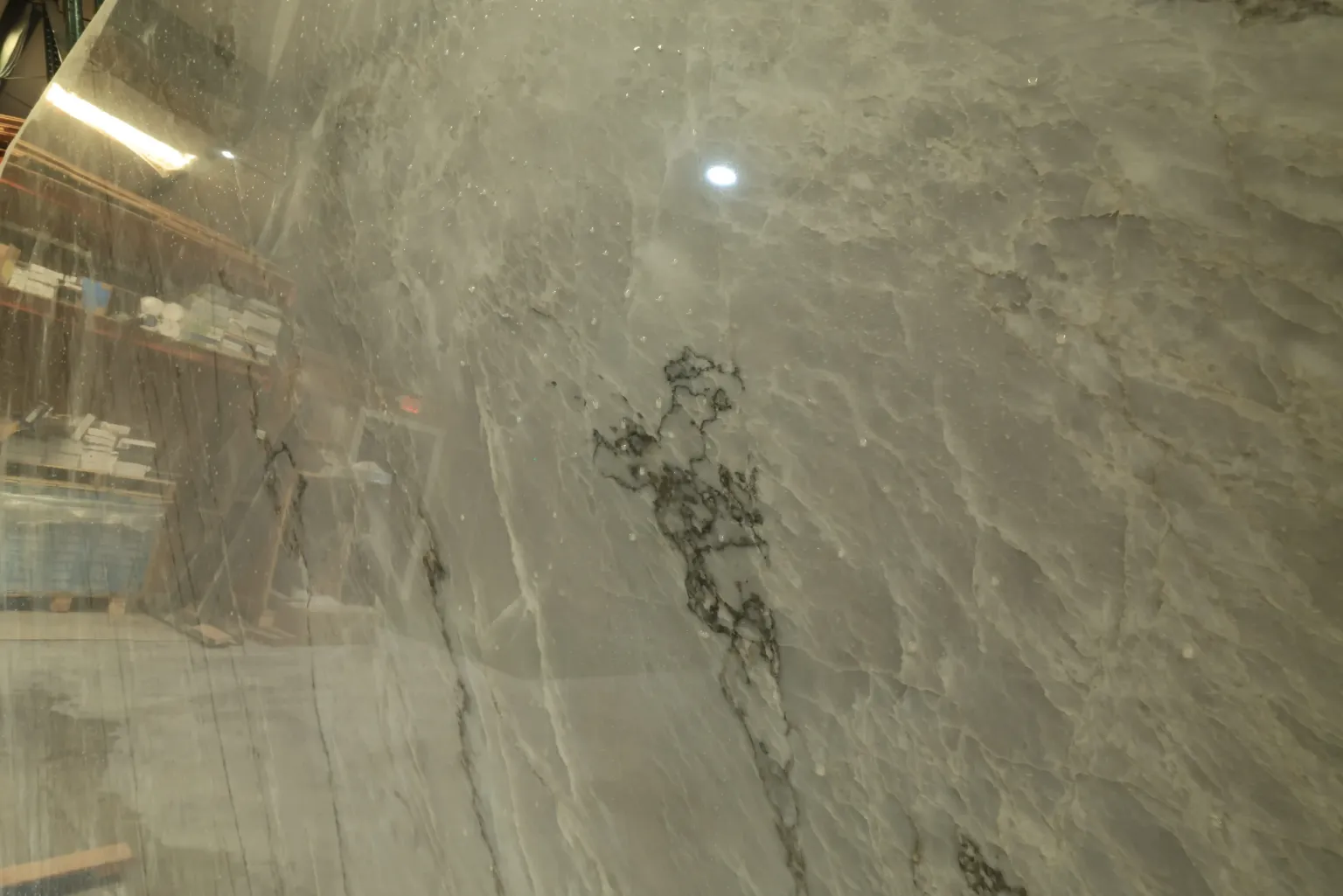
A sample shows a color. It cannot show how the veins move across a full slab, where the darker patch sits, or whether a fissure runs toward your sink. Consumer Reports’ countertop buying guide notes that one slab can change a lot from end to end, and suggests reserving it once you find it.

A slab like this one, with long bands running in one direction, has to be laid out so the bands run the same way on every piece. Directional stones are where layout decides whether the kitchen looks planned. How fabricators handle it is the subject of our piece on matching slabs for a bookmatched island.
Finish, thickness and edge come with the stone
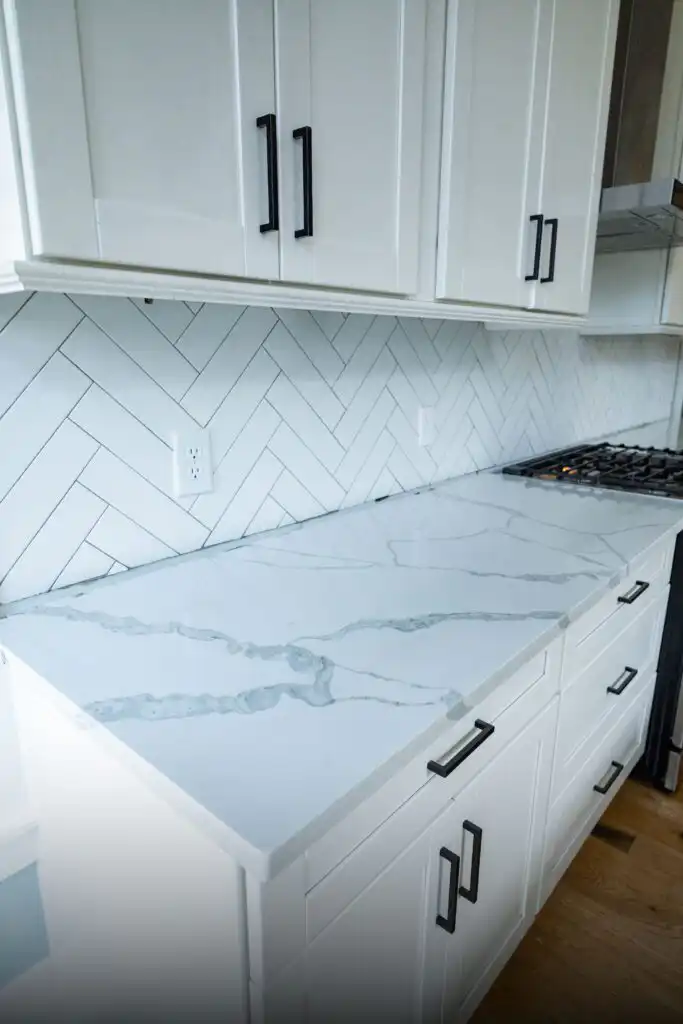
The same slab can look polished and bright, honed and soft, or leathered and textured. The Natural Stone Institute article notes that honed and leathered finishes have grown popular on light-colored stones because they tend to disguise etch marks, which matters if marble is on your list.
Thickness and edge change the look too. The design-build partner quoted there mentions mitering stone to make it look thicker, at the cost of extra labor. If you are weighing shapes, our comparison of ten edge profiles shows where each one works.
Where price fits in the decision
Price follows the choices above more than the stone family alone: the specific slab and how rare it is, how many slabs the layout needs, matched veining, the edge, the cutouts and the thickness. We go through each factor, and how to get quotes you can compare, in our guide to planning a countertop budget.
A short list for the showroom visit
Bring:
- a cabinet door or paint chip, and a piece of the floor if you have it;
- a rough plan with measurements, or the cabinet drawings;
- the sink, faucet and cooktop models, if chosen;
- a few photos of the room in daylight.
Ask:
- Is this the exact slab I would get, and can it be held?
- How porous is this slab, and what care does it need?
- Will my island fit on one slab, and which way would the veins run?
For judging the showroom itself, from how slabs are stored to how the team answers, see what to look for in a stone showroom.
Choosing, in four lines
If you bake more than you sear, look hard at marble and accept its patina. If the counter takes hot pans, homework and the dog, shortlist granite and quartzite. If you never want to think about sealing, compare engineered quartz before deciding. And whatever the family, let the actual slab have the last word.
When you are ready to stand in front of real stone, start with the slabs in our showroom and bring your list.