The most common way to end up unhappy with quartz has little to do with the slab. It is buying it for the wrong job: a bar on a sunny porch, or a kitchen where pans go straight from the burner to the counter and trivets never come out of the drawer.
So, are quartz countertops worth it? For indoor kitchens, baths and laundry rooms where you want one even color, no sealing and simple cleaning, usually yes. Outdoors, in strong sun, or for a cook who won’t use a trivet, a natural stone tends to serve you better.
We fabricate and install engineered quartz countertops in Charleston, and we would rather you pick quartz for the right reasons.
What you are buying: a manufactured slab
Quartz countertops are made, not quarried. The Natural Stone Institute (NSI) describes engineered quartz as quartz particles bonded with resin, pigments and other ingredients. The often-quoted 93% quartz figure is a maximum, by weight; by volume, the NSI puts one brand at around 74%. The rest is what gives quartz both its strengths and its limits.
What quartz does well
It never needs sealing. Cambria says its tops never require sealing, polishing or reconditioning, and MSI explains why sealers are pointless on its Q Quartz: they cannot penetrate the surface, sit on top and wear off unevenly, leaving the polish patchy.
Daily care is simple. Caesarstone’s routine is a soft cloth with warm water and a mild detergent, then a rinse and a dry. So a mild dish soap is fine; Caesarstone’s one twist is to keep a separate cloth from your dishcloth, which can carry oils onto the surface.
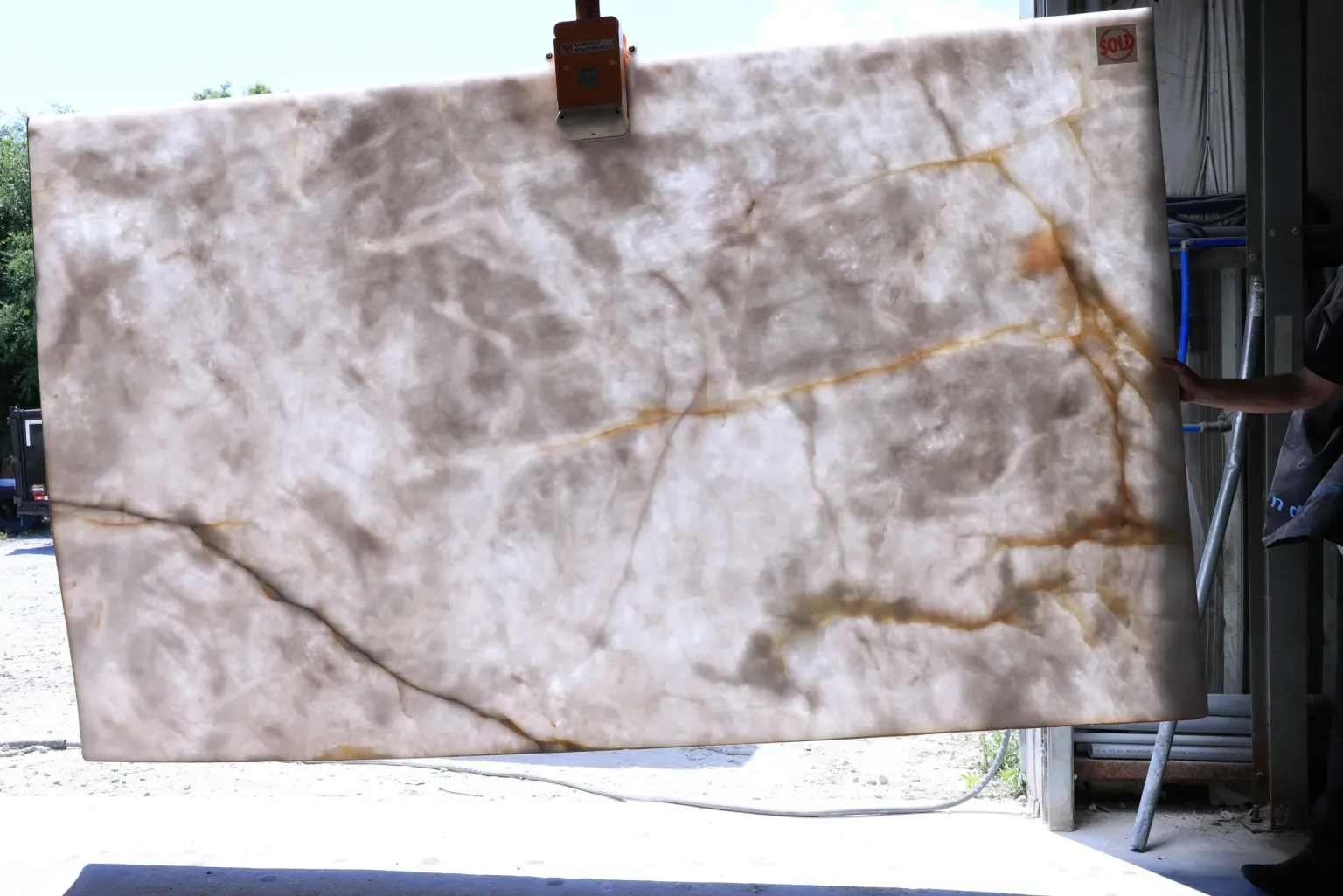
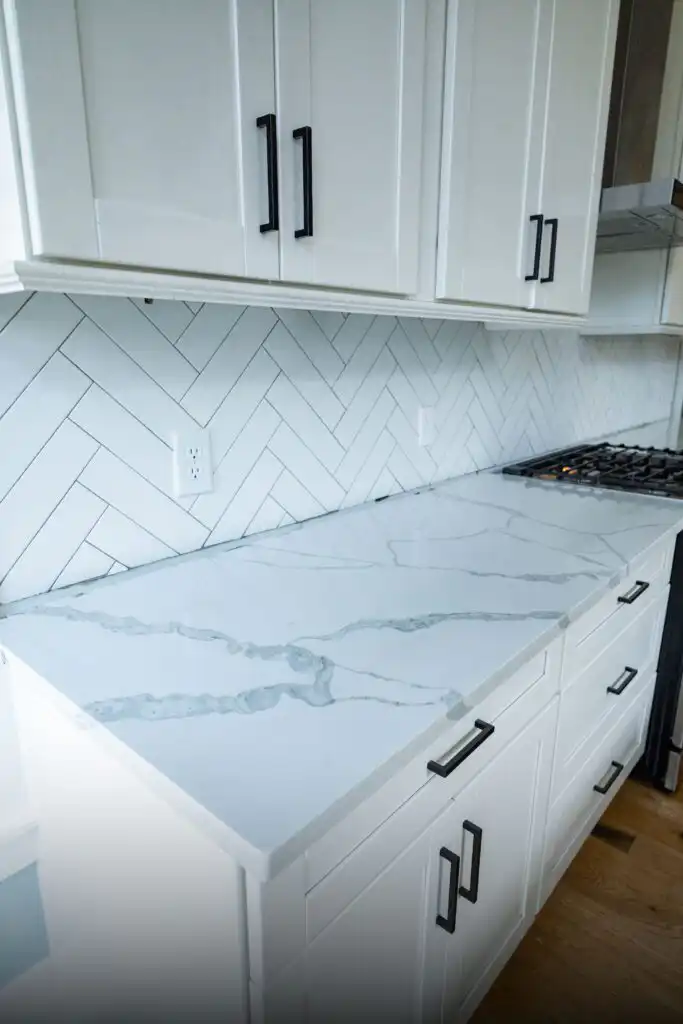
The look is predictable, within limits. An engineered pattern is designed, so a long run or several rooms can share one color in a way natural stone rarely allows. Cambria still cautions that samples are small cuts and may not show every characteristic of the installed product, so see a full slab of any veined design.
What you give up
Heat is the first limit. None of the major makers publishes a safe temperature; they ask for a trivet or a board under hot pans and long-running appliances. Our answer on how much heat quartz can take lists the habits that cause damage.
Sun is the second. An NSI writer who left several engineered slabs outdoors for a few months saw the resin turn yellow. If part of your counter sits in strong sun, read why coastal kitchens often lean on natural stone.
Abrasives are the third. In a 2019 NSI test, scrubbing with Bar Keepers Friend powder left hazy areas on both engineered quartz samples, while the natural stones were unaffected. The right cleaner depends on the brand, and the guides don’t always agree.
Seams are the fourth. Cambria’s own care guide states that its product is not seamless and that pattern and shade changes are visible at the joints. On a veined design, where the joints fall matters; see our notes on stone slab seam placement before approving a layout.
Worth it for you? Follow the row that matches your kitchen
| If your kitchen… | Quartz is… | Why |
|---|---|---|
| Is indoors, out of strong sun most of the day | A good fit | The resin’s weak spot, UV, never comes into play |
| Needs one even color across a long run or several rooms | A good fit | An engineered pattern repeats from slab to slab |
| Belongs to someone who never wants to think about sealer | A good fit | Cambria and MSI both say no sealing, ever |
| Sees pans go straight from burner to counter | Worth it only with a trivet habit | Every maker asks for a barrier under hot cookware |
| Has a household that reaches for scouring powder | A second thought | Abrasives hazed both quartz samples in the NSI test |
| Extends to a porch, a piazza or an outdoor bar | The wrong product | Resin can yellow in sunlight (NSI) |
| Wants a one-of-a-kind slab with natural depth | The wrong product | That is what quarried stone is for |
If most of your rows land in the first three, quartz will likely feel worth it for years. If two or more land at the bottom, compare it with natural stone in the same visit; our side-by-side of quartz and quartzite is a good place to start.
Resale: does quartz add value?
No association data singles quartz out. The National Association of Home Builders buyer survey asks about granite or natural stone, not quartz, and condition and color tend to matter more than the material. Our look at which countertops help at resale goes through that data if you plan to sell within a few years.
What decides the price of a quartz top
We don’t publish prices, because material costs move and a number on a page goes stale. A quartz quote is built from a handful of decisions, and knowing them lets you control it.
- The brand, collection and color you choose, which is the starting point of every quartz quote.
- How many slabs the layout needs, which follows from the square footage and from any vein matching across pieces.
- Thickness and edge profile.
- Cutouts for the sink, cooktop and any outlets.
- Extras such as a full-height backsplash or a waterfall end on the island.
- Removing the old tops and getting slabs into the room.
Decide in one showroom visit
Bring a cabinet sample or a paint swatch, a photo of where the afternoon sun lands, and a list of the appliances that live on your counter. Ask for the care guide and warranty of any brand you consider, and look at a natural slab or two before you leave.
When you know your layout, send it over for a quote on quartz countertops in Charleston, or call (843) 284-7866 to set a time at our North Charleston showroom.