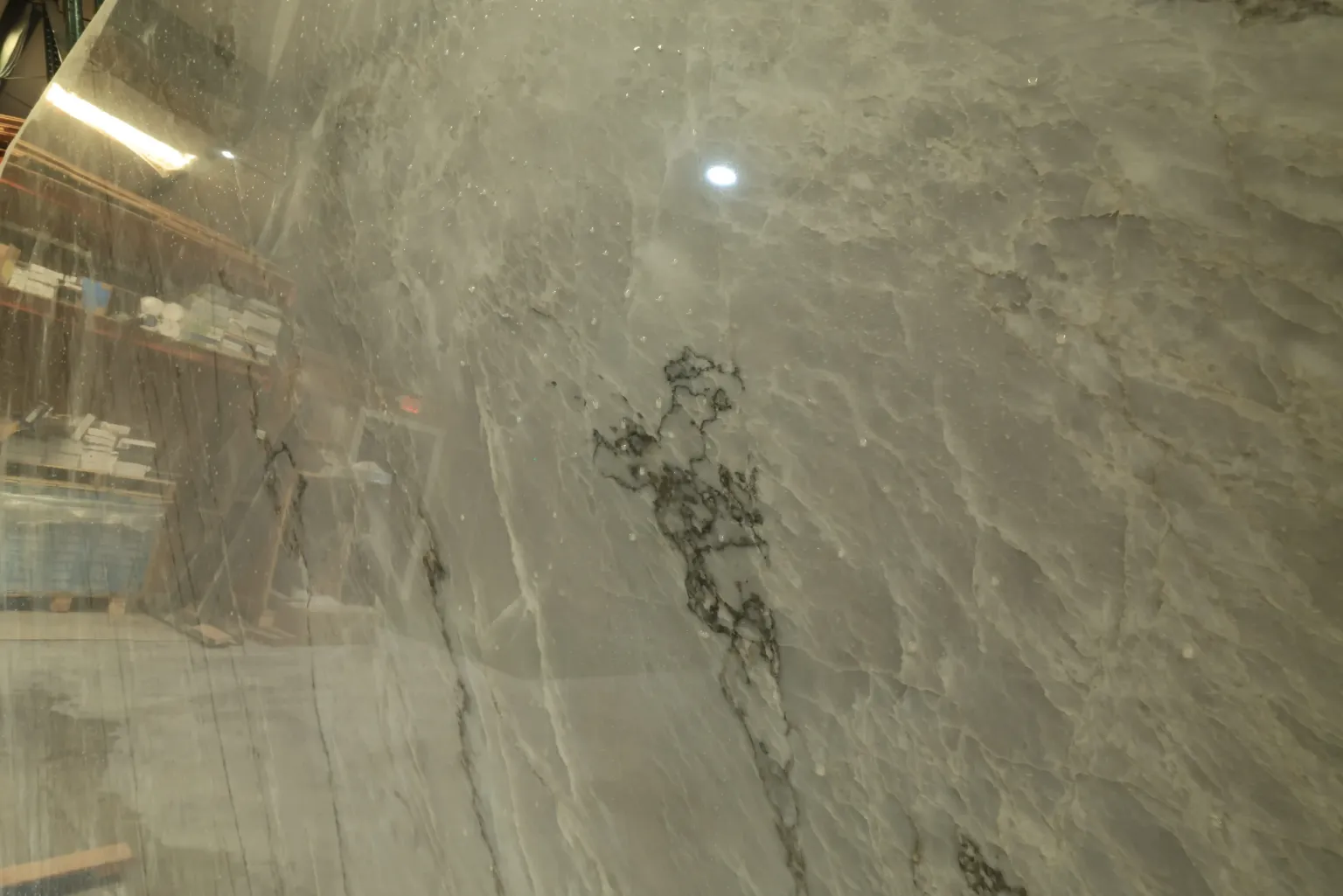
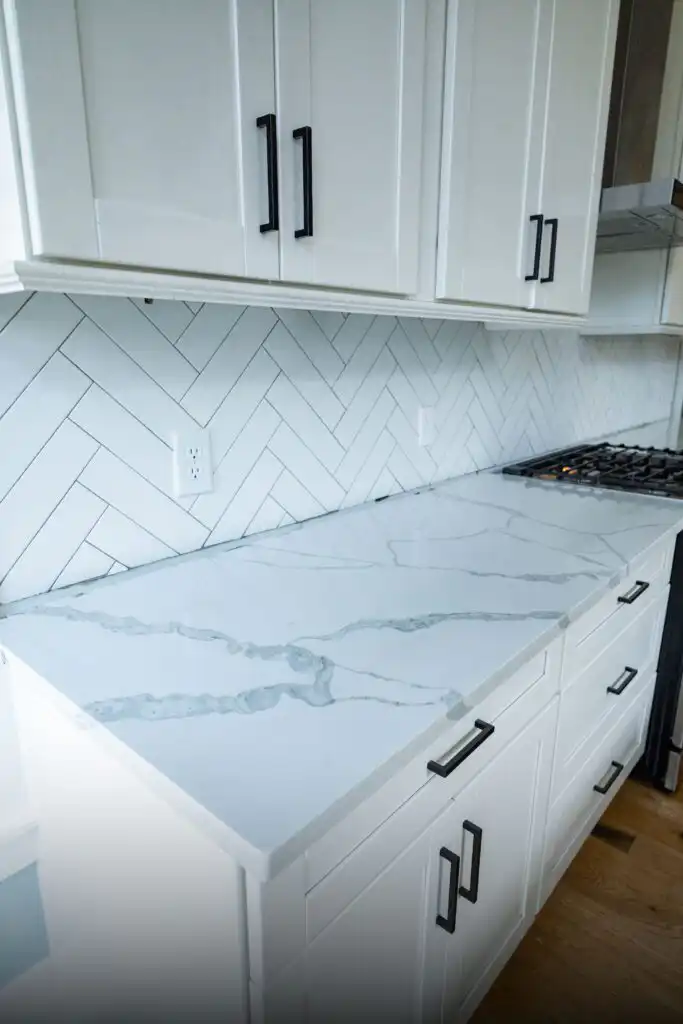
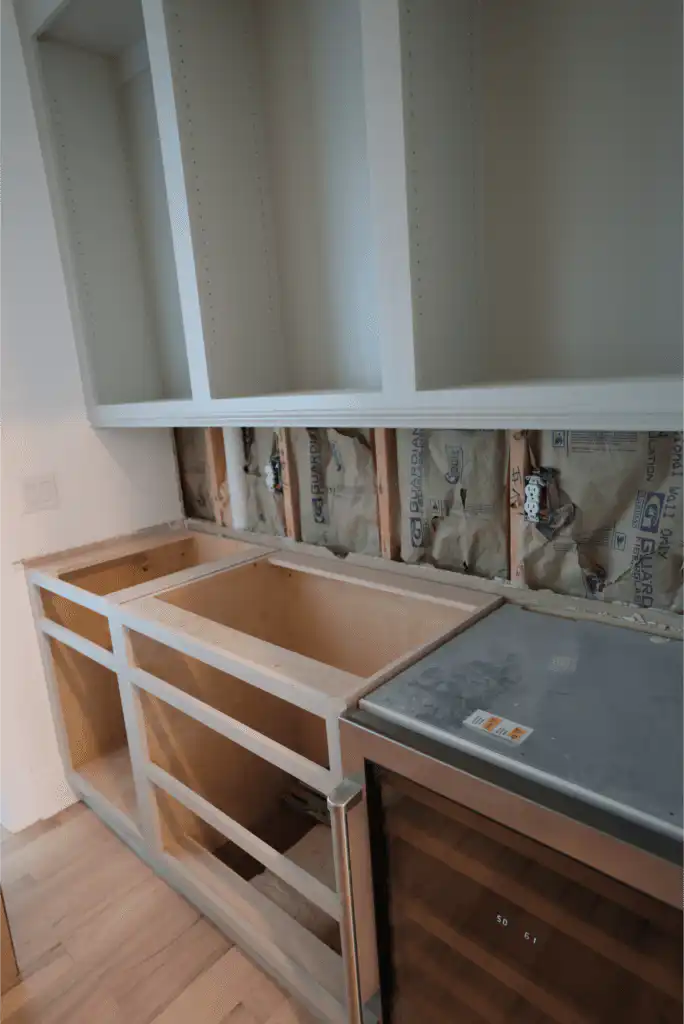
Luxury bathroom stone is natural stone used at the scale of architecture: whole slabs instead of tiles, veins matched across the seams, and a finish chosen for the way light lands on it. The stone’s name matters, yet in a high-end bath the layout, the finish and the specific slab carry just as much of the effect.
Below are the moves that define that look, what each one asks of the project, and the stones from our own collection that suit them. Every stone named here is one we show at full size, so you can browse natural stone slabs in Charleston before deciding which move fits your room.
Full-height slabs where tile used to go
The first sign of a high-end bath is how few joints you see. A wall clad in two or three slabs reads as one surface, and the veining runs across it the way it ran through the block. Tile, however beautiful, breaks the pattern every few inches.
Scale is the condition. The Natural Stone Institute’s guide to bookmatching recommends matched slabs where there is a large expanse to cover, such as a wall or an oversized shower, and warns against cramming them into surfaces broken by corners and cutouts. A slab wall rewards a simple plan: one niche, aligned with a seam, rather than three.
Behind the beauty sits a technical layer of slab thickness, waterproofing and seam placement around valves. We keep that in a separate guide to the technical side of slab shower walls.
Bookmatched and diamond-matched layouts
Two neighboring slabs, opened like a book and polished on the faces that touched, carry nearly mirror-image patterns. Set side by side, they form the butterfly figure most people associate with a luxury bath. The same Institute article describes a four-piece version, called diamond-matching or quad-matching, that produces a diamond-shaped figure.
It also describes a quieter variation: a vertical slab on the wall mated to its twin on a horizontal surface such as a tub surround, so the pattern seems to wrap around you. That is the move to plan when a freestanding tub sits against a stone wall.
Matching starts at the stone yard, not in the shop. The Institute notes that bookmatched slabs are usually processed at the sawyer, that a match always needs two slabs even for a small area, and that losing one slab to breakage can cost the whole layout. Plan for lead time and reserve the pair early.
Stones with strong direction show the effect best. Our Sequoia Brown quartzite page notes that its linear veining reads beautifully in long bookmatched applications. For the selection and layout steps, see how we approach matching slabs so the pattern flows across the seam.
Stone that carries light
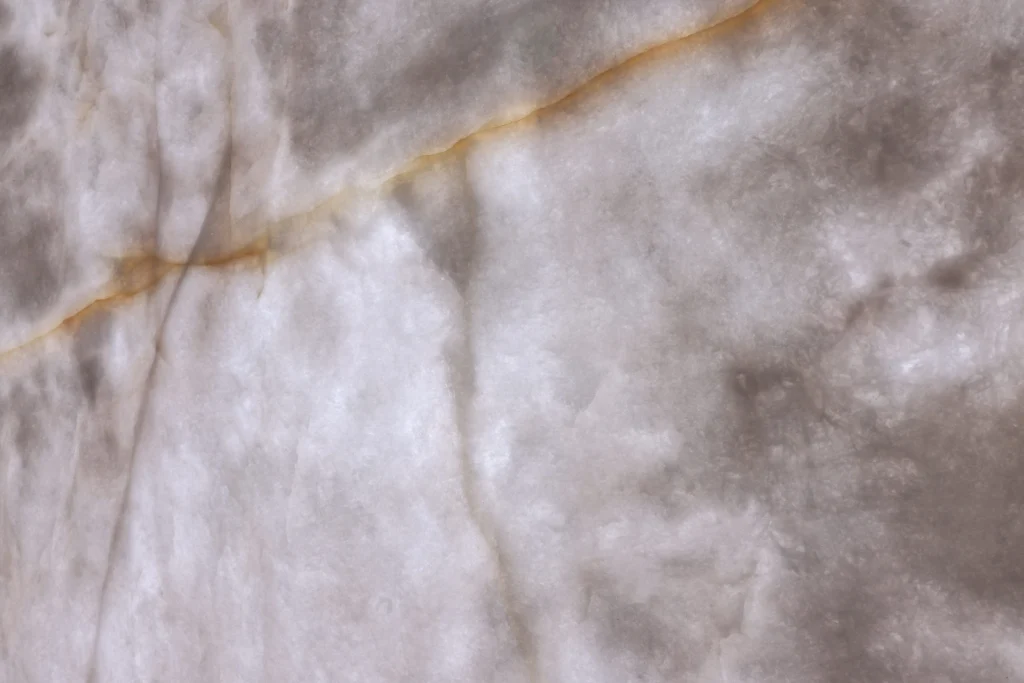
The close-up above is Crystallo, a quartzite from our collection with a semi-translucent body. Our Crystallo quartzite page notes that it glows when backlit and names master baths with backlit shower walls among the uses we carry it for.
Look at the amber vein and the cloudy depth around it: with light behind the slab, that is what comes forward.
Backlighting is a design decision that starts before fabrication. The wall needs space for the light source, the electrician needs the plan early, and the slab has to be chosen for how it looks lit, not only by day. Our page lists the honest considerations too: slabs sell quickly, and the stone is best shown with proper lighting design.
A vanity that reads as sculpture
A statement vanity is usually a matter of thickness and continuity. A thick edge built up from the same stone, sides that drop to the floor, or the vanity slab running up the wall behind the faucets all turn a counter into a piece of furniture.
Each of those moves adds fabrication: mitered corners have to align the veining, and a wall-height backsplash has to be laid out with the vanity top so the pattern continues. When the vanity is the focal point, choose the slab for the section that will sit at eye level, not for the slab as a whole.
Six stones from our showroom that suit a high-end bath
These descriptions come from our own material pages, including what each page lists as a consideration:
- Crystallo: translucent and backlightable, for the wall or vanity meant to glow.
- Black Forest: near-black with fluid white veining, listed for vanities and feature walls. Its page notes it shows fingerprints more than light stones and is best in well-lit spaces.
- Taj Mahal quartzite: creamy champagne with soft veining, described as at home in a transitional bath, with low maintenance and periodic sealing.
- Mont Blanc quartzite: white with gray, charcoal and occasional lilac veining, listed for vanities and described as harder than marble.
- Sequoia Brown quartzite: linear, wood-like bands, listed for feature walls and at its best bookmatched.
Finishes that read as luxury, and where each belongs
Polished stone gives the deepest color and the sharpest veining, which is why it dominates vanity tops and feature walls. On a shower wall it also shows water spots more readily, so it pairs best with a daily squeegee.
Honed stone is matte and softer to the eye. Because etching dulls a polish, a dull mark stands out less on a surface that was never glossy, and a matte face grips better underfoot.
A designer quoted by the Natural Stone Institute usually specifies honed stone for bathroom floors. A textured or leathered surface adds depth you can feel and can disguise fingerprints.
Many high-end bathrooms use more than one finish on the same stone: polished on the vanity, honed on the floor. For the trade-offs on marble specifically, read our notes on honed and polished marble.
How designers choose stone for a high-end project
- See full slabs, not samples. A sample shows color; only the slab shows where the movement goes.
- Ask for slabs cut in sequence from the same block. The Institute explains that consecutively polished slabs are usually numbered so neighbors can be bought together.
- Reserve enough for the whole room, including the pieces that must match.
- Approve a mock-up or dry-lay of the layout and sign off on where each seam falls before cutting.
- Settle plumbing, lighting and niche locations before templating, so cutouts land where the pattern allows.
If you are still deciding which stone belongs in which part of the room, start with our guide to choosing stone for each zone of the bathroom.
Which kind of luxury is yours?
Some high-end bathrooms are quiet: one calm slab running from vanity to tub, honed underfoot. Others are theatrical: a bookmatched wall, a glowing quartzite, a black vanity with white veins. Both are luxury; they simply ask for different stones and a different layout plan.
Decide which one you are after, then come see the candidates side by side. Visit the showroom in North Charleston with your floor plan, and we will pull the slabs that suit the move you have in mind.