
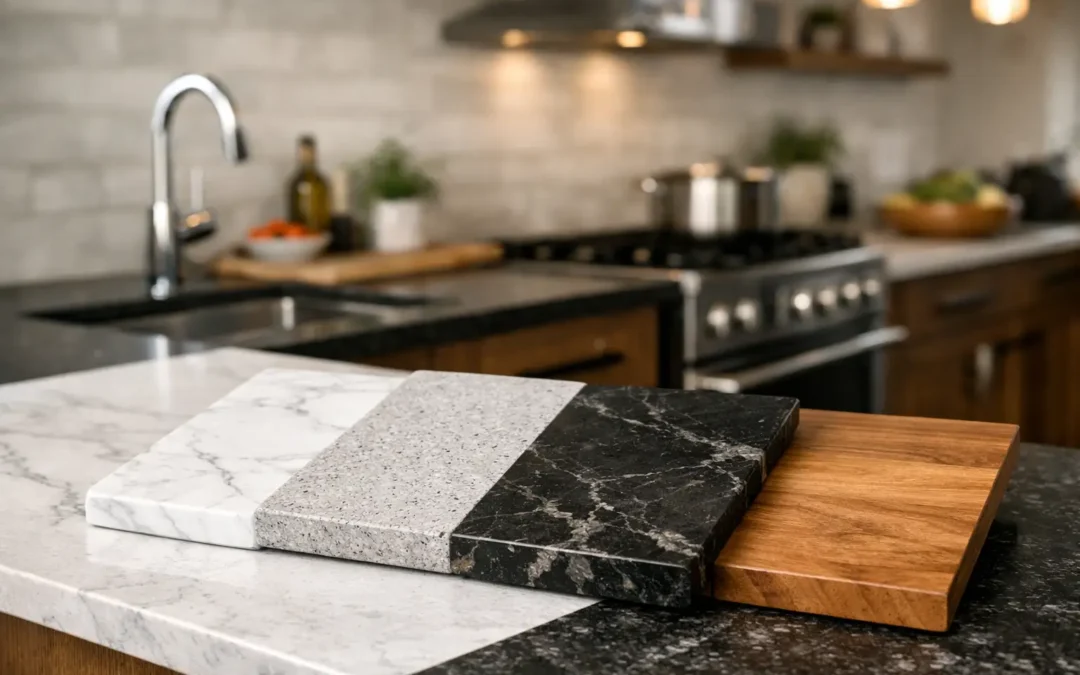
A kitchen that gets real use asks a lot from its countertops. Hot pans get set down in a rush, grocery bags slide across the surface, kids lean in with homework, and spills rarely wait. If you are comparing the best countertop materials for busy kitchens, the right choice is not just about looks. It is about how the material performs on your busiest mornings, your most crowded weekends, and the years in between.
For most high-traffic kitchens, the decision usually comes down to quartz, quartzite, granite, and, in some cases, marble. Each has a different balance of maintenance, durability, pattern movement, and price. The best fit depends on how you cook, how much maintenance you want to take on, and how important a specific aesthetic is to the finished space.
What busy kitchens actually need from a countertop
A busy kitchen puts pressure on a surface in several ways at once. Daily wear is the obvious one, but the more important question is how the material responds over time. Does it resist staining from coffee, oil, wine, and tomato sauce? Does it handle frequent cleaning without losing its finish? Can it tolerate the occasional impact from cookware or a dropped utensil?
There is also the design side of the decision. Countertops take up a large visual footprint, so the material has to work hard aesthetically while still earning its place functionally. A dramatic slab may be worth a bit more care in one home, while another household needs something forgiving and low-maintenance above all else.
Best countertop materials for busy kitchens: the leading options
Quartz
Quartz is often the first material we discuss with homeowners who want a polished look with less day-to-day upkeep. As an engineered surface, quartz is nonporous, which means it resists staining better than many natural stones and does not require sealing. For families, avid cooks, and households that want simple maintenance, that is a meaningful advantage.
Quartz is also consistent. If you are aiming for a clean, contemporary kitchen or want a specific color direction, engineered slabs offer predictability in tone and pattern. That makes design coordination easier, especially when cabinetry, backsplash, and flooring all need to work together.
The trade-off is heat tolerance. Quartz performs well in everyday use, but it is not the material we recommend treating like a landing zone for hot cookware straight from the oven. Trivets and pads are still part of responsible use. Some clients also prefer the movement and variation of natural stone, which quartz can emulate but not fully replicate.
Quartzite
Quartzite is one of the strongest options for homeowners who want natural beauty without giving up durability. It is a natural stone, prized for its depth, character, and often light, elegant appearance. Many people are drawn to it because it can deliver the airy look associated with marble while offering greater resistance to scratching and etching.
In a busy kitchen, quartzite performs exceptionally well when properly selected and fabricated. It handles wear better than softer stones and generally stands up well to active cooking spaces. Depending on the specific slab, sealing may still be recommended, so it is not completely maintenance-free, but for many households the upkeep is very manageable.
The key with quartzite is expert guidance. Not every slab behaves the same way, and some stones sold under similar names can vary in density and performance. This is where showroom selection and material knowledge matter. Seeing the slab in person and understanding its actual properties is far more useful than making a decision from a small sample.
Granite
Granite remains a reliable choice for high-use kitchens because it combines durability, natural variation, and strong heat resistance. It has earned its reputation over years of real-world performance. For clients who cook often, entertain regularly, or simply want a surface that feels proven, granite still deserves serious consideration.
It tends to resist scratches well and handles everyday kitchen demands with confidence. When sealed properly, it also performs well against common household spills. Granite offers a broad visual range, from subtle patterns to more pronounced movement, so it can fit both traditional and more updated spaces.
The trade-off is that granite is a natural material, so each slab is unique and some varieties are more porous than others. That means the right granite is not just about color. It is also about selecting a slab that suits your maintenance expectations and the way the kitchen will be used.
Marble
Marble is not usually the first recommendation for the busiest family kitchen, but that does not mean it is the wrong choice. It means the choice should be intentional. Marble brings softness, depth, and a timeless look that many other materials spend a lot of effort trying to imitate.
In active kitchens, the main consideration is wear. Marble is more prone to etching and scratching than quartzite, granite, or quartz. Acidic ingredients like lemon juice or vinegar can leave marks, and frequent use will create a lived-in patina over time. For some homeowners and designers, that aging is part of the appeal. For others, it becomes a source of frustration.
If you love marble, the better question is not whether it is perfect. It is whether you will enjoy it as it develops character. In the right home, especially one where design priorities lead the conversation, marble can still be the right answer.
How to choose the best countertop material for your kitchen
The best countertop materials for busy kitchens are rarely chosen by trend alone. The better approach is to start with your habits.
If your kitchen sees constant activity and you want the least maintenance, quartz is often the most straightforward fit. If you want the beauty of natural stone with excellent durability, quartzite is a strong contender. If you prefer a proven natural material with broad design flexibility and dependable performance, granite makes sense. If your project is design-led and you are comfortable with patina, marble may still be worth specifying.
It also helps to think beyond the slab itself. Edge profile, finish, color depth, and layout all affect how the countertop performs visually in daily life. A polished finish may brighten a room and sharpen contrast, while a softer finish can create a more relaxed look and help disguise some fingerprints or smudging. Large islands, waterfall edges, and full-height backsplashes also raise the importance of slab selection, because movement and veining become more visible.
Why fabrication matters as much as the material
A great slab can be undermined by poor fabrication, and a well-chosen material only performs as well as it is measured, cut, and installed. Busy kitchens need precise seams, thoughtful sink and cooktop cutouts, and edge work that feels intentional. These are not finishing details to treat lightly. They shape both durability and the final appearance.
This is one reason many homeowners and design professionals prefer a partner who can guide material selection and handle fabrication under the same roof. It reduces guesswork and keeps accountability clear from slab selection through installation. At Stonhaus Design, that process is built around helping clients choose with confidence, then executing the details with precision.
Common mistakes to avoid
One of the most common mistakes is choosing by image alone. A material may look perfect online and behave very differently in a real kitchen. Another is assuming all natural stones perform the same way. They do not. Even within one category, porosity, movement, and hardness can vary.
It is also easy to overcorrect toward maintenance and ignore aesthetics, especially in a major remodel. A kitchen should work hard, but it should also feel right in the home. The strongest projects usually balance both. They choose a material that supports daily life without sacrificing the design language of the space.
Finally, do not underestimate the value of seeing full slabs in person. Samples are useful, but they cannot show the full story of tone variation, veining direction, or overall character. For a surface this important, in-person review gives you a much clearer basis for decision-making.
The right countertop should make your kitchen easier to live in and better to look at every day. When performance, design, and fabrication are aligned, the result feels less like a compromise and more like a smart long-term choice.