
A countertop decision usually feels simple until you start comparing slabs in person. Then the details matter fast – how it handles heat, whether it stains, how consistent the pattern looks, and what will still feel right five years from now. If you are weighing granito vs quartzo para bancada cozinha, the better choice is not universal. It depends on how you cook, the look you want, and how much maintenance you are willing to take on.
At a glance, granite tends to win on natural character and heat resistance. Quartz tends to win on consistency, low maintenance, and predictability. Both can be excellent kitchen countertop materials when they are selected well and fabricated with precision. The mistake is choosing based on a single talking point instead of how the material will perform in your actual kitchen.
Granito vs quartzo para bancada cozinha: what really changes day to day
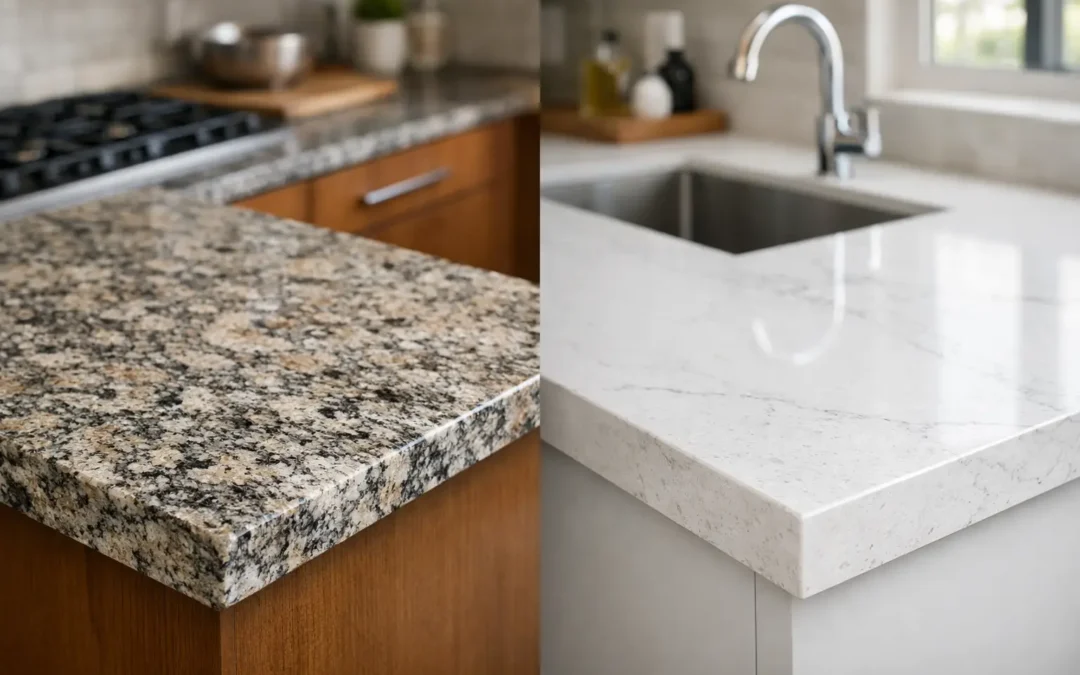
The biggest difference between granite and quartz is what they are. Granite is a natural stone cut from the earth, so every slab has its own movement, mineral variation, and color shifts. Quartz is an engineered surface made from crushed stone and resins, designed to create a more controlled appearance and performance profile.
That difference affects the way your kitchen feels. Granite often reads as more organic and one-of-a-kind. It can bring depth, variation, and a stronger sense of natural materiality. Quartz usually feels more uniform and intentional, which many homeowners and designers prefer in clean, modern spaces where continuity matters.
From a use perspective, quartz is often the easier material to live with if you want less upkeep. Granite asks a little more of you, but many clients consider that a fair trade for the look of real stone.
Durability is not just about hardness
Both materials are durable enough for busy kitchens, but they do not respond to wear in the same way.
Granite
Granite is naturally hard and handles daily use very well. It is especially strong against heat, which is one reason serious cooks often lean toward it. A hot pan is less likely to create an immediate problem on granite than on quartz, although trivets are still the safer habit for any premium surface.
Because granite is a natural material, its porosity varies by slab. Some darker granites are denser and more forgiving, while lighter or more porous options may need more attention to sealing and spill cleanup. When sealed properly, granite performs very well, but it is not maintenance-free.
Quartz
Quartz is also highly durable for everyday use and tends to resist scratches and stains well. Its key advantage is consistency. You generally know what you are getting in terms of maintenance and appearance.
Where quartz is less forgiving is heat. The resin content that helps make quartz non-porous also makes it more vulnerable to high temperatures. Setting a hot pot directly on the surface can cause damage, including discoloration or thermal shock. In homes where cooking is frequent and fast-paced, this is worth taking seriously.
So if your priority is simple durability, the answer is nuanced. Granite is stronger against heat. Quartz is easier against routine spills and staining.
Maintenance: the real lifestyle question
For many homeowners, maintenance is the deciding factor in the granite vs quartz conversation.
Granite usually needs periodic sealing to help protect against moisture and stains. How often depends on the specific slab and how heavily the kitchen is used. Day to day, that means wiping up oil, wine, citrus, or tomato-based spills without letting them sit too long. None of this is difficult, but it does require a little awareness.
Quartz is non-porous, so it does not require sealing. That makes it appealing in households that want a more straightforward routine. Soap, water, and a soft cloth are usually enough for regular cleaning. If your goal is a surface that asks less from you over time, quartz generally has the edge.
That said, low maintenance should not be confused with indestructible. Quartz still needs sensible care, particularly around heat and harsh chemicals. Granite needs more upkeep, but not an unreasonable amount when the material is well chosen and professionally finished.
Style and design impact
This is where the choice often becomes emotional, and that is not a bad thing. A kitchen countertop is a functional surface, but it also sets the tone for the room.
Why people choose granite
Granite offers natural variation that cannot be replicated exactly. Veining, speckling, movement, and mineral depth give it a layered look that many clients associate with authenticity and luxury. In kitchens where you want the countertop to feel distinctive rather than standardized, granite has a strong advantage.
It also pairs especially well with warmer cabinetry, natural wood tones, and homes where texture matters. Even in modern kitchens, the right granite can add visual depth without looking busy.
Why people choose quartz
Quartz appeals to clients who want control. Patterns are more repeatable, colors are more consistent, and it is easier to align the surface with a very specific design direction. If you want a bright white kitchen, a soft concrete look, or a marble-inspired pattern with less upkeep, quartz can be the more practical fit.
This makes quartz especially useful in projects where multiple surfaces need to feel coordinated, or where the client wants fewer surprises between showroom sample and installed result.
Cost: what affects the number
There is no honest one-size-fits-all answer on price. Both granite and quartz come in a wide range of tiers, and the final cost is shaped by more than the slab itself.
Material rarity, slab thickness, edge profile, cutouts, sink details, backsplash choices, and installation complexity all influence the budget. Some entry-level granites can be very competitive on price. Some premium granites can exceed many quartz options. The same is true in reverse – designer quartz collections can sit well above basic granite selections.
For most projects, the better question is not which material is always cheaper. It is which one gives you the right balance of look, performance, and long-term satisfaction at your budget level. A material that saves money upfront but feels like a compromise every day is rarely the best value.
When granite makes more sense
Granite is often the better fit if you cook frequently, want stronger heat resistance, and appreciate the individuality of natural stone. It also makes sense when your design calls for movement and character that feels genuinely organic rather than manufactured.
It is a strong choice for homeowners who do not mind periodic sealing and want a countertop that feels materially distinct. For many high-impact kitchens, that authenticity is exactly the point.
When quartz makes more sense
Quartz usually makes more sense when you want a cleaner maintenance routine, a more uniform appearance, and a surface that fits a highly controlled design palette. It works particularly well for busy households that want fewer care requirements and for projects where consistency across slabs matters.
If your kitchen is more about convenience and polished everyday usability than natural variation, quartz is often the easier yes.
Granito vs quartzo para bancada cozinha for families, entertainers, and design professionals
Different users notice different strengths. Families with young children often appreciate quartz because spills are constant and easy cleanup matters. Homeowners who entertain and want a dramatic focal point often gravitate toward granite because it brings natural depth that photographs and lives beautifully. Designers and contractors usually look at the bigger picture – cabinet tone, lighting, floor material, edge details, and how the slab will read across the full space, not just a sample.
This is why showroom selection matters. A small sample can tell you color, but not always movement, scale, or how a seam will disappear or stand out. The right decision is easier when you can compare full materials, ask practical questions, and align the slab with fabrication details from the start.
At Stonhaus Design, that consultative part of the process is what helps clients avoid expensive second-guessing. A premium surface should look right, perform well, and feel considered from selection through final installation.
The better question is not which material is best
The better question is which material is best for your kitchen. If you want natural beauty, stronger heat resistance, and a one-of-a-kind surface, granite is hard to beat. If you want easier maintenance, visual consistency, and a more predictable day-to-day experience, quartz is often the smarter choice.
A good countertop decision should reduce friction, not create it. Choose the material that fits the way you live, the way you cook, and the way you want your kitchen to feel every time you walk into it.