
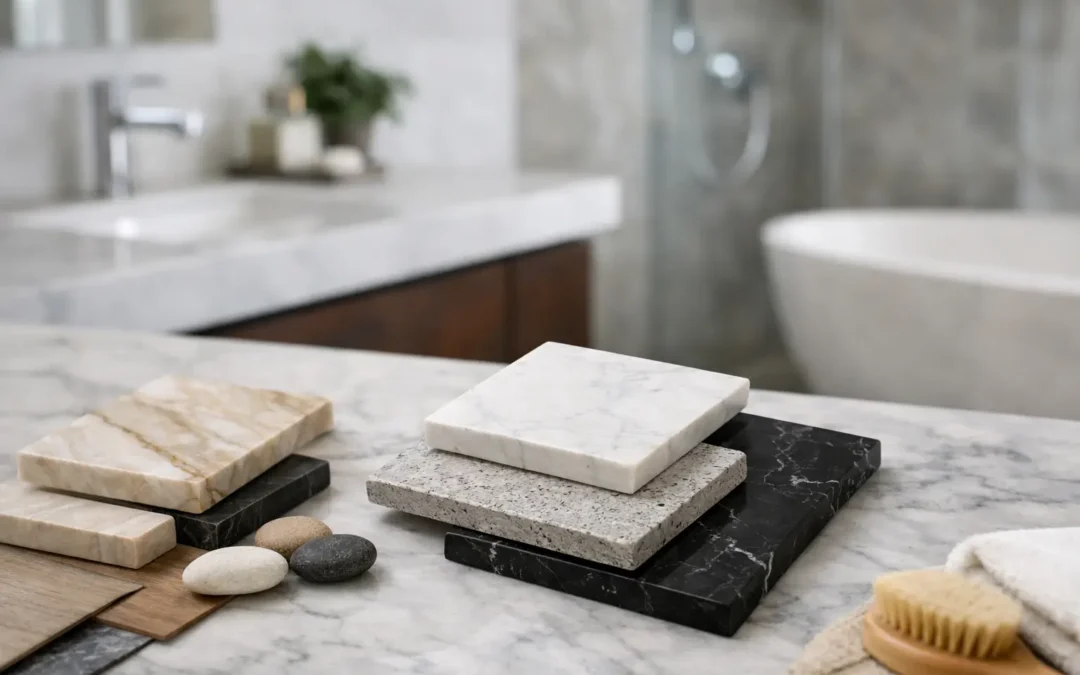
A bathroom can look polished in a sample tray and still feel wrong once it is installed. The reason is usually not the stone itself. It is choosing a surface based only on color, without weighing moisture, daily use, lighting, edge details, and the level of maintenance you are actually comfortable with. That is why understanding how to choose bathroom stone surfaces matters before fabrication begins.
In bathrooms, stone has to do more than look beautiful. It has to perform in humidity, hold up around sinks and cosmetics, and work with the scale of the room. A dramatic slab may be perfect for a primary vanity and completely impractical for a small guest bath. The right decision usually comes from balancing design goals with the realities of use.
How to choose bathroom stone surfaces by area
Not every bathroom surface asks the same thing from the material. A vanity top, shower wall, tub surround, and backsplash each have different demands. That is where many expensive mistakes start.
For vanity tops, most homeowners want a surface that feels refined but does not become high-maintenance. This is often where quartz, quartzite, granite, and some marbles enter the conversation. The sink cutout, faucet holes, edge profile, and backsplash height all affect the final look, so the material has to suit both the style and the fabrication details.
For shower walls and tub surrounds, water exposure becomes a bigger factor. Porosity, sealing needs, and finish matter more here than they might on a dry wall application. Some natural stones create a striking spa-like effect in these areas, but they need to be selected with a clear understanding of upkeep.
For accent walls or niche details, the visual character of the stone can take the lead. Veining, movement, and bookmatching may matter more than resistance to a dropped curling iron. These are often the moments where a project can become more custom and more memorable.
Start with the material, not just the pattern
Marble is often the first stone people fall in love with. It brings softness, movement, and a sense of luxury that is hard to imitate. In a bathroom, marble can be an excellent choice for vanities, walls, and feature applications. The trade-off is that it is more prone to etching and staining than some other options. If you use strong skincare products, hair dye, or acidic cleaners, that matters.
Granite tends to offer better resistance to staining and wear, which makes it practical for busy bathrooms. It can range from subtle to bold, though many clients looking for a light, airy bathroom now lean toward stones with a cleaner, more contemporary pattern.
Quartzite is a strong option when you want the elegance of natural stone with better durability than marble in many applications. It often has beautiful veining and depth, but not all quartzites perform the same way. Some are denser and more resilient than others, so proper identification matters.
Quartz, as an engineered surface, appeals to clients who want consistency, low maintenance, and predictable performance. It does not require the same sealing routine as natural stone, and it is available in looks that range from quiet solid tones to marble-inspired designs. The trade-off is aesthetic preference. Some clients want the uniqueness of a natural slab, while others prefer the controlled look of engineered material.
Think honestly about maintenance
The best stone for your bathroom is not the one with the best showroom reaction. It is the one you will still be happy with two years later.
If you want a low-maintenance vanity in a family bathroom, quartz or a well-selected granite may make more sense than a soft marble. If you are creating a primary bath where the visual impact is the priority and you are comfortable with periodic sealing and more thoughtful care, marble or quartzite may be exactly right.
This is where honest guidance matters. There is no single best material for every bathroom. There is only the right fit for your routine, your design goals, and your tolerance for upkeep.
Finish changes performance and appearance
Polished stone reflects light and tends to make colors and veining appear sharper. It is a popular choice for vanity tops because it feels clean and finished. It can also help smaller bathrooms feel brighter.
Honed finishes offer a softer, more understated look. They are especially appealing in bathrooms aiming for a relaxed, natural palette. On some materials, a honed finish may show water marks or handling differently than a polished finish, so the decision should not be purely aesthetic.
Textured finishes can work on feature walls or certain design-driven applications, but they are less common for areas that need easy cleaning. Bathrooms demand practicality, and surfaces with too much texture can collect residue more easily.
Size, layout, and slab movement matter more than people expect
A small powder room and a large primary bath do not need to be approached the same way. In compact spaces, heavy movement or dark stone can overpower the room unless it is balanced carefully. In larger bathrooms, quieter materials can sometimes feel flat if there is no contrast in cabinetry, lighting, or hardware.
Slab scale also matters. A stone with broad veining may look spectacular on a full slab and lose its impact on a small vanity cut. Another material with finer patterning may be more successful in a tighter application. This is one reason seeing full slabs in person is so valuable. Samples help with color, but they rarely tell the whole story about movement and variation.
Match the stone to the style of the bathroom
If the bathroom design is tailored and architectural, a clean quartz or a restrained quartzite can create the right level of sophistication. If the room leans classic, marble remains a natural fit. For organic or coastal interiors, lighter quartzites, soft granites, and select natural stones with subtle movement often work beautifully.
Hardware finishes, cabinet color, wall tile, and even mirror shape influence the right stone choice. A surface should not be selected in isolation. It has to connect the rest of the room.
That is why the strongest projects usually come from coordinated decision-making rather than last-minute slab shopping. When the stone is chosen as part of the full design, the result feels intentional instead of pieced together.
How to choose bathroom stone surfaces without costly surprises
The most common issues are not dramatic failures. They are smaller disappointments that could have been avoided. A vanity top may stain more easily than expected. Veining may not land where the client imagined. A backsplash seam may be more visible than planned. An edge profile may feel too heavy once installed.
To reduce that risk, ask practical questions early. Where will seams fall? How will the sink cutout affect the pattern? Is the material appropriate for shower use? What finish is easiest to maintain in this room? Does the slab you selected have natural variation that should be reviewed before cutting?
Working with a team that handles both selection and fabrication can simplify these decisions. It creates better continuity between what you choose in the showroom and what gets installed in the home. At Stonhaus Design, that combined approach helps clients move from inspiration to execution with more confidence and fewer guesswork moments.
Budget should include more than the slab
When clients compare materials, they often focus only on square foot pricing. That is understandable, but incomplete. The final investment also depends on fabrication complexity, cutouts, edge work, installation conditions, and whether the design includes full-height splashes, shower walls, or custom details.
A less expensive material can become a more expensive project if the fabrication is intricate. A premium slab can still be the right value if it transforms a focal-point bathroom and performs well over time. Good decisions come from looking at total project value, not just the first line item.
See the material in person before you commit
Stone is visual, but it is also tactile. Light hits a polished marble differently than a honed quartzite. Veining can feel soft in one slab and dramatic in another. Even engineered materials vary in realism and depth.
That is why in-person selection matters, especially for bathrooms where the material is often viewed up close. Photos are useful, but they flatten detail. Seeing the slab yourself gives you a more accurate read on tone, movement, finish, and overall fit with your design.
If you are deciding how to choose bathroom stone surfaces, start by narrowing the application, then compare materials based on maintenance, performance, and the look you want the room to carry every day. The best choice is rarely the trendiest one. It is the one that still feels right once the room is finished, the lighting is on, and real life begins.