
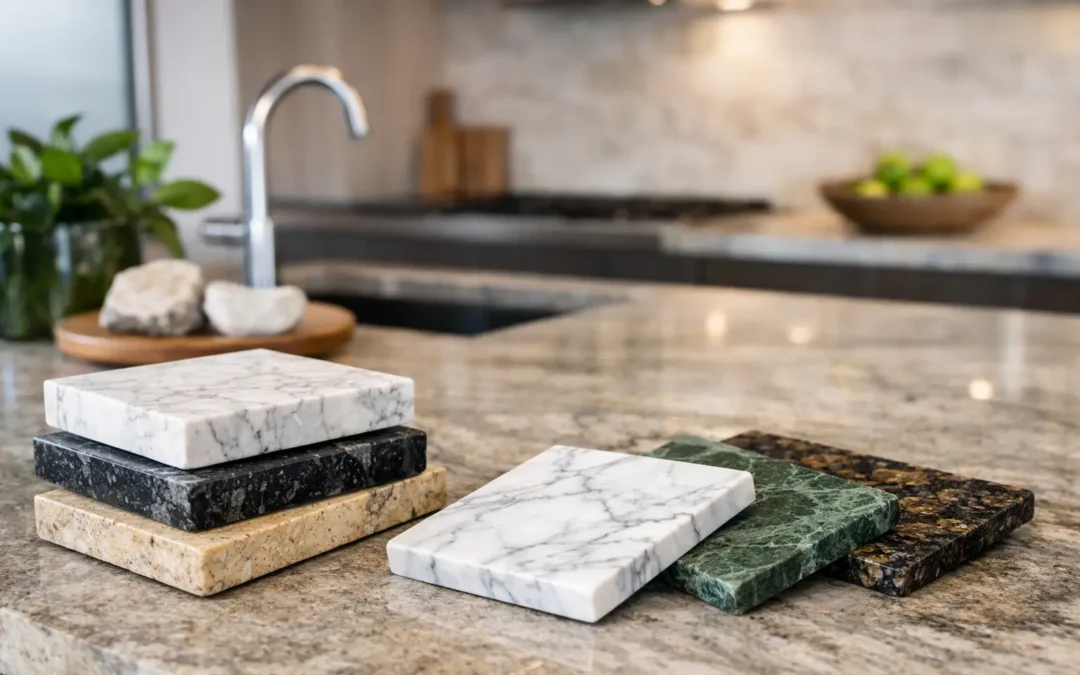
A countertop can look perfect under showroom lighting and still be the wrong choice for how you actually live. That is why a natural stone countertop buying guide matters most before you fall in love with a color or a dramatic veining pattern. The right slab should work just as well with your cooking habits, design goals, timeline, and tolerance for maintenance as it does with your inspiration photos.
Natural stone is one of the few finish materials that can change the feel of a room instantly. It adds depth, variation, and a sense of permanence that manufactured surfaces often try to imitate. But not all natural stone performs the same way, and not every beautiful slab belongs in every kitchen or bath. A smart decision starts with knowing what changes from one stone to another, and what should never be left to guesswork.
What this natural stone countertop buying guide should help you answer
Most buyers are really trying to answer four questions. Will it hold up? Will it fit the look of the space? How much maintenance will it need? And will the final installation look as refined as the sample or slab did in person?
Those questions are connected. A marble vanity may be a confident, low-stress choice in a powder room, while that same material in a busy family kitchen may require more acceptance of etching and wear. A quartzite may deliver the movement a homeowner wants with better hardness, but slab availability, edge details, and layout planning still affect the result. The material matters, but so does fabrication, finish selection, and how carefully the slab is matched to the project.
Start with how the space will be used
The fastest way to narrow your options is to think about function before aesthetics. In a kitchen, ask how often you cook, whether you tend to leave spills sitting, and if the surface will get heavy daily use from children, guests, or frequent entertaining. In a bathroom, think more about cosmetics, water exposure, and whether the room is used lightly or several times a day.
This matters because natural stone is not one category from a performance standpoint. Some stones are denser and more forgiving. Some are softer or more reactive to acids. Some hide wear beautifully because movement and variation are part of their character. Others show every mark more clearly, which can be either a drawback or part of their charm, depending on your expectations.
If you want the lowest level of worry, say that early. If your priority is a one-of-a-kind statement slab and you are comfortable with a little patina, say that too. Honest priorities lead to better recommendations.
Understanding the main natural stone options
Granite remains a strong choice for buyers who want durability, natural variation, and broad design flexibility. Many granites resist scratching and heat well, and they tend to perform reliably in active kitchens. The look can range from subtle and consistent to bold and high movement, so it is often easier than people expect to find a granite that feels current rather than dated.
Marble is chosen for its softness of pattern, elegant veining, and unmistakable luxury. It is especially popular in bathrooms, statement islands, fireplace surrounds, and kitchens where the owner appreciates a lived-in surface. Marble can etch and scratch more easily than harder stones, so it is usually best for clients who understand that beauty and patina often come together.
Quartzite is often where design and performance meet. It can offer the dramatic veining people love in marble while generally providing greater hardness. That said, quartzite is not a shortcut to a maintenance-free surface. Different slabs vary, and accurate material identification matters. This is one reason in-person slab review and expert guidance are so valuable.
Soapstone and other specialty stones have loyal followings for a reason. Soapstone develops character over time and brings a quieter, richer look that works well in both classic and modern settings. Other exotic stones can become a centerpiece of the room, but they need equally careful review for suitability, especially in high-use applications.
Why seeing the actual slab matters
Small samples are useful, but they rarely tell the full story. A sample may show color, but not the full movement, veining direction, mineral variation, or natural fissures that make one slab distinct from another. In premium projects, those details are not minor. They shape the entire visual outcome.
Seeing the full slab gives you a realistic sense of tone, scale, and personality. It also allows better planning for seams, cutouts, waterfall edges, backsplashes, and bookmatching when needed. A stone with strong directional veining can look stunning, but only if the layout is considered early. Without that step, even an expensive slab can feel visually disconnected once installed.
This is where a curated showroom experience makes a difference. Instead of sorting through options blindly, you can compare real materials side by side, ask practical questions, and evaluate each slab with the fabrication plan in mind.
Finish, edge, and thickness are not small details
When buyers think about countertops, they usually focus on stone type and color first. But finish, edge profile, and thickness also influence both performance and style.
A polished finish reflects more light and often brings out depth and color. It tends to feel crisp and formal. A honed finish is softer and less reflective, which many clients prefer in calmer, more contemporary spaces. The trade-off is that certain marks may show differently depending on the material and finish.
Edge profiles affect more than appearance. A simple eased edge feels clean and current. A more shaped profile can support a traditional or transitional design language. Thickness changes visual weight. A slim profile may feel tailored and modern, while a thicker build can create a stronger architectural statement. None of these choices are purely decorative. They need to match the cabinetry, room scale, and intended mood.
Maintenance expectations should be realistic
One of the most common mistakes in countertop selection is expecting every natural stone to behave the same way. They do not. Sealing may be recommended depending on the material. Daily cleaning should be gentle and appropriate for stone. Acidic spills, heat, oils, and abrasion affect different surfaces differently.
That does not mean natural stone is difficult. It means it should be chosen with open eyes. If you want a surface that will age with character, natural stone can be deeply rewarding. If you want zero variation, no patina, and complete uniformity, a different category of surface may be a better fit.
The key is alignment between the material and the owner. A good buying experience does not oversell perfection. It helps you understand what is normal, what is avoidable, and what level of care fits comfortably into your routine.
Fabrication and installation shape the final result
A premium slab can still disappoint if fabrication is careless. Templating accuracy, cut precision, edge finishing, sink reveals, seam placement, and installation quality all affect whether the countertop feels clean, intentional, and high end.
This is especially important for larger islands, dramatic veining, integrated design features, and custom applications beyond standard kitchen counters. Fireplace surrounds, full-height backsplashes, shower details, and feature walls require both design sensitivity and technical control. When selection and fabrication are handled in a coordinated process, there is less room for miscommunication and fewer surprises late in the project.
That end-to-end control is often what gives homeowners and design professionals the most confidence. At Stonhaus Design, that combination of curated slab selection and precision fabrication is central to making the process feel clear, not complicated.
How to choose with confidence
The best decisions usually come from comparing three things at the same time: the look you want, the way the space will be used, and the level of maintenance you are genuinely comfortable with. If one of those gets ignored, regret tends to follow.
Bring cabinet finishes, paint colors, flooring samples, and inspiration images when reviewing materials. Ask how a stone performs in your specific application, not just whether it is popular. Request guidance on seam placement and layout if the slab has bold movement. And if two materials look similar, ask where they differ in daily use, not just price.
A natural stone countertop is not a disposable finish. It becomes part of the architecture of the home. It should feel considered from every angle, from the first showroom visit to the final install.
If you are choosing carefully, you are already on the right track. The goal is not just to pick a beautiful slab. It is to choose one that will still feel right after the boxes are unpacked, the kitchen is busy, and the space begins to live the way it was meant to.