
A countertop can look perfect on installation day and still disappoint a year later if the maintenance is wrong. That is especially true with granite. This guia de manutenção de bancadas em granito was written for homeowners and design professionals who want the surface to keep its depth, polish, and performance without guesswork.
Granite earns its reputation because it is durable, heat resistant, and visually rich. But durable does not mean maintenance-free. Natural stone has variation from slab to slab, different finishes behave differently, and daily habits at home matter more than most people expect. A polished black granite in a busy kitchen will not show wear the same way as a honed light-gray granite in a powder room.
Why granite maintenance is simpler than people think
Most problems with granite do not come from the stone failing. They come from using the wrong cleaner, letting spills sit too long, or assuming every granite surface was sealed the same way. The good news is that maintenance is usually straightforward when the material has been selected well, fabricated properly, and cared for with consistency.
For most households, the routine is simple: wipe regularly, clean with a pH-neutral product, avoid harsh chemicals, and reseal when needed. The nuance is in knowing what “when needed” actually means. Some granites are denser and need sealing less often. Others, especially lighter or more porous slabs, may need closer attention.
Daily care in a practical granite countertop maintenance guide
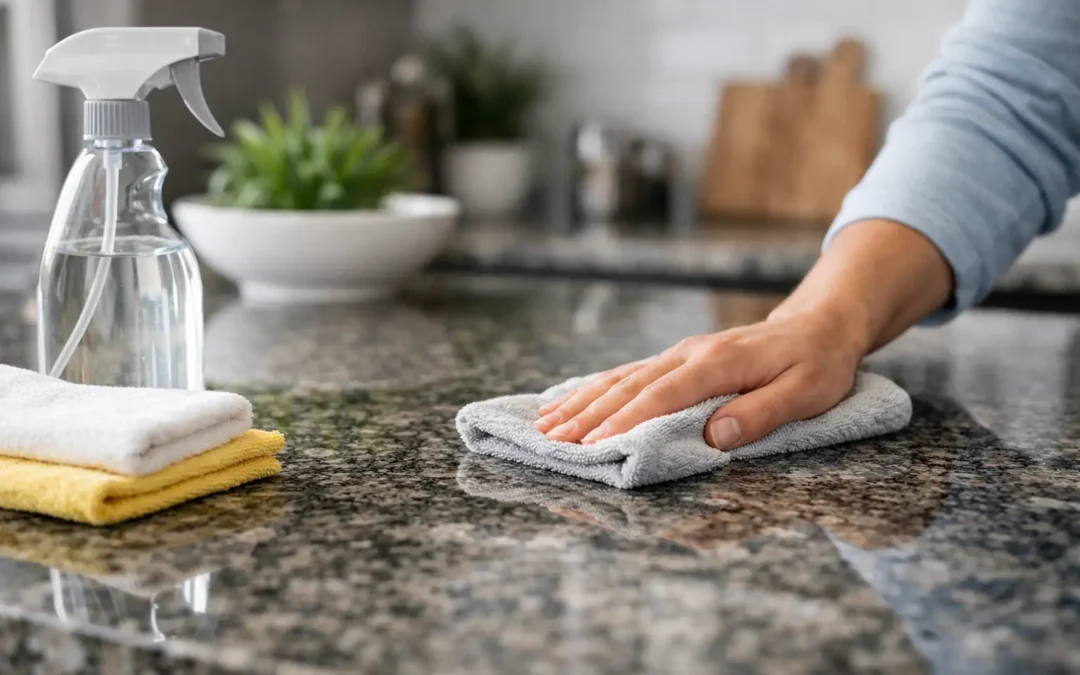
If you want granite to age well, daily care matters more than occasional deep cleaning. Use a soft cloth or sponge with warm water and a stone-safe cleaner. That is usually enough to remove cooking residue, fingerprints, and ordinary mess without dulling the finish.
Avoid acidic or abrasive products. Vinegar, lemon-based cleaners, bleach-heavy formulas, and scouring powders can slowly wear down the sealer and affect the look of the surface. Even if damage is not immediate, repeated use creates avoidable risk.
Dish soap can work in a pinch, but it depends on the formula and how often you use it. Some soaps leave a film that builds up over time and makes the surface look hazy. If the countertop starts looking dull even after cleaning, residue is often the reason.
It also helps to wipe spills as they happen, especially around cooktops, sinks, coffee stations, and prep zones. Oils, wine, tomato sauce, citrus, and cosmetics are not guaranteed to stain granite, but they are the substances most likely to test a weak sealer.
What to keep off the surface
Granite is tough, but that does not mean every habit is harmless. Hot pans are often tolerated better by granite than by many engineered materials, yet thermal shock is still possible, especially near seams or thinner sections. Trivets are a safer habit.
Cutting directly on granite will not usually hurt the stone, but it can dull your knives and increase the chance of scratching the finish in grit-heavy areas. A cutting board is the better choice. Standing water near sinks is another common issue. It may not damage the slab itself right away, but it can leave mineral deposits and make the area look tired sooner.
Sealing: when it matters and when it doesn’t
Sealing is the part of granite care that causes the most confusion. Not every granite countertop needs frequent sealing, and not every dark surface is automatically low-maintenance. Porosity is what matters.
A simple water test can help. Place a few drops of water on the surface and let them sit for about 10 to 15 minutes. If the water beads and remains on top, the sealer is likely still doing its job. If the area darkens noticeably as the stone absorbs moisture, it may be time to reseal.
That said, sealing schedules are not universal. A heavily used family kitchen may need more attention than a guest bathroom vanity. Honed finishes can also show moisture behavior differently than polished ones, which can make homeowners think the stone has a problem when it may simply be the finish reacting more visibly.
How to reseal without overdoing it
Use a sealer specifically made for natural stone and follow the manufacturer directions closely. More product is not better. Over-application can create streaks, uneven curing, or a sticky residue that is harder to correct than the original issue.
Before resealing, the countertop should be completely clean and fully dry. If there is existing buildup from household cleaners, that should be addressed first. Otherwise, the new sealer may lock in the problem rather than improve protection.
If you are unsure whether the countertop was sealed at fabrication or what product was previously used, it is worth getting guidance before applying anything. This is one of those moments where a little technical advice prevents a much bigger cosmetic frustration.
Stains, etching, and dull spots are not the same thing
One reason granite maintenance feels confusing is that different problems can look similar. A darkened ring near the sink, a cloudy patch beside the cooktop, and a pale mark under a soap dispenser may all be described as “a stain,” but the cause can be completely different.
A true stain means something has penetrated the surface. Oil-based stains often darken the stone. Organic stains from coffee, tea, or food may leave brownish marks. In many cases, these can be treated with a poultice designed for natural stone, but the right treatment depends on what caused the discoloration.
Etching is less common on granite than on marble, but some granite slabs contain minerals that react more than expected. Dull spots can also come from cleaner residue, abrasion, or sealer breakdown. That is why aggressive DIY fixes are risky. If you scrub hard with the wrong product, you may trade a small issue for a larger finish problem.
When to call a professional
If the mark changes color when wet but reappears when dry, if the polish looks physically altered, or if the problem sits around seams, faucets, or undermount sink edges, professional assessment is the smart move. Fabrication details, finish type, and stone composition all affect the right next step.
For premium kitchens and bathrooms, especially those using curated natural stone, maintenance should protect the original design intent, not just remove visible mess. That is where expert guidance adds real value.
Long-term care for kitchens, bathrooms, and custom applications
A kitchen island takes a different kind of wear than a bathroom vanity or fireplace surround. In kitchens, grease, acids, and repeated cleaning are the main concerns. In bathrooms, soap residue, cosmetics, and hard water are usually the bigger issue. On feature walls or fireplace applications, dusting and avoiding harsh spray cleaners is often enough.
This is why a good guia de manutenção de bancadas em granito should never treat all surfaces as identical. The slab may be granite, but the use case changes the care plan. A family kitchen with heavy daily cooking deserves a stricter routine than a decorative bar used on weekends.
For designers and contractors, this matters during specification as much as after installation. If the client wants the look of a softer-toned granite with a honed finish in a high-splash prep area, it is worth discussing maintenance expectations early. Good material selection reduces regret later.
The installation and fabrication factor most people overlook
Maintenance starts before the countertop is ever used. Proper fabrication, accurate sink cutouts, well-finished edges, and careful seam placement all affect how easy the surface is to live with.
Poorly executed details create places where water sits, grime collects, or stress develops over time. By contrast, precision fabrication makes maintenance feel lighter because the surface behaves the way it should. That is one reason many homeowners prefer working with a partner who can guide material selection and execute the fabrication in one process. At Stonhaus Design, that continuity helps remove uncertainty from both the aesthetic and practical side of stone ownership.
A simple routine that protects the investment
If you want the shortest version, here it is: clean gently, wipe spills promptly, use protection under hot items, and check the sealer periodically. That routine handles most of what granite needs.
The more important point is this: treat granite like a premium natural material, not like an indestructible work surface. It is resilient, beautiful, and built for real life, but it performs best when care is thoughtful and consistent.
When granite is chosen well and maintained with a light but informed hand, it does what great materials should do – it keeps looking right in the room, year after year, without asking for much.