
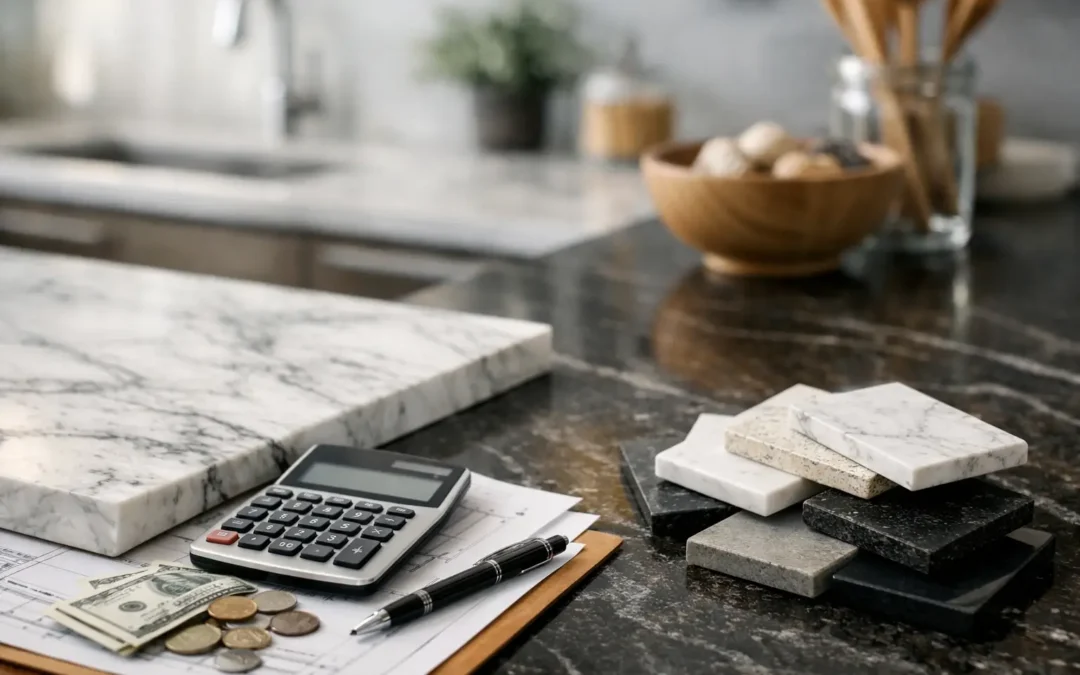
Sticker shock usually happens at the wrong moment – after you have already fallen in love with a slab. If you are figuring out how to budget premium countertops, the smartest move is to price the project the way fabricators do, not the way inspiration photos make it seem. A beautiful surface is only one part of the number. The final budget is shaped by material, slab availability, layout, edge profile, cutouts, installation conditions, and the level of finish you expect.
For homeowners and design professionals, this matters because countertops are highly visible and highly used. They affect the look of the room every day, but they also need to perform. Budgeting well is not about cutting corners. It is about knowing where your money changes the result and where it does not.
How to budget premium countertops without surprises
The most common mistake is treating countertop pricing like a simple price-per-square-foot purchase. That can be a useful starting point, but it rarely tells the whole story on a premium project. Natural stone and engineered surfaces are fabricated to fit a specific space, and that means your estimate depends on more than dimensions alone.
A realistic budget starts with four core buckets: material, fabrication, installation, and project-specific details. Material is the slab itself. Fabrication includes templating, cutting, polishing, sink openings, cooktop cutouts, seams, and edge work. Installation covers transport, delivery, setting, and final fitting. Project-specific details can include tight stair access, waterfall ends, full-height backsplashes, integrated sinks, or matching veining across pieces.
When clients understand those buckets early, they stop comparing quotes that are not actually comparable. One estimate may include a premium edge and backsplash. Another may not. One may assume a standard sink cutout. Another may include reinforced overhangs or additional finish work. Clear scope is what keeps a premium countertop budget under control.
Start with the room, not just the slab
It is easy to begin with material because that is the exciting part. In practice, the room should come first. A kitchen island with two waterfall panels will budget very differently than a straightforward perimeter kitchen. A primary bath vanity with a simple undermount sink is a different exercise from a multi-sink commercial restroom or a fireplace surround with mitered returns.
Before shopping seriously, define the application, rough dimensions, and the visual priority. Ask yourself what needs to stand out. If the island is the focal point, you may want to put more of the budget there and simplify the perimeter counters. If the bathroom calls for elegance but sees lighter use, a softer natural stone may still make sense. Budget follows priorities well when priorities are clear.
This is also where design professionals can save clients money without lowering the standard of the project. A small adjustment to layout, seam placement, or backsplash height can change slab usage significantly. Sometimes the best budget decision is not a cheaper stone. It is a smarter plan.
Material choice drives cost, but also maintenance and risk
If you want to understand how to budget premium countertops accurately, compare materials on three levels: appearance, performance, and fabrication complexity. Price matters, but it is only one part of the decision.
Quartz often gives clients a predictable look, strong everyday durability, and easier maintenance. That can make it a practical premium option for busy kitchens. Quartzite usually brings more natural variation and a high-end visual impact, with strong performance when properly selected and fabricated. Marble offers timeless beauty, but it comes with trade-offs around etching and wear that should be discussed honestly. Granite remains a strong choice for many kitchens because it can balance durability, movement, and value. Exotic stones can create unforgettable results, but sourcing and fabrication details can push costs higher.
There is no universal best material. There is only the right fit for the project. A family kitchen, a showpiece powder room, and a luxury rental property each call for different budgeting logic. Paying more for a material that does not match the way the space will be used is not efficient. Paying more for the right material often is.
Slab size and layout can change the budget quickly
One of the biggest hidden budget factors is slab yield. Countertops are not purchased like flooring, where you can blend multiple boxes and spread variation across the room. With stone, the size of the slab and the way pieces are cut from it affect waste, seam placement, and whether a single slab can complete the visual story.
Large islands, long runs, and dramatic vein patterns often require more planning and sometimes more material. A layout that looks simple on paper may need an additional slab to maintain clean veining or avoid awkward seams. That is especially true with bold quartzite, marble, or bookmatched applications.
This is where showroom guidance and fabrication expertise matter. A careful slab layout can help maximize material use while protecting the design intent. On premium projects, budget control often comes from planning rather than compromise.
Fabrication details are where custom work shows up
Premium countertops look premium because the details are handled well. Those details also affect cost. A polished eased edge is different from a mitered thick-look profile. A standard undermount sink cutout is different from a fluted apron-front sink installation. A simple backsplash is different from a full-height wall application with outlet cutouts and tight pattern alignment.
None of these upgrades are wrong. They just need to be budgeted intentionally. If you want a cleaner, more architectural result, edge style, corner shaping, drain grooves, integrated features, and waterfall ends should be priced from the start instead of added later.
This is also why vague allowances can create frustration. An allowance may sound generous until the desired material and fabrication scope are fully defined. Precise estimates reduce change orders and keep the process calmer for everyone involved.
Build a contingency into your countertop budget
Even well-planned projects benefit from a buffer. In remodeling, existing conditions are not always as expected. Cabinet adjustments, wall irregularities, appliance shifts, and revised design decisions can all affect the countertop scope.
A practical rule is to hold a contingency specifically for finish selections and installation variables. That does not mean expecting something to go wrong. It means leaving room for real-world conditions on a project where tolerances matter. Premium materials deserve that level of planning.
For homeowners, this contingency protects the experience. For builders and designers, it protects the schedule and the client relationship. Budget confidence comes from allowing for variables before they appear.
Where to spend and where to simplify
Not every part of the project needs the same investment. If the island is the centerpiece, that may be the place for the more dramatic slab, a refined edge, or a waterfall detail. Secondary spaces may benefit from a quieter material or a more standard profile while still maintaining a cohesive overall look.
You can also simplify without making the project feel lesser. Standard edge profiles, straightforward backsplashes, and efficient sink selections can keep costs in line. In many cases, the material itself carries the design, so not every upgrade needs to happen at once.
The key is to simplify strategically. Saving money on craftsmanship or templating is rarely the right move. Saving money by reducing unnecessary complexity often is.
How to compare quotes the right way
When reviewing estimates, ask what is included in material selection, templating, fabrication, edge profile, cutouts, seam work, backsplash, delivery, and installation. Ask whether pricing reflects the actual slab you want or a general category. Ask how the layout is being handled if your stone has strong movement or directional veining.
The lowest number is not always the best value. A premium countertop project depends on precision. If one quote leaves major details open, you may not be looking at a lower cost so much as an incomplete scope.
This is where a consultative process pays off. A team that can guide material selection, measure accurately, fabricate locally, and manage the finish details under one roof usually gives you more control over the result and fewer opportunities for expensive disconnects.
A practical budgeting range to set early
Before final selections, it helps to define a comfortable range instead of one hard ceiling. That range should include the countertops themselves plus any upgraded details you already know matter to you. Think of it as the project number, not the slab number.
If you are still narrowing options, identify a target range, a stretch range, and one non-negotiable priority. Maybe the target is a durable premium quartz kitchen, the stretch is a quartzite island with a waterfall, and the non-negotiable is clean fabrication with minimal seams. That framework makes decisions faster when you are in the showroom comparing real materials.
At Stonhaus Design, this is often where clients gain clarity. Seeing slabs in person and discussing fabrication details early tends to turn a vague budget into a workable plan.
Premium countertops are worth budgeting carefully because they do more than finish a room. They shape how the space looks, functions, and holds value over time. The smartest budget is not the cheapest one. It is the one that aligns the material, the craftsmanship, and the room so the final result still feels right years later.