
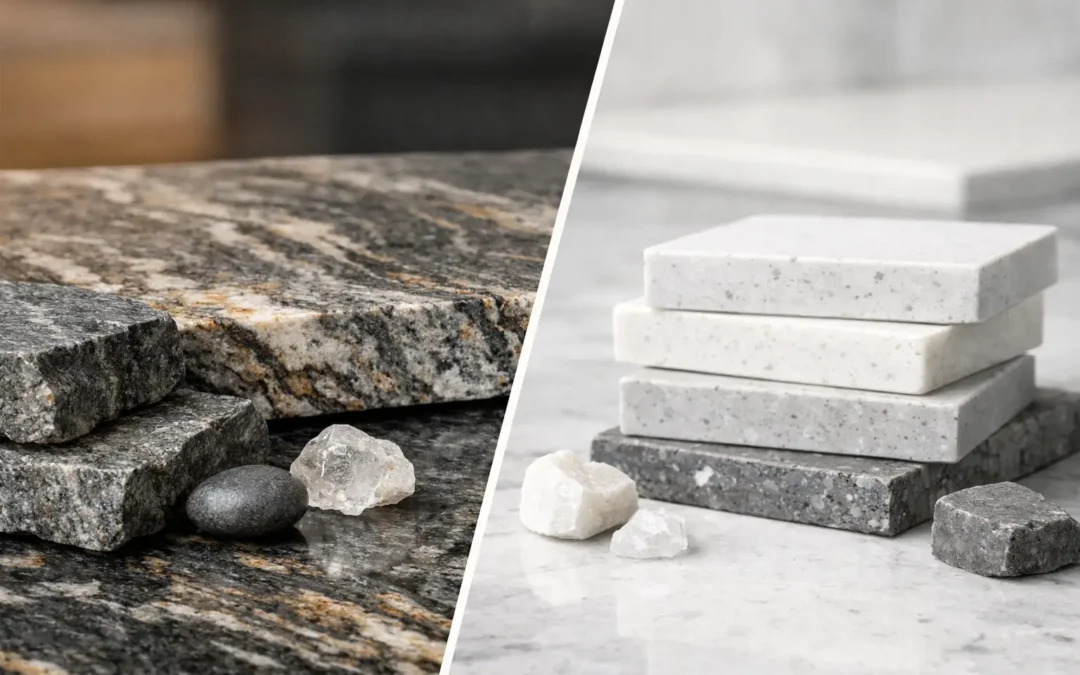
A slab can look perfect under showroom lighting and feel completely wrong once you picture it in your kitchen. That is why the choice between natural stone versus engineered stone is rarely just about color. It is about how you live, how much variation you want to see every day, how much maintenance you are comfortable with, and how precise the finished installation needs to be.
For homeowners, designers, and builders, this decision usually comes down to balancing beauty, performance, and predictability. Both categories can be excellent. The right answer depends on the project, the design goal, and how the surface will be used over time.
Natural stone versus engineered stone: what is the difference?
Natural stone is quarried from the earth and cut into slabs. Materials like marble, granite, and quartzite each have their own mineral makeup, movement, veining, and variation. No two slabs are identical, which is part of the appeal. You are selecting something formed by nature, not manufactured to repeat.
Engineered stone is produced through a controlled manufacturing process. In most residential conversations, this usually means quartz surfaces made from crushed stone and resins, though other engineered materials exist. The main advantage is consistency. Color, pattern, and performance are designed to be more uniform from slab to slab.
That basic difference affects almost every practical decision that follows. Natural stone tends to offer more one-of-a-kind character. Engineered stone tends to offer more control and predictability.
Appearance and design impact
If the project calls for depth, movement, and natural variation, natural stone often leads the conversation. Marble brings softness and classic veining. Quartzite can offer dramatic pattern with strong durability. Granite ranges from subtle texture to bold visual movement. These materials create a sense of authenticity that is difficult to replicate exactly.
That said, engineered stone has come a long way. Many quartz surfaces now offer refined patterns, clean neutrals, and marble-inspired looks that work beautifully in contemporary kitchens and bathrooms. For clients who want a polished, design-forward result with less visual unpredictability, engineered stone can be the better fit.
This is where viewing full slabs matters. A small sample can never show the true personality of natural stone, and even engineered materials can look different at scale. Vein direction, pattern repeat, and color shift under natural light all affect the final result.
Durability in everyday use
Durability is where many buyers expect an easy answer, but the reality is more specific than that.
Granite and quartzite are often excellent choices for active kitchens because they handle daily wear well. Quartz, as an engineered surface, is also highly durable and typically resists scratching and staining better than softer natural stones. Marble is more vulnerable to etching and surface wear, especially in areas where acidic foods, cosmetics, or cleaning products are common.
So which one is tougher? It depends on the material, not just the category. Natural stone is not automatically delicate, and engineered stone is not automatically indestructible. A well-chosen quartzite may outperform some engineered options in certain applications. A high-quality quartz may be the most practical option for a busy family kitchen that needs easier day-to-day care.
Heat is another consideration. Natural stone generally performs very well with heat, which is one reason it remains a strong choice around cooking areas and fireplaces. Engineered quartz surfaces are heat-resistant to a point, but excessive direct heat can damage the resins. For that reason, trivets and heat protection are still wise.
Maintenance and long-term care
Maintenance is often the deciding factor for clients who love the look of natural materials but want a lower-effort routine.
Most natural stone benefits from sealing, though the frequency varies by material and use. Granite and quartzite are typically more forgiving than marble, but all natural stone should be cared for properly. Marble, in particular, develops character with use. Some people love that lived-in patina. Others prefer a surface that stays visually consistent with less attention.
Engineered quartz is generally easier to maintain. It does not usually require sealing and is simple to clean with mild soap and water. That makes it especially attractive in kitchens, bathrooms, and commercial spaces where convenience matters.
Still, low maintenance does not mean no maintenance. Harsh chemicals, abrasive pads, and excessive heat can shorten the life or appearance of any premium surface. The best results come from matching the material to the way the space will actually function.
Natural stone versus engineered stone for kitchens
Kitchens are where the trade-offs become clear. If the goal is a statement island, dramatic veining, or a surface with real geological character, natural stone can deliver a result that feels elevated and unique. It often becomes the visual anchor of the room.
If the kitchen is heavily used and the priority is easier upkeep, engineered stone may be the smarter choice. A quartz surface can provide a clean, consistent look with strong daily performance and less concern about sealing or etching.
Many projects are not either-or. A designer may choose quartz for perimeter counters and reserve a striking natural stone for an island, backsplash, or bar area. The strongest projects are often the ones that stop treating the decision like a debate and start treating it like a design solution.
Bathrooms, fireplaces, and custom applications
Bathrooms create a different set of priorities. Vanity tops often benefit from engineered stone because of easy cleaning and visual consistency, especially in multi-bath projects where repeatability matters. On the other hand, natural marble remains a favorite for powder rooms and primary baths where luxury and visual softness are the priority.
For fireplace surrounds, feature walls, and custom statement pieces, natural stone often shines. The depth, variation, and slab movement can turn a functional surface into an architectural focal point. Engineered materials can still work well in these spaces, particularly when a cleaner, more minimal look is desired.
Commercial and hospitality projects also vary. Designers may lean toward engineered surfaces when deadlines, repeat units, and consistency are critical. Natural stone is often selected when the goal is to create a premium impression that feels distinctive and materially rich.
Cost, fabrication, and project control
Price is important, but it should be viewed in context. Natural stone can range widely depending on rarity, origin, slab size, and pattern. Engineered stone can also vary by brand, design complexity, and finish. There is no universal rule that one is always more affordable.
What often affects the total project more than the slab price alone is fabrication complexity. Edge details, cutouts, waterfall panels, bookmatching, seam placement, and installation conditions all influence cost and outcome. This is where expert guidance matters.
Some materials are more forgiving during layout and fabrication than others. Natural stone requires careful slab selection and planning, especially when movement and veining need to be featured or aligned. Engineered stone offers more consistency, which can simplify certain decisions. But precision still matters. A premium result depends on accurate measuring, thoughtful layout, and high-quality fabrication from the start.
How to choose with confidence
The best way to decide is to stop asking which material is better in general and start asking which material is better for this specific project.
If you want one-of-a-kind character, are comfortable with some variation, and appreciate the authenticity of a natural surface, natural stone may be the right choice. If you want a more controlled look, easier maintenance, and consistency across multiple areas, engineered stone may serve you better.
It also helps to think beyond the slab itself. Consider the room, lighting, cabinet color, edge profile, sink style, and how the surface will be used five years from now. A beautiful material only performs well when it is selected in context.
For many Charleston-area clients, that is where a showroom-and-fabrication approach makes the process easier. Seeing curated materials in person, asking practical questions, and getting honest input on performance can prevent expensive mistakes later. At Stonhaus Design, that kind of guidance is part of helping clients choose surfaces that look right, live well, and finish strong.
A great surface decision does not come from chasing trends or picking the loudest sample. It comes from choosing the material that fits the way the space should feel and function every day.