
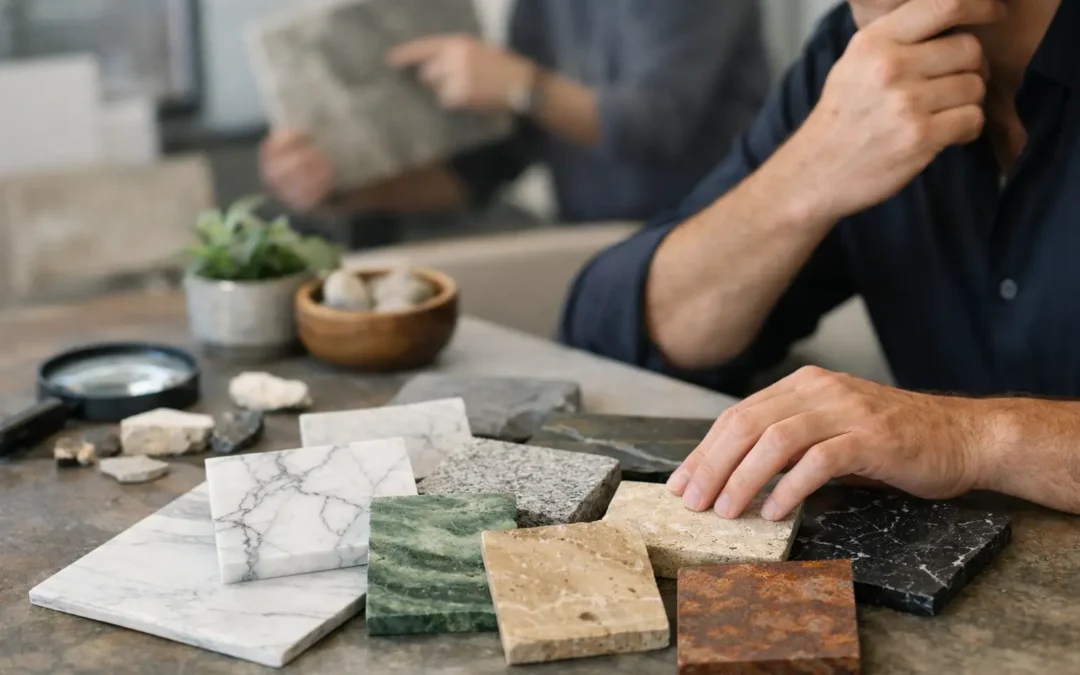
A slab can look perfect under showroom lighting and still be the wrong choice for the way your kitchen, bathroom, or commercial space actually functions. That is why so many costly decisions come down to the same issue: erros comuns ao escolher pedra natural usually happen when people focus only on appearance and skip the technical details that affect daily use, fabrication, and long-term performance.
Natural stone adds depth, movement, and individuality that manufactured materials often struggle to replicate. But not every stone is right for every application, and not every beautiful slab will perform the same way once it is cut, installed, sealed, and lived with. The best results come from balancing design goals with practical realities early in the process.
Why these mistakes happen so often
Most clients begin with inspiration photos. That makes sense. You are reacting to color, veining, finish, and overall mood. The problem is that inspiration rarely shows what is happening behind the scenes – substrate requirements, edge details, slab yield, maintenance expectations, or whether a dramatic vein pattern will line up correctly across a large island.
This is where natural stone projects can go off course. A decision that looks simple at first can affect fabrication complexity, project timing, durability, and final cost. For homeowners, that often means avoidable stress. For designers, builders, and contractors, it can mean revisions late in the schedule.
1. Choosing stone based only on color
One of the most common errors when choosing natural stone is treating materials with a similar color palette as if they perform the same way. A white marble, a light quartzite, and a pale granite may all fit the visual direction of a project, but they behave very differently in real life.
Marble is prized for its softness and classic movement, but it is more vulnerable to etching and scratching. Quartzite can offer a similar high-end look with greater hardness, though not every slab sold as quartzite performs equally. Granite often brings strong durability and lower maintenance, but the pattern and overall character can feel different from what a client first imagined.
Color matters, but color alone is not enough. The right question is not just, “Do I like this look?” It is also, “Does this material fit how this space will be used?”
2. Ignoring how the stone will actually be used
A powder room vanity and a heavily used family kitchen do not ask the same thing from a surface. Neither does a fireplace surround compared with an outdoor kitchen in the Charleston climate. Yet many buyers make selections before fully defining the application.
This is where erros comuns ao escolher pedra natural become expensive. A homeowner may fall in love with marble for a kitchen without realizing how acidic foods can etch the finish. A builder may specify a striking stone outdoors without confirming weather suitability. A designer may choose a material with bold movement for a waterfall island but overlook how difficult it will be to match the veining at the mitered edges.
Function should shape selection. Heat exposure, moisture, direct sun, cleaning habits, traffic level, and the age of the household all matter. There is no universally best stone – only a better fit for a specific use.
3. Underestimating variation from slab to slab
Natural stone is not a printed surface. That is part of its value, but it also means variation is not a flaw. Veining, background color, movement, mineral concentration, and finish can shift dramatically from one slab to another, even within the same material name.
This surprises people who shop from a small sample or make a decision based on a photo. A sample may suggest a soft, consistent look, while the full slab reveals bold directional veining or stronger contrast. In some cases, that variation becomes the centerpiece of the project. In others, it creates disappointment simply because expectations were not aligned.
Reviewing the actual slab matters, especially for large kitchens, bookmatched applications, full-height backsplashes, or projects where symmetry is important. When possible, looking at the layout before fabrication helps clarify where seams will land, how the movement will flow, and which areas of the slab will be most visible.
4. Not thinking about fabrication early enough
Stone selection is not separate from fabrication. Thickness, edge profile, cutouts, seam placement, sink type, overhangs, and backsplash details all influence the final result. Waiting too long to discuss these details is one of the most preventable mistakes in the process.
A material may be visually ideal but less forgiving for a particular edge profile. A slab may be large enough for the counters but not for a seamless island. A dramatic vein may need to be oriented a certain way, which changes yield and may require additional slabs. Even appliance cutouts and corner conditions can affect what is feasible.
This is why a guided process matters. Good stone selection includes technical review, not just aesthetic approval. Precision happens before the first cut, not after a problem appears.
5. Assuming all natural stone requires the same maintenance
Clients often ask whether stone is “high maintenance” or “low maintenance,” but that framing can oversimplify the issue. Different stones have different porosity, hardness, and sensitivity. Finish also plays a role. A polished surface and a honed surface may age differently in the same home.
Some homeowners are happy to accept patina as part of the material’s character. Others want a surface that looks as close to day-one pristine as possible with minimal effort. Neither preference is wrong, but the stone should match the expectation.
Sealing helps many natural stones, but it is not a force field. Daily habits still matter. So does cleaner selection. When maintenance expectations are discussed honestly upfront, clients usually make better decisions and feel more confident after installation.
6. Letting price per square foot drive the whole decision
Budget matters, and any responsible material conversation should include it. But focusing too narrowly on slab price can lead to the wrong conclusion. The actual installed cost may be affected by fabrication complexity, edge treatments, cutouts, thickness, transport, waste, layout requirements, and how many slabs are needed to achieve the design intent.
A less expensive material can become costly if it creates more seams, more labor, or more design compromises. A premium slab may offer better visual impact and cleaner execution with fewer adjustments. The smartest choice is usually the one that aligns material, design, and fabrication from the beginning.
For trade professionals, this is especially important during specification. For homeowners, it helps avoid the frustration of selecting a material that appears to fit the budget at first, then changes once real project conditions are considered.
7. Choosing without expert guidance
Natural stone is one of the most visible and permanent decisions in a space. It affects cabinetry, lighting, flooring, hardware, and resale perception. Yet many buyers still try to make the decision in isolation, based on online images or broad assumptions about material categories.
That approach increases risk. A consultative review can identify whether a stone fits the application, whether the finish supports the design, how the slab layout will read in the room, and what trade-offs should be considered before fabrication begins. This is where experience has real value – not in pushing a material, but in helping the client avoid a mismatch.
For clients who want a smoother process, it also helps to work with a team that can connect selection, measuring, fabrication, and finishing. The fewer disconnects between those stages, the fewer surprises later.
How to avoid the most common mistakes
The strongest projects usually start with a simple shift in approach. Instead of asking only what looks best in the showroom, ask what will look right and perform well after a year, five years, or ten years of actual use.
Bring real information into the conversation early. Share how the space will be used, what level of maintenance feels realistic, whether you want soft movement or bold pattern, and how important it is to minimize seams or create a continuous visual effect. If you are a designer or contractor, align those decisions with fabrication requirements before final approval.
At Stonhaus Design, that is where the process becomes more useful than overwhelming. A curated selection helps narrow the field, but the real value comes from pairing design guidance with technical execution so the finished result feels intentional, not improvised.
Natural stone should feel like a confident decision, not a gamble. The right slab is not just beautiful in the moment. It is the one that fits the space, the project goals, and the way the surface will actually be lived with every day.
If you are choosing stone for a high-impact space, slow down just enough to ask better questions before the cuts are made. That extra clarity is often what turns a good project into one that still feels right long after installation day.