The best stone for a bathroom is the one matched to its zone. A vanity top that meets toothpaste and skincare every day is safest in quartzite, granite or engineered quartz. Shower walls want a dense stone with few fissures, or a quartz made for walls.
On a floor that gets wet, a honed or textured finish matters more than the stone’s name. Marble still has a place: a powder room, a feature wall, or a primary bath where a soft patina is welcome. The table puts each zone side by side; the sections after it explain the reasoning and name the sources behind it.
What each part of the bathroom asks of the stone
| Zone | What it deals with | Stones that suit it | Finish to ask for | Watch for |
|---|---|---|---|---|
| Vanity top | Toothpaste, cosmetics, hair products, water pooling at the faucet | Quartzite, granite, engineered quartz; marble if you accept etching | Polished or honed | Products left sitting on the surface |
| Shower walls | Constant water, soap film, hard-water minerals | Dense natural stone with few fissures; quartz made for walls | Honed hides water spots; polished shows them | The waterproofing behind the stone |
| Shower floor | Standing water, soap, bare feet | Small-format stone tile or mosaic | Honed or textured | Traction when wet |
| Main floor | Splashes, grit, daily traffic | Granite, quartzite, limestone or marble tile | Honed or textured, not high polish | The tile’s wet slip rating |
| Tub deck or surround | Splashes and bath products | Most stones, marble included | Either; honed is more forgiving | Colored or oily products left to dry |
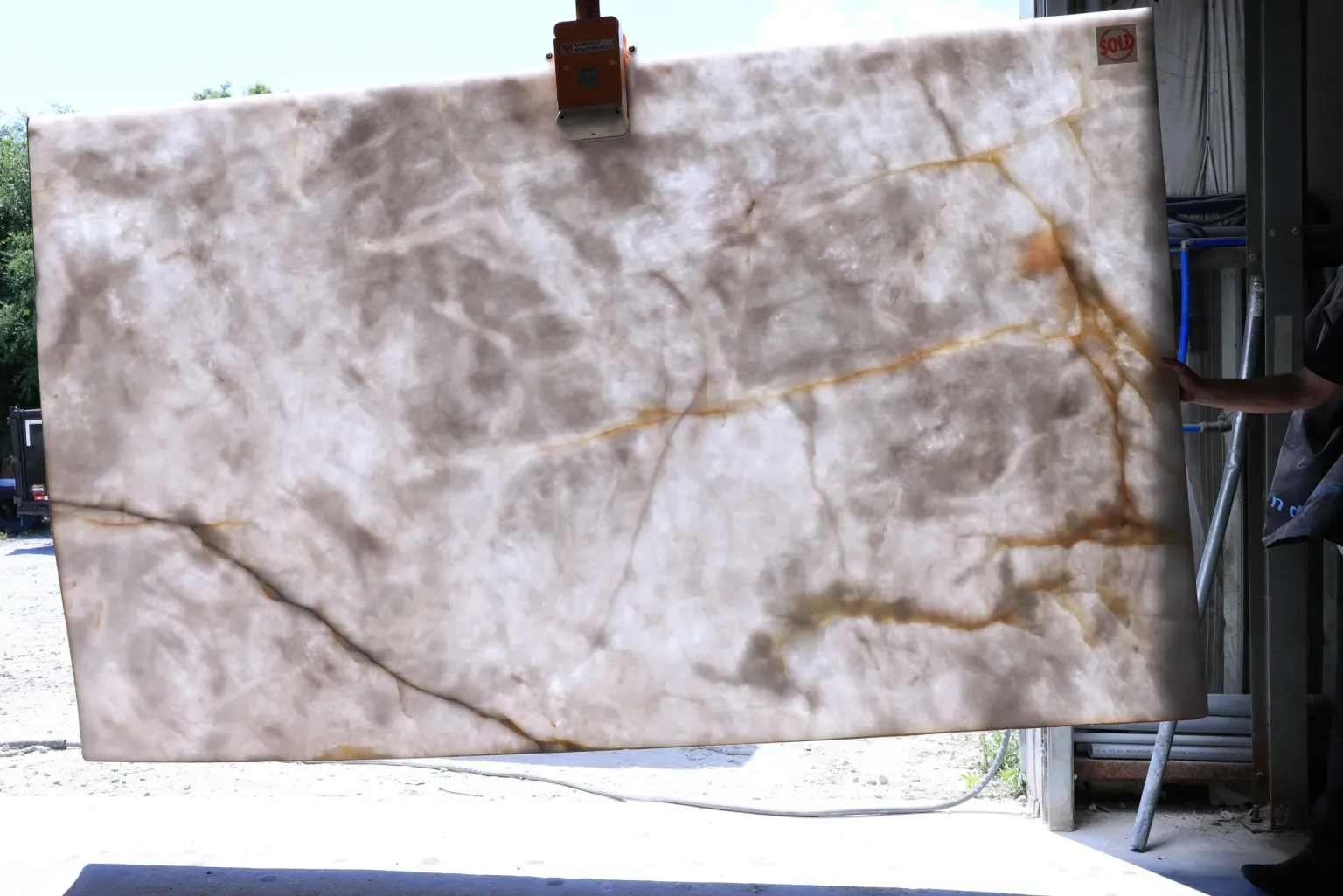
| Powder room vanity or feature wall | Light use, close-up viewing | Marble, translucent quartzite, bold slabs | Polished, for depth of color | Very little: this is where a delicate stone fits |
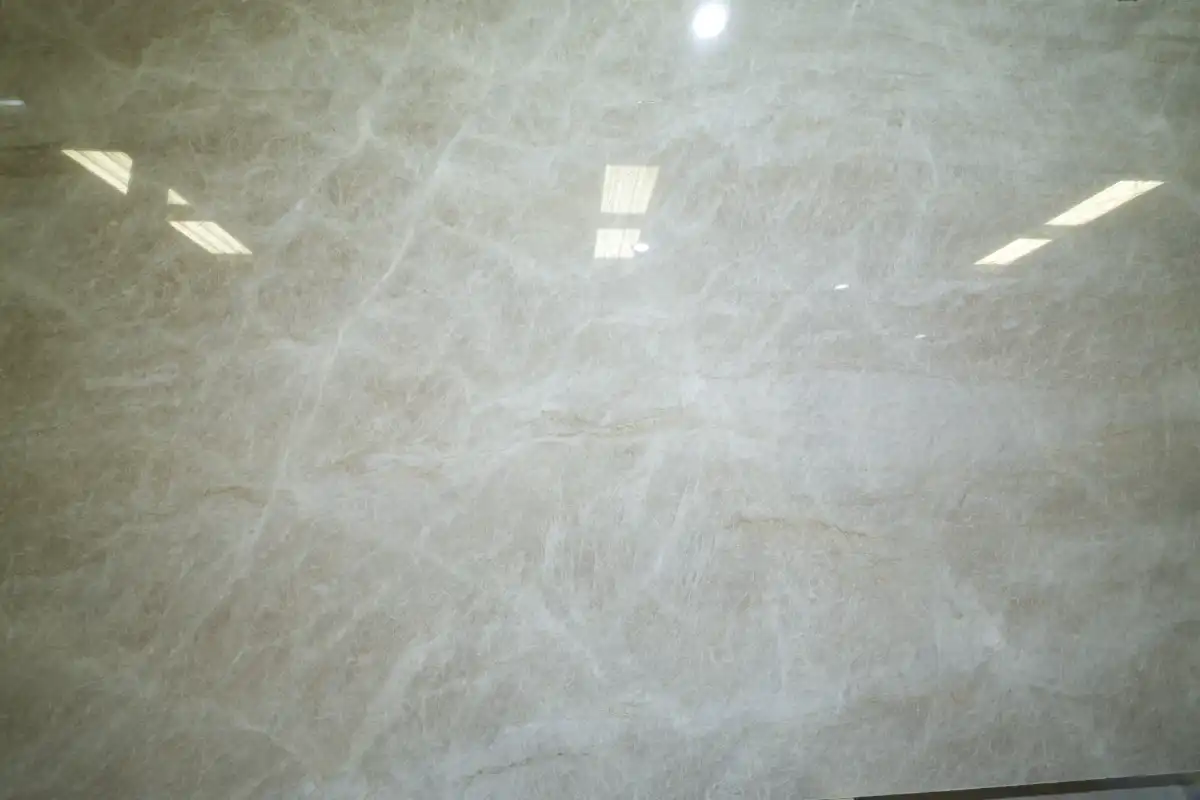
Seven of the eight stones on our materials pages list bathroom vanities among their uses, from the warm Taj Mahal to the high-contrast Black Forest. When you want to compare them at full size, browse the materials we stock before you visit.
Vanity tops: where cosmetics and toothpaste meet the stone
The vanity is a small counter touched all day. In a Natural Stone Institute article on using marble in the bathroom, a fabricator points out that perfumes, hair products and dental products can contain acids or bases that damage stone. On marble, a tray for daily products and a quick wipe go a long way.
Granite and true quartzite are far less reactive. Our Mont Blanc quartzite page describes it as harder than marble and far less reactive to everyday spills, which is why white quartzites are a common answer for a shared vanity.
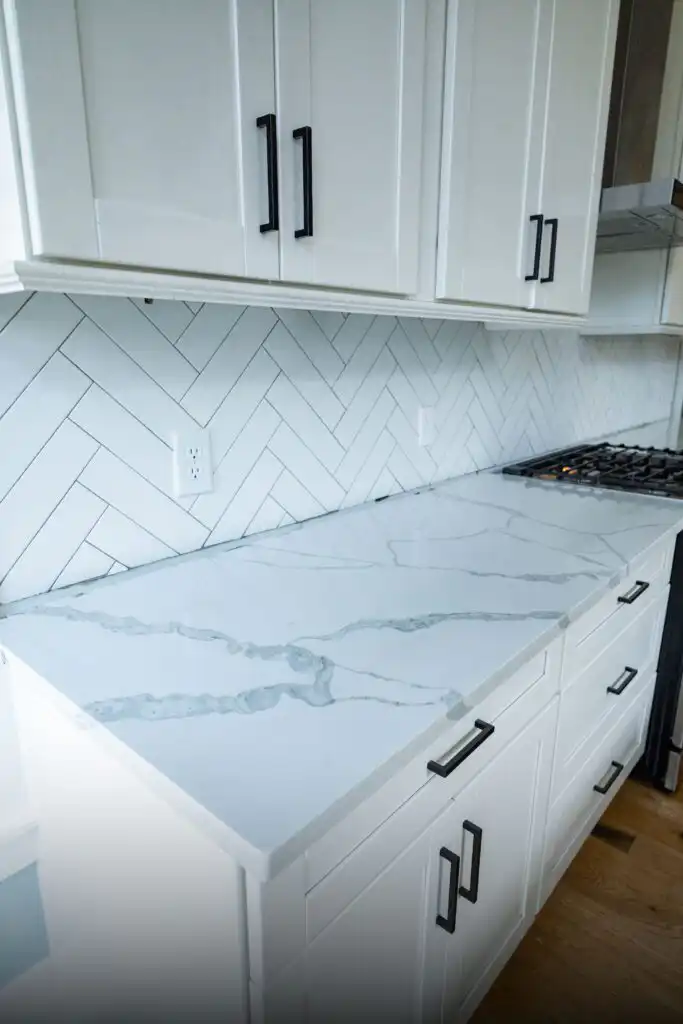
Engineered quartz is nonporous and needs no sealing, which suits a family bath. One caution comes from Cambria’s own FAQ: quartz may not withstand direct, sustained heat, so a hot styling tool should rest on a heat-proof mat, not on the counter.
If your shortlist is down to two materials, our side-by-side of marble and quartz for bathroom vanities covers that exact choice. Sink style, faucet holes and backsplash height are covered in our notes on a custom stone vanity with the sink built in.
Shower walls: density, veining and what sits behind the stone
Water finds every weak line in a stone. In the Natural Stone Institute’s guide to natural stone in the shower, a forensic tile consultant explains that marble is graded for soundness from A to D: A and B have few veins or inclusions, C and D have more, and moisture working into those veins can cause damage.
The same article adds two practical points. Some white marbles contain iron-bearing minerals that can discolor with enough water, and, as a rough rule with many exceptions, lighter stones tend to be more porous than darker ones. That is why the slab itself, not only the stone’s name, should be reviewed for a wet wall.
The stone is the finish, not the waterproofing. A membrane behind the wall keeps water out of the framing. Full-slab walls add questions of thickness and seam placement; we cover them in our guide to slab shower walls, from thickness to the membrane behind them.
Daily care is simple: a squeegee after each shower, a pH-neutral cleaner, and the door left open so moisture can escape, all recommendations from the same Institute article.
Floors: the finish decides how slippery the stone is
A high polish on a wet floor is a hazard, whatever the stone. The tile industry measures traction with ANSI A326.3, the test method published by the Tile Council of North America.
Level interior floors expected to be walked on when wet are specified at a wet DCOF of 0.42 or higher. Ask for that number on the spec sheet of any stone tile you consider.
Honed and textured finishes grip better than polished ones. Inside the shower, many designers use small tiles or mosaics, because the grout lines add traction underfoot; the designer quoted in the Institute’s marble article does exactly that.
Choose the stone with the floor and walls you already have
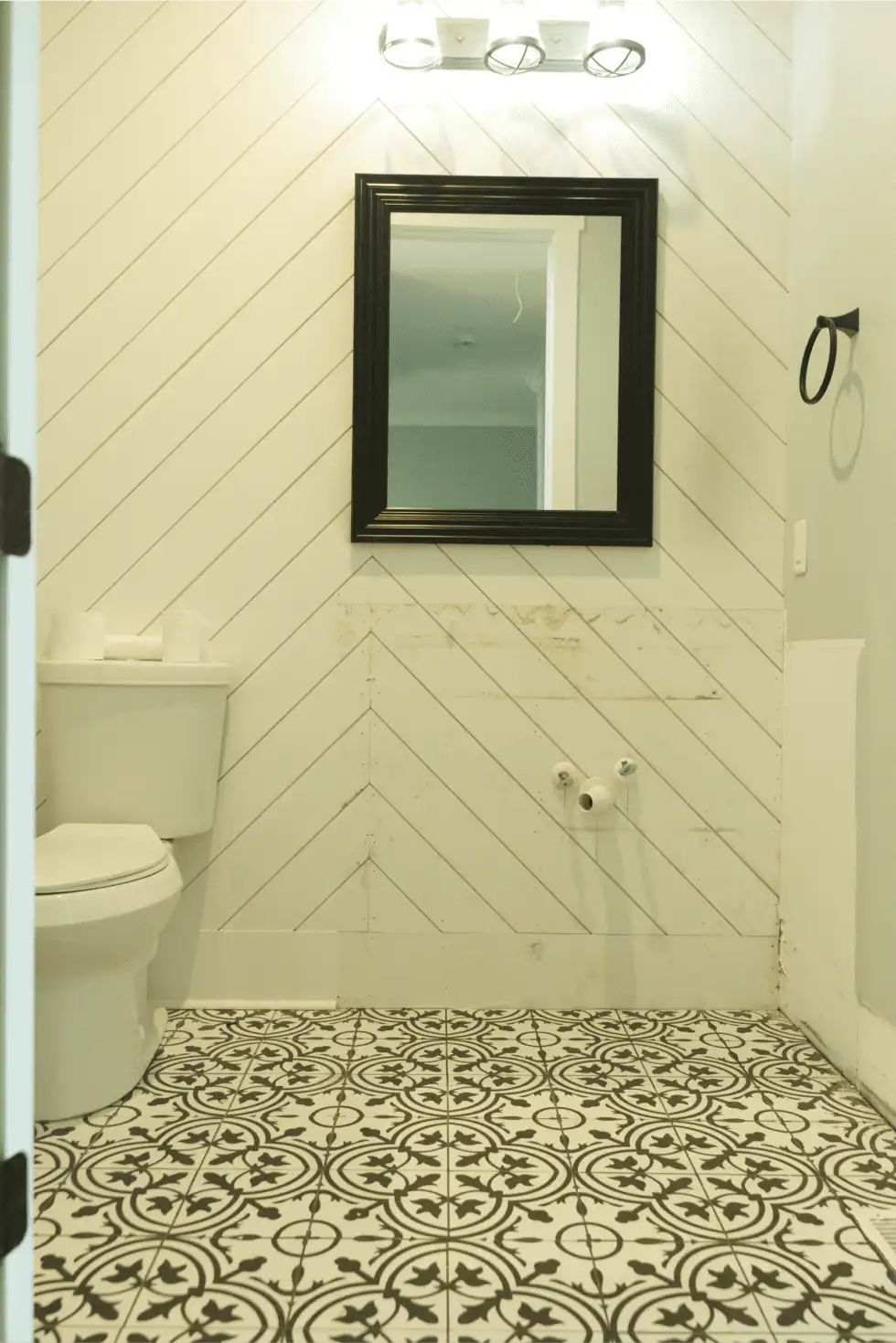
Floor and wall tile cover the most area, so they usually set the palette and the vanity stone follows.
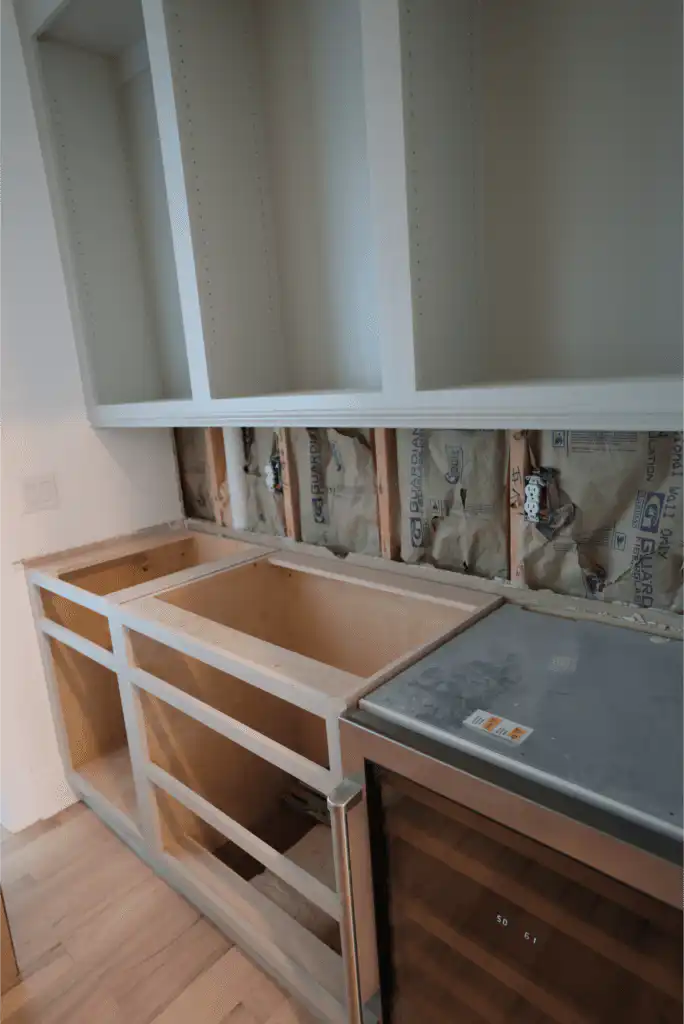
The powder room above, from the Moncks Corner project gallery, was photographed before its vanity went in. With a busy black-and-white floor already down, a quiet, light stone on the vanity would let the floor lead instead of competing with it.
Check undertones too: warm stone beside brass fixtures, cooler grays beside chrome or matte black. Bring a tile sample and a cabinet door when you look at slabs, because a small chip of stone cannot show how a full vanity will read against them.
Where travertine, limestone and statement slabs fit
Travertine and limestone, like marble, are calcium-based stones. A stone restoration specialist quoted by the Natural Stone Institute notes that acid etches marble and travertine and removes the polish, while most granites do not react to acid, ammonia or alcohol. That makes them lovely on walls and tub surrounds, and more demanding on a busy vanity.
A powder room is the opposite case: light use, close viewing, and the best room in the house for a dramatic slab. For bookmatched walls, backlit stone and sculptural vanities, see our ideas for high-end bathroom stone.
What sets the budget for bathroom stone
A bathroom quote is built from the plan, not from a price list, so any figure printed here would be wrong for your room. What moves that quote is easy to list, though:
- How much stone the plan uses: a single vanity top is one thing; vanity, tub deck and full shower walls is another.
- The stone itself: its rarity, and how many slabs the layout needs, especially if the veining has to match across pieces.
- Thickness, edge profile and the height of the backsplash.
- Cutouts for sinks, faucet holes and valves.
- Coordination with the waterproofing and plumbing trades on shower walls.
- Access: stairs, tight hallways and second-floor bathrooms change how pieces are carried in.
For a broader way to set priorities before you ask for a number, read our notes on planning a stone budget without guesswork.
A short decision guide
- If the vanity is shared and busy, choose quartzite, granite or engineered quartz.
- For a powder room, or a vanity you are happy to look after, marble or a statement slab is a fair choice.
- Stone on the shower walls? Pick a dense slab with few fissures and plan the membrane first.
- When the floor gets wet, use a honed or textured tile rated at a wet DCOF of 0.42 or more.
- A busy floor or wall tile calls for a quiet vanity stone.
Once you know which zone needs which kind of stone, the next step is seeing the candidates at full size. Bring your tile sample to our North Charleston showroom and compare the vanity options side by side; you can start by looking through the slabs in our showroom online.