
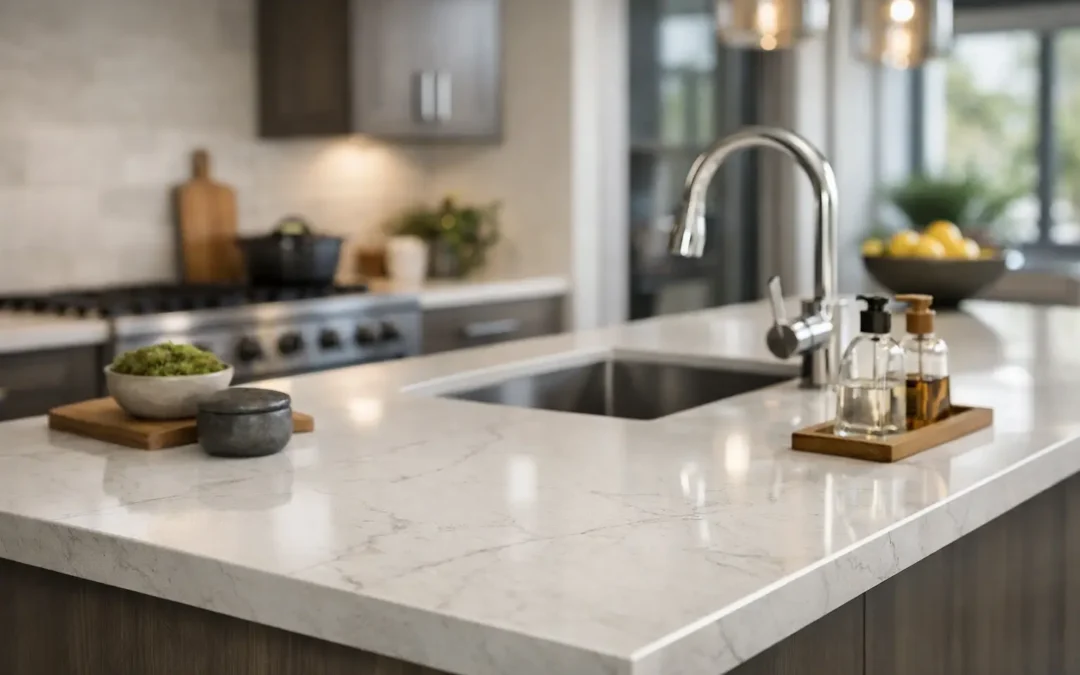
A countertop can make a kitchen feel finished – or slightly off – long before the appliances arrive. That is why bancadas quartzo keep coming up in remodels and new builds. They offer a clean, consistent look, strong everyday performance, and a wide range of colors that fit both modern and classic spaces.
Quartz has become a go-to choice for homeowners who want durability without the extra maintenance that some natural stones require. It also appeals to designers and builders because the look is predictable, the slabs are versatile, and the finished result can feel refined when the fabrication is precise. Still, quartz is not the right answer for every project, and the best outcomes depend on more than just picking a pretty sample.
What bancadas quartzo actually are
Quartz countertops are engineered surfaces made from ground natural quartz combined with resins and pigments. That mix is pressed into slabs and finished for installation. The result is a non-porous surface that resists staining better than many porous stones and does not require sealing in normal use.
That engineered composition is what gives quartz its consistency. If you want a bright white kitchen, a soft concrete look, or a marble-inspired pattern with less maintenance, quartz usually gives you more control than natural stone. For clients who want fewer surprises from slab to slab, that matters.
At the same time, consistency can be either an advantage or a drawback. Some homeowners love the uniformity. Others prefer the movement, variation, and one-of-a-kind character that come with marble or quartzite. This is often the first real decision point – not performance, but personality.
Why bancadas quartzo are so popular
In kitchens, quartz earns its reputation through daily practicality. It handles spills well, cleans easily with mild soap and water, and stands up to normal family use. Coffee, oil, wine, and makeup are less stressful on a non-porous surface than on materials that can absorb moisture if not properly sealed.
That ease of care is a major reason quartz is often chosen for busy households, secondary bathrooms, laundry rooms, and properties where owners want a premium look with less upkeep. For design professionals, it also helps reduce maintenance concerns after the project is complete.
Appearance is the other major reason. Quartz manufacturers now offer colors and patterns that range from minimal and contemporary to warm and traditional. Some are subtle and quiet. Others mimic marble veining convincingly enough to satisfy the overall design goal without the higher sensitivity of true marble.
Where quartz performs best
Quartz is especially strong in kitchens and bathrooms where easy cleaning is part of the brief. It works well for vanity tops, waterfall islands, full-height backsplashes, and streamlined contemporary spaces where crisp edges matter. Because the material is fabricated with precision, it also suits designs that rely on tight tolerances and a polished finish.
For many indoor applications, quartz is a safe and balanced choice. It delivers good looks, dependable performance, and straightforward maintenance. That combination is hard to ignore when the project includes multiple decisions, budgets, and deadlines.
The one area where caution matters is heat and UV exposure. Quartz is heat-resistant to a point, but not heatproof. Hot pans can damage the resin if placed directly on the surface. In outdoor installations, direct sunlight can cause discoloration or performance issues in many quartz products, so it is usually better to consider other materials for exterior kitchens or uncovered spaces.
The trade-offs to understand before you choose
Quartz is often described as low-maintenance, and that is true. But low-maintenance does not mean maintenance-free or damage-proof. If a pan comes straight from the oven onto the surface, you are taking a risk. If a heavy object hits a corner edge, chips are possible. And although quartz resists stains well, harsh cleaners can dull the finish over time.
There is also the cost question. Quartz is not usually the budget option. Depending on color, brand, thickness, edge profile, and installation complexity, it often sits in the premium category. For many clients, the value is there because of the look and reduced upkeep. Still, if the project is price-sensitive, the final installed number can be higher than expected once cutouts, backsplashes, waterfall panels, and premium fabrication details are included.
Another trade-off is visual depth. Some quartz patterns are excellent. Others can look flatter or more repetitive than natural stone, especially across large islands. This is why viewing full slabs matters. A small sample can suggest one thing, while a large installation can reveal pattern repetition, seam planning needs, or a tone that reads cooler than expected.
How to choose the right quartz for your space
Start with the room, not the sample. A bright white quartz that looks crisp in a showroom may feel too stark under warm residential lighting. A dramatic veined pattern may be beautiful on a display board but overwhelming in a compact kitchen with busy cabinetry. The best selection process considers flooring, paint, cabinet tone, hardware finish, and the amount of natural light.
Edge details also shape the final impression more than most people expect. A simple eased edge can feel clean and contemporary. A thicker build-up or waterfall edge reads more architectural. In a bathroom, the same quartz color can feel very different depending on whether the sink is undermount, integrated into the design, or paired with a bold backsplash.
This is where guided selection makes a difference. In a curated showroom, you can compare materials side by side, test tones against your finishes, and discuss whether quartz is actually the best fit for how you live. Sometimes it is. Sometimes a natural quartzite or granite is the smarter answer.
Fabrication matters as much as the material
Even a premium quartz slab can look average if the fabrication is rushed. Seam placement, cutout accuracy, edge finishing, overhang support, and backsplash alignment all influence the final result. A good installation feels effortless because every detail lands where it should.
That is why the process matters. Accurate field measurements, careful slab layout, and clear communication between selection and fabrication reduce surprises later. If your project includes a large island, bookmatched visual flow, mitered edges, or full-height applications, execution becomes even more important.
For homeowners, this usually translates into peace of mind. For designers and builders, it means fewer downstream problems and better control over the finished look. A partner that handles selection, fabrication, and installation with one coordinated process can save time and prevent the common disconnect between what was chosen and what arrives on site.
Are quartz countertops better than granite or marble?
It depends on what you value most. If you want low maintenance, color consistency, and a polished contemporary feel, quartz is often the stronger option. If you want a one-of-a-kind natural pattern and do not mind more variation, granite, quartzite, or marble may be the better fit.
Granite is natural, durable, and often excellent in kitchens, though some varieties need sealing and patterns vary significantly. Marble offers unmatched softness and character but is more prone to etching and staining. Quartzite can deliver dramatic natural beauty with strong performance, though pricing and maintenance vary by slab. Quartz sits in the middle of this conversation as the practical premium choice for many indoor spaces.
That is also why honest guidance matters. The right material is not always the one with the biggest trend momentum. It is the one that aligns with the design, the use of the room, and your tolerance for maintenance.
When bancadas quartzo make the most sense
Quartz is a smart fit when you want a refined look, predictable performance, and a surface that supports everyday life without asking for much in return. It works especially well in family kitchens, polished bathrooms, and projects where clean lines and reliable fabrication are part of the design language.
If your priority is a truly natural surface with unique movement and geological character, quartz may not satisfy in the same way. But if your priority is a beautiful, durable, easy-care countertop that holds up well in real homes, it is easy to see why so many clients choose it.
At Stonhaus Design, that conversation usually starts with the material but ends with the full result – how it will look in your space, how it will be fabricated, and how confidently you can move forward. The best countertop choice is rarely just about the slab. It is about choosing a surface you will still feel good about after the project dust settles.