
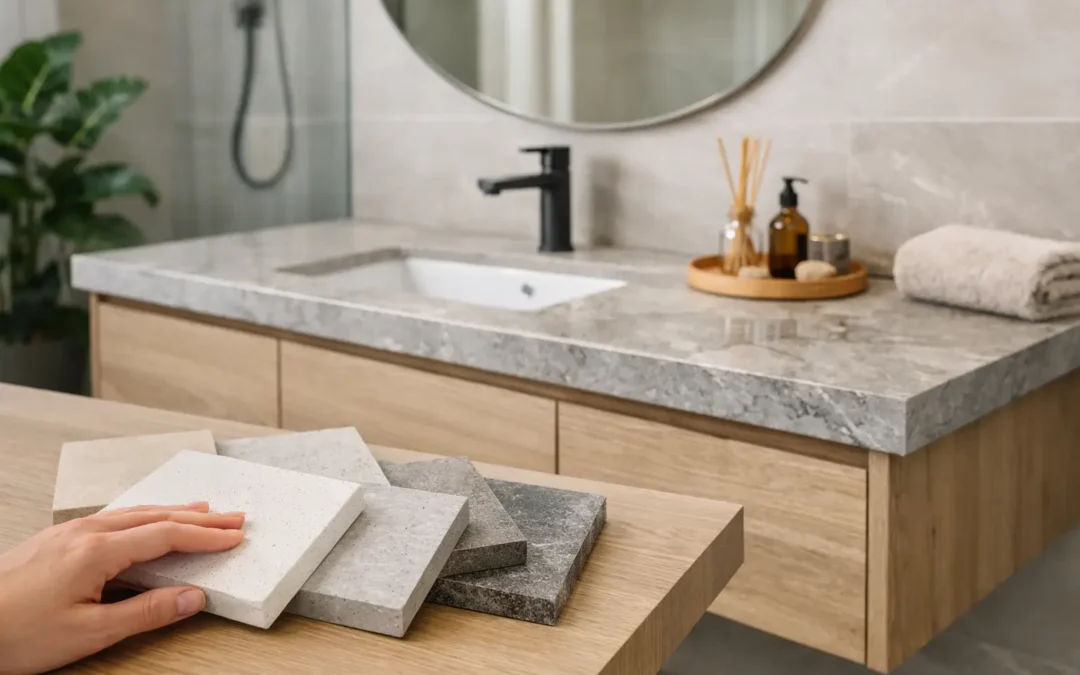
A bathroom vanity top rarely fails all at once. More often, it shows small signs first – water marks around the faucet, dulling near the sink, edges that no longer look crisp, or a surface that simply feels out of step with the rest of the room. If you are planning a new bathroom or updating an existing one, choosing the right bancada para casa de banho is one of the decisions that shapes both the look of the space and how well it performs every day.
This is where the choice deserves more care than many homeowners expect. In a bathroom, the countertop has to do two jobs at once. It needs to look refined and intentional, but it also has to hold up to moisture, frequent cleaning, cosmetics, soap residue, and daily traffic. The right answer is not always the most expensive material or the trendiest finish. It is the surface that fits the room, the way the bathroom is used, and the level of maintenance you are comfortable with.
What makes a good bancada para casa de banho?
A good bathroom countertop starts with proportion. In a powder room, the surface may only need to support a compact sink and leave a small landing area for hand soap and essentials. In a primary bath, the countertop often has a much bigger role. It may need room for two sinks, storage zones, a makeup area, or a cleaner visual line across a long vanity.
Material performance matters just as much as size. Bathrooms are wet spaces, but not all moisture exposure is the same. A guest bath that sees occasional use has very different demands than a busy family bathroom where water sits around the sink, products get left out, and cleaning happens often. That is why selecting stone, engineered quartz, or another premium surface should be tied to real use, not just appearance.
Edge profile and finish also affect the final result more than people realize. A polished surface reflects light and often feels more formal. A honed finish reads softer and more understated, but in some materials it may show marks differently. Thick, dramatic edges can create a strong design statement, while a thinner profile often feels more architectural and current. None of these choices are right or wrong on their own. They need to work together.
Best materials for a bathroom vanity top
Natural stone remains one of the most compelling options for a bathroom because it brings depth, movement, and authenticity that manufactured materials often try to imitate. Marble is a classic choice, especially in bathrooms where elegance is the priority. It offers beautiful veining and a soft, refined presence that works well in both traditional and modern spaces. The trade-off is that marble is more sensitive than some other materials. It can etch or stain more easily, especially around products with acids, oils, or dyes.
Granite is often chosen for its strength and visual variation. It performs well in bathrooms and offers more resistance to wear, making it practical for households that want durability without sacrificing the character of real stone. Some granites have a busier pattern, while others are quiet and uniform, so the selection process matters.
Quartzite is another strong option when clients want the elegance of natural stone with excellent durability. It is often confused with quartz, but it is a natural stone with distinct performance characteristics. Many quartzites offer dramatic movement and high-end visual impact while standing up well to daily use. For homeowners who want a statement surface without the delicacy associated with some marbles, quartzite often deserves a closer look.
Engineered quartz is popular for good reason. It is consistent, low-maintenance, and available in a wide range of colors and patterns. For many bathrooms, especially family bathrooms or projects where ease of upkeep is a priority, quartz offers a practical balance of style and performance. It does not have the exact one-of-a-kind variation of natural stone, but it can provide a very clean, controlled aesthetic.
How to match the countertop to the bathroom
The countertop should not be chosen in isolation. It needs to relate to the vanity cabinetry, wall tile, flooring, plumbing fixtures, and lighting. In a smaller bathroom, that relationship becomes even more important because every finish is more visible.
If the room already has bold tile or a highly figured floor, a quieter countertop often creates better balance. If the bathroom palette is restrained, the vanity top can become the focal point through veining, texture, or a more distinctive edge detail. This is one of the most common design mistakes in remodels – choosing several competing statement materials and asking them to do too much at once.
Color temperature is another detail that influences the final look. Warm stones can soften a bathroom with brass fixtures or wood cabinetry. Cooler whites and grays tend to pair well with chrome, nickel, or black accents. That said, perfect matching is not the goal. A well-designed bathroom usually has contrast, but it should feel intentional rather than accidental.
Scale matters too. Large dramatic veining can look stunning on a long double vanity, but it may feel visually compressed in a compact powder room. Smaller spaces often benefit from materials with subtler movement, especially when the goal is a calm and clean finish.
Sink style, fabrication, and the details that affect the result
A beautiful slab can still lead to a disappointing bathroom if the fabrication details are not resolved carefully. Sink selection is a major part of that. Undermount sinks remain a favorite because they create a cleaner line and make wiping water into the basin easier. Integrated stone sinks can look exceptionally refined, especially in modern bathrooms, but they require precise fabrication and thoughtful detailing.
Backsplash height is another decision that should reflect the design intent. Some bathrooms look best with a short matching backsplash for practicality. Others benefit from taking the wall material all the way down to the countertop and skipping the separate splash entirely. The right answer depends on the wall finish, the faucet style, and how tailored you want the vanity area to feel.
Cutouts, seams, and overhangs should never be treated as minor technical items. They are part of the visual quality of the room. Clean sink cutouts, consistent reveal lines, and well-planned seam placement are what make a finished vanity feel premium rather than merely adequate. This is one reason clients often prefer a partner who can guide material selection and execute fabrication in one process.
Where homeowners tend to make the wrong call
The most common mistake is choosing based only on a small sample. A sample is useful for evaluating tone and finish, but it rarely shows the full movement of a slab. This matters most with natural stone, where the character can change dramatically across the piece. Seeing the actual slab, or at least understanding the range of variation, reduces surprises.
Another frequent issue is underestimating maintenance preferences. Some clients love the patina and individuality of natural stone and are perfectly comfortable with that. Others want the bathroom to look nearly unchanged with minimal effort. Neither mindset is better, but they should lead to different recommendations.
Budget decisions can also become shortsighted when they focus only on the initial material price. A vanity top is a highly visible surface that gets daily use. If the countertop feels generic, mismatched, or poorly fabricated, the whole bathroom can feel less resolved. Spending wisely here often improves the overall impression of the room more than adding another decorative upgrade later.
A better way to choose with confidence
The best projects usually begin with three clear questions. How will the bathroom be used day to day? What level of maintenance feels realistic? And what kind of visual statement should the vanity make in the room?
From there, the selection process becomes much simpler. Materials can be narrowed by performance. Colors and patterns can be reviewed against cabinetry, tile, and fixtures. Fabrication details can be aligned with the overall design. When those decisions are handled together, the result feels calm, intentional, and built to last.
For clients who want that process to feel more straightforward, working with a team that combines curated slab selection, technical guidance, and precision fabrication can save time and prevent expensive missteps. That is the value of a showroom-and-fabrication approach like Stonhaus Design offers through https://StonhausDesign.com – you are not choosing a surface in a vacuum; you are choosing a finished result.
A bathroom countertop is one of those details you see and use every single day. When the material, scale, and fabrication are right, the room feels easier to live with and better every time you walk into it.