
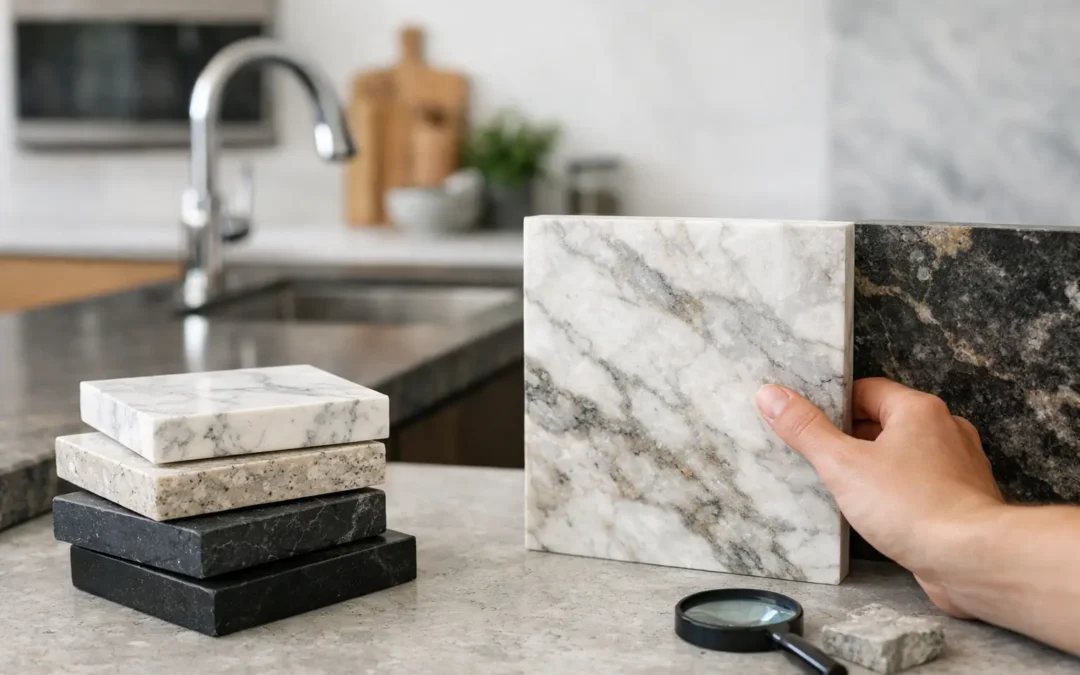
A kitchen stone can look perfect under showroom lighting and still be the wrong choice for the way your home actually works. The real question is not just what looks good today, but how to select durable kitchen stone that will still perform well after years of cooking, cleaning, spills, heat, and everyday use.
For some households, durability means a surface that shrugs off dropped utensils and red wine. For others, it means a stone that holds its finish, hides daily mess, and supports a clean, tailored design. The right answer depends on how you use your kitchen, how much maintenance you want, and how precise you need the final look to be.
What durability really means in a kitchen
Durability is often treated as a single feature, but in practice it has several parts. A durable kitchen surface should resist scratching, staining, etching, and heat while also holding up at cutouts, edges, and overhangs. That matters because even a beautiful slab can become a poor long-term choice if it is too delicate for the room it is going into.
This is where many decisions go off track. A client may focus on color and pattern first, then discover later that the material reacts poorly to acids, shows every mark, or requires more upkeep than expected. Good stone selection starts with appearance, but it should not end there.
How to select durable kitchen stone by material
Each material category has strengths, trade-offs, and ideal use cases. There is no single best kitchen stone for every project. The better approach is to match the material to the way the kitchen will be used.
Granite
Granite remains one of the most dependable choices for hardworking kitchens. It is a natural stone known for strong scratch resistance, good heat performance, and broad visual variety. Many granites also tolerate busy family use well, especially when properly sealed.
That said, not every granite performs exactly the same way. Some lighter or more porous options may need more attention to sealing, and movement-heavy patterns can vary from slab to slab. If consistency matters, seeing the exact slab in person is worth it.
Quartzite
Quartzite is a strong option for clients who want the elegance often associated with marble but with better wear performance. In many kitchens, it offers excellent durability, strong scratch resistance, and natural beauty with more depth than engineered alternatives.
The caution here is that quartzite is frequently confused with softer stones. Labeling in the market is not always consistent. A true quartzite can be an excellent long-term choice, but selection should be guided by someone who understands the material and can verify what you are actually buying.
Quartz
Quartz is engineered rather than quarried as a full slab of natural stone, but it is often part of the kitchen surface conversation for good reason. It is nonporous, low maintenance, and predictable in pattern and tone. For many homeowners, that combination makes daily life easier.
Its main trade-off is heat sensitivity compared with some natural stones. A hot pan set directly on the surface can cause damage, and very bright sun exposure in some installations may also be a consideration. If you want a cleaner, more uniform look and lower maintenance, quartz can be a smart choice, but it is not automatically the toughest in every category.
Marble
Marble is timeless, but it is rarely the first recommendation for clients whose top priority is pure durability. It is softer than granite and quartzite and more vulnerable to etching from acidic foods such as lemon juice, vinegar, and tomato sauce.
That does not mean marble should be ruled out. In the right home, and with the right expectations, it can be a beautiful and intentional decision. Some clients love the lived-in character that develops over time. The key is honesty about performance before installation, not after.
The kitchen itself should guide the choice
A stone that works beautifully in a low-traffic entertaining kitchen may not be ideal in a home where meals are cooked daily and counters are used hard. Before choosing a slab, it helps to answer a few practical questions.
Do you cook often, or is the kitchen more design-forward than high-impact? Are there young children, frequent guests, or a habit of placing hot cookware directly on the counter? Do you want a surface that stays visually crisp, or are you comfortable with natural aging and patina?
These answers narrow the field quickly. A busy family kitchen often benefits from granite, quartzite, or quartz. A statement island in a more controlled space may allow for something more delicate if the design goal is worth the added care.
Finish affects performance more than most people expect
Polished surfaces are still the most common, and for good reason. They reflect light well, bring out color and pattern, and are often easier to wipe clean. In many kitchens, polished finishes also make it easier to spot spills before they sit too long.
Honed and leathered finishes can be excellent choices too, especially if you want a softer or more natural look. They can help disguise fingerprints or minor daily marks, but they may show oils differently depending on the material. A finish changes not only the appearance of the slab, but also how the surface lives day to day.
This is why touching and viewing full samples matters. Two stones with similar color can behave very differently once finish is factored in.
Edges, cutouts, and fabrication matter to durability
When people think about durable stone, they usually think about the slab itself. Just as important is how that slab is fabricated. Weak points often show up around sink cutouts, cooktop openings, tight corners, and unsupported spans.
A well-selected material can still underperform if the fabrication is careless or if the design pushes the stone beyond what it should reasonably do. Thick-looking waterfall edges, large overhangs, and thin-profile details may require reinforcement depending on the material and application.
That is one advantage of working with a team that handles both selection and fabrication. The design can stay ambitious, but the technical decisions stay grounded in what the material can support safely and cleanly.
Slab variation is part of the decision
Natural stone is not a manufactured print. Veining, background tone, movement, and structure can vary significantly even within the same category. That is part of the appeal, but it also means durability and appearance should be evaluated slab by slab, not just by stone name.
A dramatic slab may be stunning on an island but require thoughtful seam planning. A quieter slab may offer more flexibility across a large kitchen. For design professionals and homeowners alike, this is where in-person viewing becomes especially valuable. You are not just choosing a species of material. You are choosing the actual surface that will be cut, finished, and installed in your home.
Maintenance should fit your real life
One of the simplest ways to choose well is to be honest about maintenance. If you want the least amount of upkeep, quartz may be appealing. If you love natural materials and are comfortable sealing when needed, granite and quartzite are often strong candidates. If you are drawn to marble, the question is whether you will appreciate its aging rather than fight it.
There is no value in selecting a surface that makes you nervous every time someone cooks. The best countertop is not the one that wins a short-term visual comparison. It is the one you can live with confidently.
At Stonhaus Design, this is where a curated showroom experience makes a difference. Seeing materials in person, comparing finishes, and discussing fabrication details at the same time tends to lead to better choices and fewer surprises.
A practical way to narrow your options
If you are deciding between several materials, start with performance first and then refine by style. Rule out any option that does not fit your tolerance for maintenance or your kitchen habits. Then compare the remaining choices based on tone, pattern, finish, and how each slab works with cabinetry, flooring, and lighting.
This keeps the process clear. Instead of falling in love with a material and hoping it works, you select from options that already make sense for the space.
For most high-use kitchens, granite, quartzite, and quartz will be the leading contenders. The best one depends on whether your priority is natural character, low maintenance, heat resistance, consistency, or a specific design statement. There is almost always a right answer once those priorities are clear.
A durable kitchen stone should make your space feel elevated, not fragile. When the material, finish, and fabrication are aligned with the way you actually live, the result is not just a beautiful countertop. It is a surface you can use every day with confidence.