
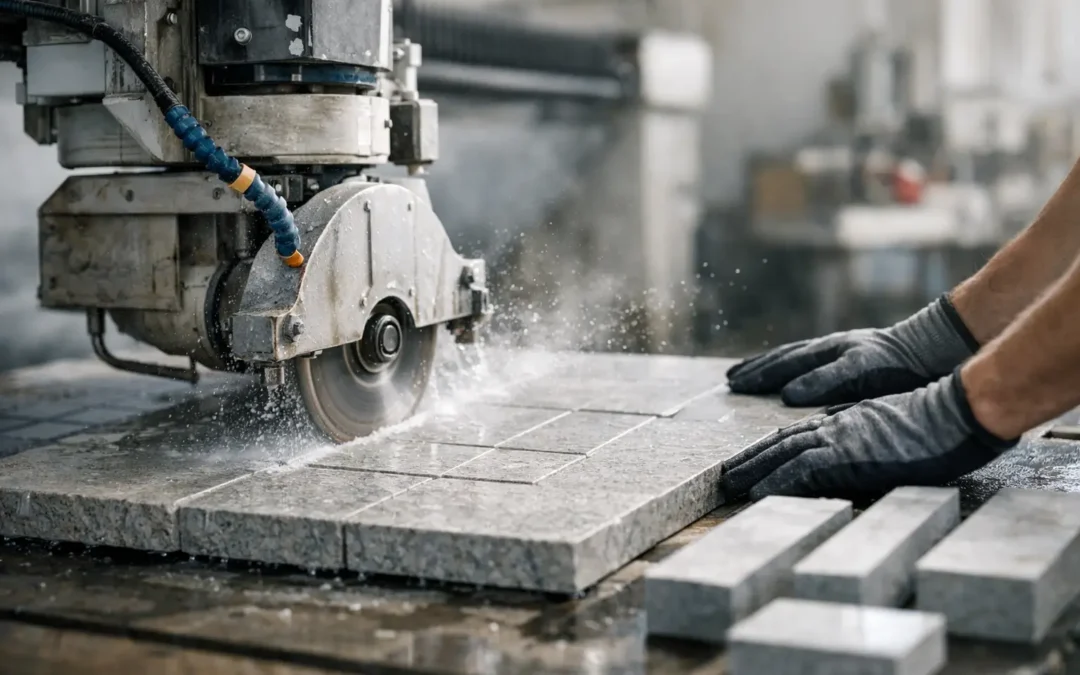
A beautiful slab can still become a frustrating project if the cut is off by even a small margin. That is why precision stone cutting services matter so much in kitchens, bathrooms, fireplaces, and custom commercial spaces. The difference shows up in the places clients notice first – tight seams, clean edge details, accurate sink openings, and finished surfaces that fit the room the way they were intended.
For homeowners, that precision protects a major investment. For designers, builders, and contractors, it reduces costly delays and field adjustments. And for any project where stone is the visual anchor, it helps preserve what made the material special in the first place.
What precision stone cutting services actually include
The phrase sounds straightforward, but good stone cutting is not just about slicing a slab to size. It starts much earlier, with material review, layout planning, and jobsite measurements that account for walls, cabinetry, appliance clearances, plumbing locations, and edge conditions.
From there, fabrication teams translate those dimensions into cuts for countertops, backsplashes, shower thresholds, vanity tops, fireplace surrounds, and other custom applications. That may include sink and cooktop cutouts, waterfall legs, mitered edges, radius corners, outlet openings, and detailed profiles. In higher-end projects, it also includes vein matching and slab orientation, which can dramatically affect the final look.
This is where experience matters. Marble, quartzite, granite, quartz, and porcelain-inspired engineered materials do not all behave the same way during cutting and finishing. A shop that understands those differences can make better decisions about tool selection, cut sequencing, reinforcement, and edge treatment.
Why precision matters beyond appearance
The visual benefit is obvious. Clean lines and a tailored fit simply look better. But precision also affects performance, durability, and installation efficiency.
When measurements are accurate and fabrication is controlled, installers spend less time forcing adjustments in the field. That reduces stress on the material and lowers the risk of chipping, cracking, or awkward gaps. It also helps plumbing fixtures, cooktops, and accessories sit properly within the finished surface.
There is also a long-term benefit. Well-cut stone is easier to maintain because seams are tighter, overhangs are better supported, and transitions to adjacent surfaces are more intentional. Those details may seem small on installation day, but they often determine whether the finished project still looks refined years later.
Where precision stone cutting services make the biggest difference
In kitchens, precision affects almost every visible line. Countertops need to work around walls that are rarely perfectly straight, islands need balanced overhangs, and sink openings need to align with faucets and cabinet centers. If a kitchen includes a full-height backsplash or dramatic veining, slab layout becomes just as important as basic measurement.
Bathrooms bring a different set of demands. Vanity tops often involve tighter dimensions, more detailed faucet drilling, and narrower tolerances around mirrors, tile, and plumbing. Shower benches, curbs, and niche components also need consistent sizing and careful finishing so the space feels intentional rather than pieced together.
Fireplace surrounds and feature walls introduce another layer. These applications are often more design-driven, so pattern continuity, edge visibility, and symmetry matter even more. A technically correct cut is not enough if the visual composition feels off.
Commercial work can raise the stakes further. Reception desks, bar tops, restroom vanities, and hospitality surfaces often require repeatability across multiple pieces, along with faster coordination between trades. In those settings, precision helps keep the schedule moving while maintaining a polished appearance.
The process behind a better result
A strong fabrication process usually feels organized long before the first cut is made. It begins with understanding how the space will be used, what material best fits the application, and where the design priorities sit. Some clients care most about durability and low maintenance. Others want striking movement, softer tones, or a specific edge profile that complements cabinetry and hardware.
Once the material is selected, accurate field measurements become the foundation. Digital templating can improve consistency, especially in spaces with irregular walls or custom cabinetry. Just as important, the fabrication team should review how the slab will be laid out so cut locations, seams, and directional veining support the design rather than work against it.
Cutting and finishing come next, but this is not simply machine work. Stone still requires judgment. Fabricators have to account for natural variation, weak points, thickness, edge exposure, and the way certain finishes respond to tooling. A slab with dramatic veining may need a different approach than a more uniform quartz. A bookmatched feature may require extra planning to preserve the effect.
Final finishing is where the craftsmanship becomes easy to see. Polished edges should feel consistent. Corners should be clean and intentional. Cutouts should be accurate without looking rough or overworked. The best shops treat fabrication as part engineering, part finish carpentry.
Choosing the right partner for precision stone cutting services
Not every stone provider handles the full process with the same level of control. Some businesses focus primarily on sales and outsource most fabrication work. Others may cut accurately but offer limited guidance on material suitability, slab layout, or design details. That does not automatically mean a poor outcome, but it can create more handoffs and more room for miscommunication.
For many homeowners and trade professionals, the smoother option is working with a team that can guide selection, measuring, fabrication, and finishing under one roof. That creates better accountability. It also makes it easier to solve issues early, before a slab is cut or a jobsite install is scheduled.
When evaluating a provider, ask practical questions. How do they template? How do they handle seam placement? What materials do they fabricate most often? Can they explain the trade-offs between marble, quartzite, granite, and quartz for your application? A trustworthy partner will answer clearly, without overselling one material or pretending every project has the same solution.
That consultative approach is especially valuable in premium spaces where design and performance need equal attention. Stonhaus Design serves many of those clients by combining curated material selection with local fabrication support, helping projects move from showroom decision to finished surface with fewer surprises.
Common trade-offs clients should understand
Precision does not eliminate every compromise. Stone projects still involve choices, and the right answer often depends on how you live and what you value most.
Natural stone offers depth and character that many clients love, but some materials require more maintenance or greater care around staining and etching. Engineered quartz offers consistency and easier upkeep in many applications, though it may not deliver the same natural movement as a dramatic quartzite or marble. Precision cutting helps either option perform better, but it does not change the material’s core properties.
Large-format pieces can create a cleaner, more luxurious look with fewer seams, but they may increase handling complexity and site access concerns. Intricate edge profiles can add elegance, though they may also affect cost and fabrication time. Waterfall ends and mitered details can look exceptional when executed well, but they demand even tighter tolerances and stronger coordination.
A good fabricator should walk clients through those decisions honestly. The goal is not to push the most expensive option. It is to recommend the approach that fits the design, budget, maintenance expectations, and timeline.
Precision is also a customer experience issue
Many clients think of fabrication as the back-of-house technical step. In reality, it shapes the entire project experience. When measurements are clear, communication is direct, and fabrication is handled carefully, the process feels more predictable. That matters just as much as the finished countertop.
A well-run stone project reduces guesswork. Clients know what they are getting, how the slab will be used, when templates will happen, and what to expect on install day. Designers and contractors can coordinate more confidently. Homeowners can make decisions without feeling pushed into technical choices they do not fully understand.
That clarity is often what separates a premium experience from a stressful one. Precision, in this sense, is not just about machinery or millimeters. It is about respecting the material, the design, and the client’s time.
If you are planning a kitchen remodel, bathroom renovation, or custom stone feature, look closely at how a fabricator approaches precision from the first conversation onward. The best results come from teams that treat cutting as one part of a carefully managed process – because the right fit should feel obvious the moment the stone is in place.