
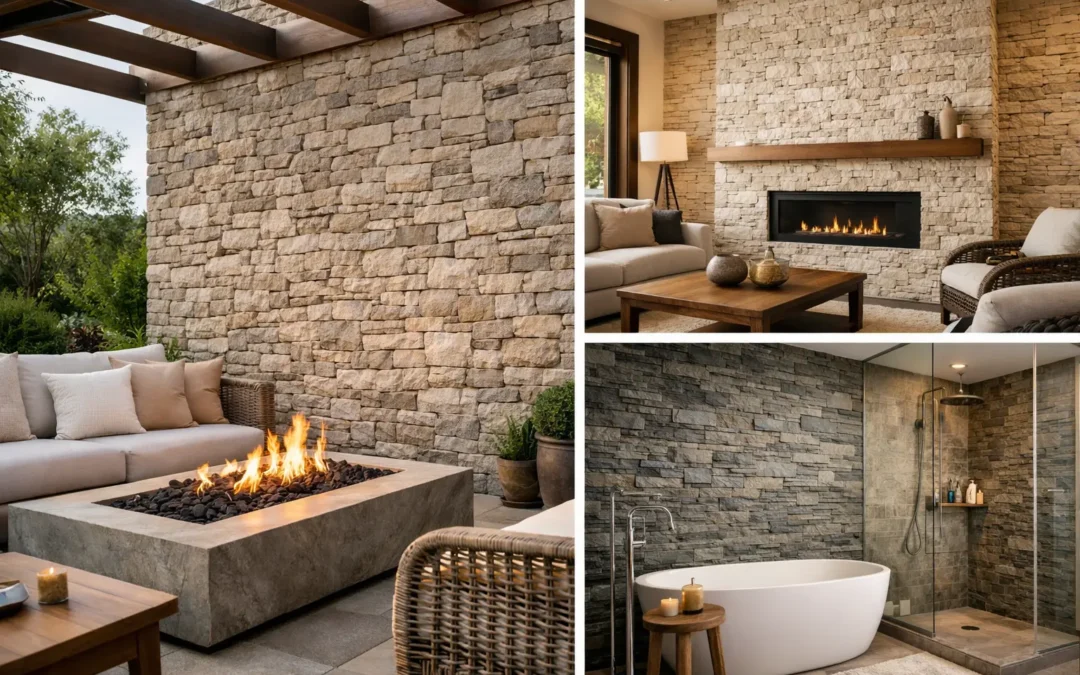
A wall can look finished on paper and still feel flat in real life. That is usually the moment clients start considering Stone Accent Walls: Not as decoration, but as a material decision that changes depth, texture, light, and the overall quality of a room.
Stone wall cladding has a different effect than paint, tile, or wallpaper. It carries weight visually, even when used sparingly. It also asks for better decisions up front. The right material can make a fireplace surround feel architectural, a bathroom feel quieter and more refined, or an exterior entry feel grounded and lasting. The wrong choice can create unnecessary maintenance, awkward transitions, or a look that feels forced.
What Stone Accent Walls: really changes in a space
The appeal of stone is not only its appearance. It is the way it interacts with scale, natural light, and nearby finishes. A veined marble wall reads differently from a split-face limestone surface. A honed quartzite panel creates a calmer effect than a highly reflective polished slab. Even within the same color family, texture changes the mood.
That is why stone cladding works best when it is part of the room’s broader material story. In a kitchen, it may connect a full-height backsplash to the countertop in a way that feels deliberate rather than busy. In a primary bathroom, it can soften the transition between vanity, shower, and floor by introducing one strong natural material instead of several competing ones. In a living space, it often becomes the focal point that lets everything else stay quieter.
Good stone selection also brings a practical benefit. Natural stone has visual depth that manufactured surfaces often try to imitate but rarely match. For homeowners investing in a remodel and for designers specifying finishes that need to hold up over time, that difference matters.
Best places to use Stone Accent Walls:
Not every wall needs stone. In most high-end homes, restraint gives better results than overuse. The strongest applications are usually the ones where stone has a clear role.
Fireplace walls and surrounds
This is one of the most natural uses for stone cladding. A fireplace already carries visual importance, so giving it material presence makes sense. Large-format stone creates a cleaner, more contemporary look with fewer joints, while textured stone can add warmth and variation in more rustic or layered interiors.
The key is proportion. A small firebox with an oversized, heavily patterned stone wall can feel top-heavy. On the other hand, a tall room may need full-height stone to avoid looking under-scaled.
Bathroom feature walls
Stone can make a bathroom feel more architectural and less pieced together. It works especially well behind a freestanding tub, inside a shower, or on the vanity wall where a single material can simplify the visual field.
This is also where performance matters. Some stones are more porous than others, and some finishes show water spotting more readily. Marble may deliver a soft, luxurious look, but it will require more care than a denser quartzite or certain engineered options depending on the installation area.
Kitchen backsplashes and accent walls
In kitchens, the move toward full-height stone has changed what homeowners expect from a backsplash. Instead of a short practical strip, many now want a surface that feels integrated with the counters and cabinetry.
Stone can absolutely do that, but kitchens are busy environments. Oil splatter, acidic foods, and constant wipe-downs make material choice important. A dramatic natural slab may be worth it for clients prioritizing aesthetics, while others may prefer a lower-maintenance surface with a similar visual effect.
Entryways and exterior facades
Stone in an entry sequence gives immediate weight and permanence to a home. On exterior walls, it can also add texture and durability, especially when balanced with simpler siding or clean architectural lines.
Exterior use brings another layer of decision-making. Climate exposure, freeze-thaw conditions, sun, and moisture all affect performance. The stone itself matters, but so do the installation system, substrate preparation, and detailing at edges and transitions.
How to choose the right stone
The best choice is rarely about color alone. It usually comes down to four things: location, finish, maintenance tolerance, and the overall design intent.
Natural stone versus engineered surfaces
If the goal is character, variation, and authenticity, natural stone usually wins. Marble, quartzite, limestone, travertine, and granite each have their own visual language. Veining, movement, pits, fossils, and shifts in tone are part of the appeal.
Engineered materials offer more predictability. They can be a smart fit when consistency, stain resistance, or project budget is driving the decision. For some wall applications, that predictability is a benefit. For others, especially focal installations, it can feel a little too controlled.
Finish matters as much as material
A polished surface reflects light and sharpens color. A honed finish softens the look and tends to feel more relaxed. Textured or split-face finishes add shadow and dimension, but they can also collect dust and be harder to clean.
That trade-off matters in real life. A deeply textured stone behind a fireplace may be beautiful and low-touch. The same surface behind a cooktop may become frustrating.
Think about slab, tile, or panel format
Large slabs create fewer seams and a more continuous look. That often feels more premium, particularly in bathrooms, fireplace walls, and kitchen backsplashes. Tile and smaller-format stone can still look excellent, but the pattern, grout lines, and installation precision become more visually important.
Format also affects fabrication. Corners, outlets, niches, wrapped edges, and bookmatching all require planning before material is cut. This is one reason many clients prefer working with a showroom and fabrication partner under one roof. It reduces handoff errors and makes the finished result more predictable.
What affects cost more than most people expect
Clients often assume stone pricing is mainly about the slab itself. The material is important, but it is only one part of the total investment.
Stone type and rarity matter, of course. Exotic materials, imported selections, or slabs with dramatic movement typically cost more. But fabrication complexity can change the number quickly. Full-height installations, mitered edges, custom cuts, outlet openings, vein matching, and difficult site access all add labor and time.
Installation conditions matter too. A straightforward flat wall is one thing. A wall with uneven framing, moisture concerns, or multiple returns is another. Premium results usually come from planning these details early rather than trying to solve them after the material arrives.
Common mistakes with stone wall cladding
Most problems are not caused by the stone. They come from choosing without enough context.
One common mistake is selecting a material from a small sample only. Stone needs to be seen at scale. Veining that looks subtle on a sample can dominate a full wall. A surface that seems calm under showroom lighting may read differently in a room with strong natural light.
Another mistake is ignoring adjacent materials. Stone should relate to cabinetry, flooring, paint, metal finishes, and lighting. It does not need to match them, but it should belong with them.
The last major issue is underestimating fabrication and installation. Precision matters. Clean reveals, consistent joints, balanced pattern placement, and thoughtful edge details are what separate a stone feature from a stone problem. That is where a curated, consultative process makes a real difference. At Stonhaus Design, that is often the value clients notice most once the project is installed – fewer surprises, better decisions, and a result that feels resolved.
Is Stone Accent Walls worth it?
Usually, yes – when the application is right and the material is chosen honestly.
Stone cladding is not the cheapest way to finish a wall, and it should not be treated like a quick cosmetic upgrade. It is a design and construction decision. But in the right place, it adds permanence, material richness, and resale appeal that many lighter finishes cannot match.
For homeowners, the value often comes from living with something that still feels substantial years later. For designers and builders, it comes from specifying a surface that photographs well, performs well, and gives the project a stronger point of view.
The best results come from asking a simple question before selecting anything: what does this wall need to do? If the answer is to anchor the room, carry texture, and hold its relevance over time, stone is often the right move.