
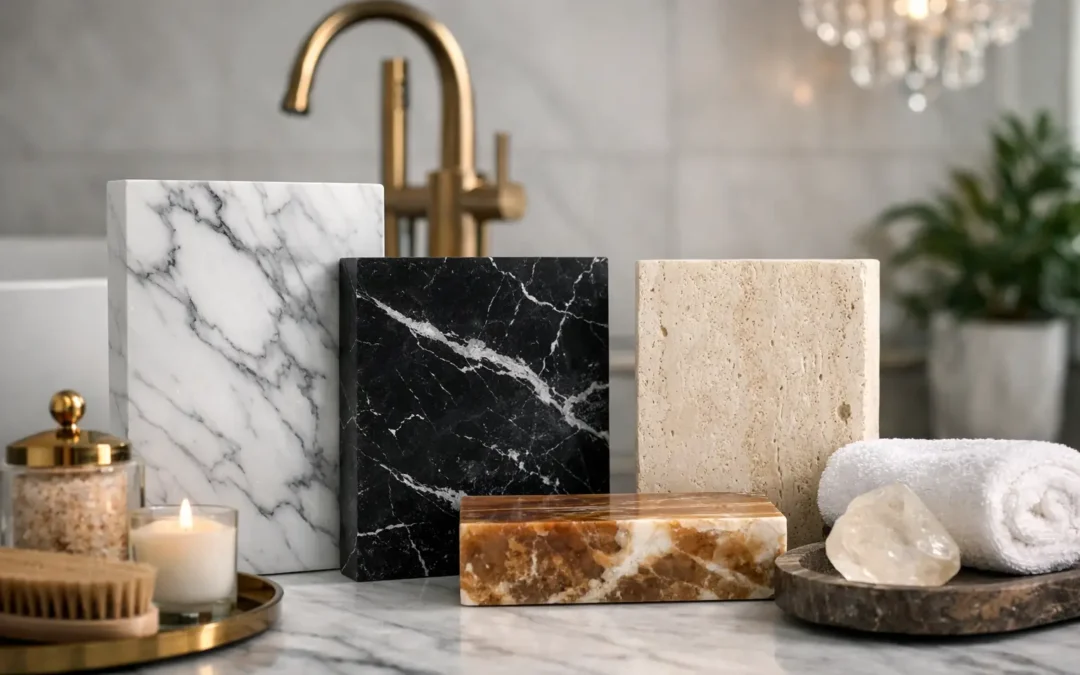
A luxury bathroom rarely comes down to one dramatic fixture. More often, the room feels elevated because the surfaces are right. When clients ask about the top stone choices for luxury bathrooms, they are usually balancing three things at once: visual impact, daily performance, and how much maintenance they are realistically willing to take on.
That balance matters. A stone that looks exceptional in a showroom slab may behave very differently once it becomes a shower surround, vanity top, or full-height feature wall. The best choice depends on where the material will be used, how the bathroom is used, and what kind of finish and fabrication details will support the design.
What makes a stone feel truly luxurious
Luxury is not just about price or rarity. In bathrooms, it usually shows up through scale, consistency, finish quality, and thoughtful installation. Large-format slabs with fewer seams create a more refined look than heavily segmented pieces. A clean eased edge, a carefully bookmatched wall, or a well-executed integrated sink can make a bathroom feel custom even before the plumbing fixtures go in.
Material selection also plays a major role. Some stones deliver movement and drama. Others create a calmer, more architectural feel. Neither is automatically better. The right decision comes from matching the stone to the style of the home and to the demands of the space.
Top stone choices for luxury bathrooms by material type
Marble
Marble remains the classic luxury bathroom stone for a reason. It has depth, softness, and natural veining that few other materials can replicate. In primary bathrooms, powder rooms, and statement vanities, marble often delivers the most timeless high-end look.
That said, marble is not the automatic best choice for every application. It is softer and more porous than some alternatives, which means it can etch from acidic products and show wear over time. For many homeowners, that patina is part of the appeal. For others, especially in busy family bathrooms, it can become a frustration.
Marble tends to work best when the client understands what they are getting: exceptional beauty with a little more care. It is especially strong for vanity tops, feature walls, tub decks, and lower-traffic bathrooms where the material can be appreciated without taking excessive abuse.
Quartzite
If a client loves the look of natural movement but wants more durability, quartzite is often one of the strongest options. Many quartzites offer the elegance people associate with marble, but with greater hardness and better resistance to scratching and wear.
This makes quartzite a smart fit for luxury bathrooms that need both beauty and resilience. It performs well on vanity tops, wall applications, and in many cases shower surrounds, depending on the specific material and finish selected. Not all quartzites behave exactly the same, so proper guidance matters. Some are denser and more consistent than others, and that affects fabrication, sealing, and long-term performance.
For design professionals and homeowners who want a natural stone statement without stepping fully into marble maintenance, quartzite often lands in the sweet spot.
Granite
Granite is sometimes overlooked in high-end bathroom conversations because people associate it more with kitchens, but that is a mistake. The right granite can bring depth, character, and impressive durability to a luxury bath.
Granite is one of the more practical natural stone choices for wet environments. It generally holds up well to daily use, resists scratching better than softer stones, and offers strong longevity when properly fabricated and sealed. Visually, some granites lean traditional, while others feel bold, contemporary, or even sculptural.
In bathrooms, granite can be especially effective for vanities, thresholds, and accent applications where strength matters. It may not always create the soft, spa-like look of a pale marble, but for clients who want confidence in performance and a premium natural surface, granite deserves serious consideration.
Quartz
Technically, quartz is engineered rather than quarried in slab form, but it is absolutely part of the luxury bathroom conversation. For clients who want consistency, low maintenance, and dependable performance, quartz is often the most straightforward recommendation.
Quartz does not require the same level of sealing or ongoing care as many natural stones. It offers a broad range of colors and patterns, including looks inspired by marble and other natural materials. That makes it appealing for homeowners who want a polished, upscale result without worrying as much about staining or etching.
The trade-off is that quartz does not have the exact depth and variation of a true natural slab. Some clients will notice that immediately, while others prefer the cleaner uniformity. In a luxury bath, quartz often works best when the design calls for precision, quiet sophistication, and minimal upkeep.
Specialty and exotic stones
For clients creating a one-of-a-kind bathroom, specialty and exotic stones can deliver something truly distinctive. These materials may feature dramatic veining, rare coloration, translucent qualities, or bold mineral movement that turns a vanity or wall into the focal point of the room.
This is where design ambition and technical planning need to meet. Exotic stones can vary widely in strength, porosity, and fabrication requirements. Some are ideal for vertical applications or lower-impact areas rather than heavily used horizontal surfaces. Others can perform beautifully when the design and installation details are handled correctly.
Used thoughtfully, these stones create bathrooms that feel custom rather than catalog-based. They are often chosen for powder rooms, statement vanities, and feature walls where the goal is maximum visual impact.
How to choose the right luxury bathroom stone
The best material is not always the most expensive or the most dramatic. It is the one that fits the application.
Start with where the stone will go. A vanity top deals with cosmetics, soap, water, and daily handling. A shower wall faces constant moisture and cleaning products. A feature wall may have fewer performance demands, which opens the door to more delicate or expressive materials. One bathroom can even use more than one stone if each is selected for the right purpose.
Then consider maintenance expectations. Some homeowners are happy to preserve and protect a natural material. Others want a surface that asks very little of them. There is no wrong answer, but there is a wrong match. A beautiful material that creates ongoing stress is not a luxury experience.
Design style should guide the final decision. Marble often suits classic and transitional spaces. Quartzite can bridge traditional elegance and modern durability. Quartz fits clean-lined contemporary bathrooms well. Granite and specialty stones can introduce richness, texture, or dramatic contrast when the room needs a stronger point of view.
The finish and fabrication matter as much as the slab
In luxury bathrooms, material quality alone is not enough. Finish selection changes the way a stone reads in the room. A polished surface reflects light and tends to feel more formal. A honed finish can soften movement and create a more relaxed, architectural look. In some bathrooms, that subtle difference has as much impact as the stone selection itself.
Fabrication details also shape the final result. Edge profile, sink cutouts, backsplash height, seam placement, and slab layout all affect whether the project looks custom or merely adequate. This is one reason many homeowners and trade professionals prefer a guided process rather than treating material selection and fabrication as separate decisions.
At Stonhaus Design, that integrated approach matters because the slab is only the beginning. Precision measuring, expert cutting, and finish quality are what turn a strong material choice into a bathroom that feels complete.
Common mistakes to avoid with top stone choices for luxury bathrooms
One common mistake is choosing purely by appearance without thinking through use. Another is assuming all natural stones behave the same. They do not. Even within the same category, performance can vary by specific slab, finish, and installation method.
Clients also sometimes underestimate the value of seeing full slabs rather than relying on small samples. In a bathroom, scale matters. Vein direction, pattern repetition, and color variation become much clearer when the material is viewed in context. That is especially important for feature walls, bookmatching, and large vanity pieces.
The last major mistake is treating fabrication as an afterthought. A premium stone can lose its impact quickly if the seams are awkward, the cutouts are rough, or the proportions are off. Luxury depends on execution.
If you are planning a bathroom that should feel elevated for years, not just on reveal day, start with the stone that fits your lifestyle as well as your design vision. The right surface should give you confidence every time you walk into the room.