
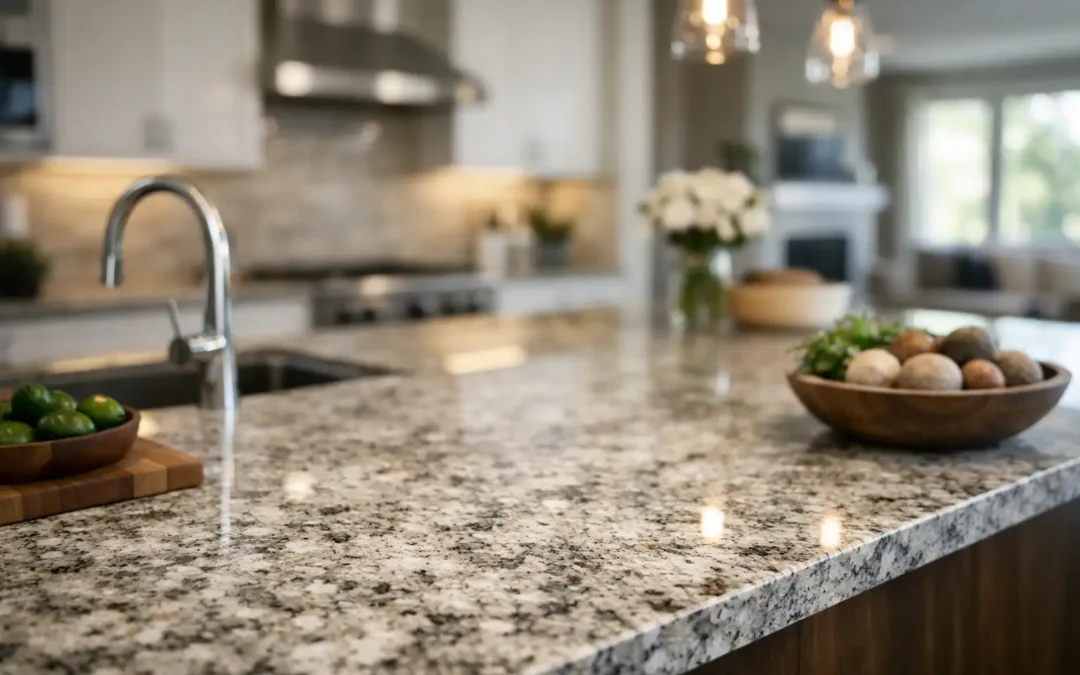
If you are choosing surfaces for a kitchen or bathroom that needs to look refined and hold up to real use, bancadas granito deserve a serious look. Granite has stayed relevant for a reason: it handles heat well, resists daily wear, and brings natural variation that engineered materials cannot fully replicate. The better question is not whether granite is good, but whether it is the right fit for the way you live and the level of finish you expect.
For many homeowners, granite sits in a useful middle ground. It feels substantial and high-end, but it is also practical. For designers and contractors, it offers visual depth, strong performance, and a broad range of movement, color, and finish options. That said, not every slab behaves the same way, and not every project calls for granite over quartz, quartzite, or marble. Good decisions start with the details.
Why bancadas granito remain a strong choice
Granite is an igneous natural stone formed under intense heat and pressure, which helps explain its hardness and durability. In everyday terms, that means a countertop that stands up well to cooking, traffic, and general household use. In kitchens especially, that matters.
One of granite’s biggest advantages is heat resistance. A hot pan placed briefly on a granite surface is less risky than on many engineered materials. It is still smart to use trivets, but granite gives you more margin for error. It also resists scratching well, which makes it appealing in busy kitchens where prep work happens daily.
Aesthetic value is another reason clients keep coming back to it. Granite offers movement, mineral flecking, veining, and depth that feel distinctly natural. Some slabs are quiet and architectural. Others are dramatic and expressive. That range is useful when you are trying to match a clean modern kitchen, a warm traditional bath, or a statement island that anchors the room.
There is also the resale factor. Buyers tend to recognize granite as a premium surface, and when it is well selected and fabricated correctly, it can add to the perceived quality of the home. It is not a shortcut to value on its own, but in a well-finished kitchen or bath, it supports the overall impression of durability and investment.
Where granite works best – and where it depends
Bancadas granito are especially well suited to kitchens, bathroom vanities, laundry rooms, bar tops, and outdoor applications, depending on the slab. Because granite is a natural stone with strong UV resistance, it often performs better outdoors than many engineered alternatives. For outdoor kitchens in sunny climates, that can be a decisive advantage.
In bathrooms, granite can work beautifully, especially when you want richer visual texture or a furniture-like vanity top. The trade-off is that some clients prefer a softer, lighter look in baths, where marble or quartz may better fit the design direction.
In kitchens, granite is often strongest when performance matters as much as appearance. If the household cooks often, uses the kitchen heavily, or simply wants a surface with fewer day-to-day worries about heat, granite makes a lot of sense. If the top priority is ultra-consistent patterning or a very clean, minimal look, quartz may be easier to control visually.
That is where material selection becomes less about trends and more about fit. The right answer depends on how the space is used, what the cabinetry and lighting are doing, and whether the client values natural variation or wants visual consistency from sample to installation.
Cost, value, and what affects the price
Granite pricing varies more than many people expect. Two kitchens with the same square footage can land in very different budget ranges based on slab origin, thickness, edge profile, color rarity, cut complexity, sink details, and installation conditions.
Common colors and more readily available patterns tend to be more budget-friendly. Exotic slabs with bold movement, unusual background colors, or imported provenance can move well into premium territory. Fabrication also matters. A straight run with a standard eased edge costs less than a project with a waterfall island, mitered edges, integrated design details, or difficult access.
This is why price per square foot is only a starting point. It helps with rough budgeting, but it does not tell the full story. A well-run process includes slab selection, templating, fabrication, edge finishing, cutouts, installation, and final fit. If any of those steps are rushed or handled poorly, the material itself cannot compensate.
For that reason, value is not just about getting granite at a lower number. It is about choosing a slab that suits the project and having it fabricated with precision, so the seams, overhangs, sink reveals, and finished edges all look intentional.
Maintenance is simple – but not zero
Granite has a reputation for being low maintenance, and that is generally true. But low maintenance is not the same as no maintenance.
Most granite countertops should be sealed periodically, depending on the specific slab and how heavily the surface is used. Some denser granites need less frequent sealing than others. Lighter stones or more porous varieties may need closer attention. A simple water test can help determine whether a surface is absorbing moisture and due for resealing.
Day-to-day care is straightforward. Mild soap and water or a stone-safe cleaner are usually enough. Harsh chemicals and abrasive pads are unnecessary and can dull the finish over time. Wiping spills promptly is also good practice, especially with oils, wine, coffee, or acidic ingredients.
What surprises some homeowners is that finish affects maintenance too. A polished granite surface is often easier to wipe clean and tends to emphasize color depth. A honed finish can look softer and more understated, but it may show oils or fingerprints more readily depending on the color and texture. Neither is wrong. The better choice depends on the look you want and how forgiving you need the surface to be.
How to choose the right granite slab
This is where many expensive mistakes happen. People choose from a small sample, fall in love with one part of the pattern, or focus only on color without considering layout, lighting, and edge treatment.
Granite should be selected as a full slab whenever possible. Natural stone is not uniform, and the difference between one slab and another can be significant, even within the same named material. The movement may be tighter, the background warmer, or the veining more directional than expected. Seeing the full slab gives you a clearer sense of scale and helps you plan where major features will land on the island, perimeter counters, backsplash, or vanity.
Lighting matters too. A granite that looks soft gray in a showroom can read much warmer in a home with wood cabinetry and afternoon sun. A high-contrast slab may feel dramatic in a large open kitchen but too busy in a compact space. This is one reason guided selection matters. Good advice can save you from choosing a slab that is beautiful on its own but wrong for the room.
It also helps to think through edge profile and finish early. The edge should support the design, not compete with it. In many projects, a simple eased or pencil edge feels more current and lets the stone take the lead.
Fabrication and installation matter as much as the stone
A premium material only performs like one if it is measured, cut, and installed correctly. Poor templating leads to gaps. Weak seam planning interrupts the pattern. Inaccurate cutouts can create stress points around sinks and cooktops. These are not small details. They shape how the finished project looks and how it holds up over time.
That is why many homeowners and trade professionals prefer working with a partner who can guide selection and control fabrication in-house. The process is more predictable when the team that helps you choose the slab also understands the technical demands of the install.
At Stonhaus Design, that integrated approach helps clients move from showroom selection to fabrication with fewer surprises and better alignment between design intent and final result. It is a practical advantage, especially for projects where timing, fit, and finish all matter.
Granite vs. other countertop materials
Granite is not automatically the best choice in every case. Quartz offers excellent consistency and very easy upkeep, which appeals to many households. Quartzite provides a natural look with strong performance, but it often comes at a higher price point. Marble delivers unmatched softness and elegance, though it asks for more care and a higher tolerance for etching and patina.
Granite stands out when you want authentic natural stone, strong durability, heat resistance, and broad design range without stepping into the maintenance profile of marble. It is often the material clients choose when they want confidence, character, and long-term practicality in the same surface.
The best projects do not start with a material trend. They start with the room, the use case, and the standard of finish you want to live with every day. If you are considering bancadas granito, choose with your eyes open: compare slabs in person, ask honest questions about maintenance and fabrication, and make sure the final surface is not just beautiful on day one, but right for the home for years ahead.
A countertop is one of the most touched surfaces in the house. It should look good, work hard, and still feel like the right decision long after installation day.