
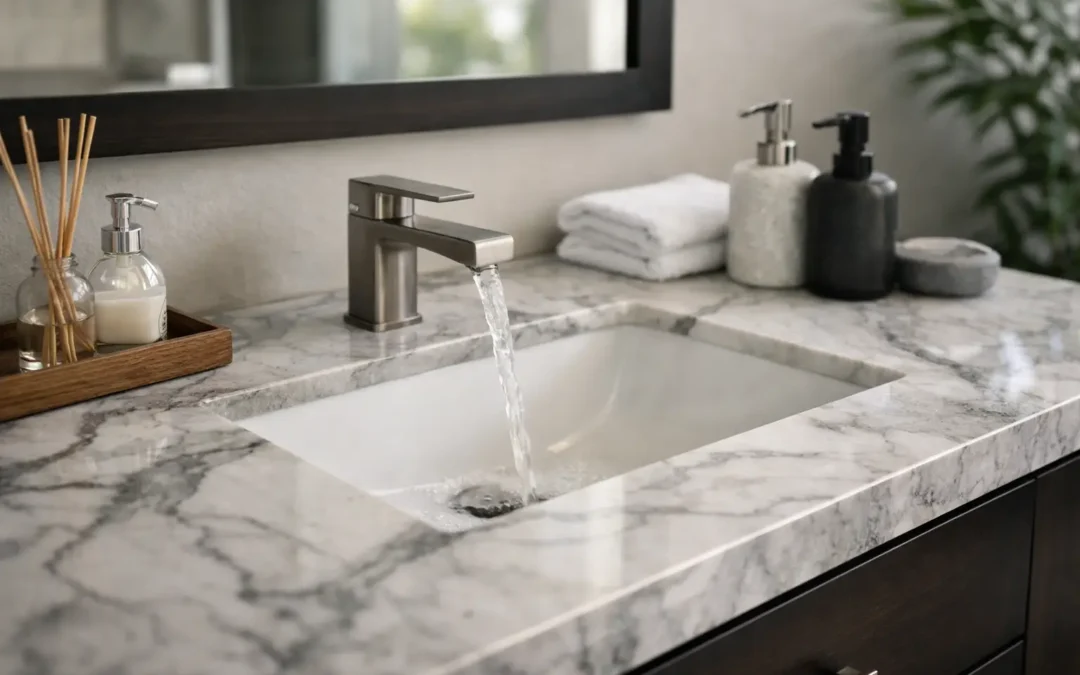
A bathroom vanity can look finished on paper and still fall apart in real life if the top is wrong. The slab may be beautiful, but if the sink placement feels cramped, the edge profile is too bulky, or the stone is poorly matched to the room, the result feels expensive without feeling refined. A custom stone vanity top with sink solves that problem by treating the vanity as one integrated piece – not a cabinet, sink, and surface forced together at the last minute.
For homeowners and design professionals, that distinction matters. In a primary bath, the vanity top is one of the most-used surfaces in the room. In a powder room, it often carries the entire visual impression. Going custom gives you control over scale, material performance, sink configuration, and the details that make the room feel intentional.
Why a custom stone vanity top with sink is worth considering
Stock tops work for basic layouts, but bathrooms are rarely as standard as they seem. Walls are not always perfectly square. Plumbing locations vary. Faucet drilling, backsplash height, and sink placement can all shift based on the room and the cabinet selected. A custom approach reduces the compromises.
The biggest advantage is fit. A custom top is fabricated to the exact cabinet dimensions and site conditions, which helps avoid awkward overhangs, exposed gaps, or the need to force a sink into a size that never really suited it. That matters even more in remodels, where existing conditions tend to reveal surprises.
The second advantage is design control. You can choose a stone that complements the floor tile, mirror finish, wall color, and hardware rather than settling for a preselected surface. You can also decide whether the sink should feel quiet and minimal or become a feature in its own right.
Then there is long-term value. A well-made stone top brings durability, easy day-to-day cleaning, and a level of finish that buyers and guests notice immediately. It is not the cheapest route, but it often prevents the costly do-over that comes from choosing something fast instead of something right.
Choosing the right stone for a vanity
Not every beautiful slab behaves the same way in a bathroom. The right choice depends on how the vanity will be used, how much maintenance you are comfortable with, and what kind of visual effect you want.
Marble
Marble remains a favorite for elegant bathrooms because of its softness in pattern and depth of color. It works especially well in primary baths and powder rooms where the goal is a quieter, elevated look. The trade-off is maintenance. Marble is more prone to etching and staining than some other options, so it is best for clients who understand natural patina and are comfortable with a little care.
Quartzite
Quartzite offers a strong combination of natural beauty and durability. Many clients choose it when they want movement similar to marble but with a harder surface. It is often a strong fit for busy family bathrooms where performance matters as much as appearance.
Granite
Granite is a practical option with a broad range of colors and patterns. It tends to resist wear well and can be a smart choice for secondary bathrooms, guest baths, or projects where durability is the main priority. Some granites have a more traditional appearance, while others feel surprisingly current depending on the slab selected.
Quartz
Quartz is engineered rather than quarried in slab form, which gives it a more controlled look and consistent patterning. It is popular in bathrooms because it is low maintenance and available in clean whites, soft neutrals, and bolder contemporary styles. If a client wants a refined surface without the variation of natural stone, quartz often makes sense.
There is no single best material for every project. A powder room may justify a more dramatic marble or exotic stone because it sees lighter use. A shared kids’ bathroom may be better served by quartz or a durable quartzite. Good selection is not just about taste. It is about matching the material to the room.
Sink styles and what they change
When people think about a vanity top, they often focus on the slab first. In practice, the sink style changes both the look and the function of the entire piece.
An undermount sink is the most common choice for a custom stone vanity top with sink because it keeps the counter line clean and makes wiping water into the basin simple. It suits both traditional and modern bathrooms and allows the stone to remain the visual focus.
A vessel sink creates more of a statement. It can work well in powder rooms or design-forward spaces where visual impact matters more than maximizing surrounding counter area. But it also raises the faucet requirements and changes the overall height at the sink, so proportions need to be handled carefully.
An integrated sink, whether carved from stone or paired in a highly minimal design, creates the most tailored look. It can be striking, but it also requires precise planning and fabrication. This option is usually best when the project budget and design goals both support that extra level of customization.
Sink size matters just as much as sink type. A sink that is too large can crowd the faucet and leave little landing space for daily use. Too small, and it becomes impractical. The best vanity tops feel balanced before they feel impressive.
The details that separate a good vanity from a great one
A lot of bathroom decisions happen in the last 10 percent of the process, and that is often where quality either shows up or disappears.
Edge profile is one example. A simple eased edge feels clean and current. A mitered thicker edge can add presence, especially on larger vanities. More decorative edges may fit traditional homes, but they need to relate to the rest of the space. If the room is restrained and modern, an ornate edge usually feels out of place.
Backsplash choice also affects the final look. Some bathrooms benefit from a low stone backsplash for practical splash protection. Others look better with the slab stopping cleanly at the wall and tile or painted drywall taking over. This is not just aesthetic. It depends on faucet style, wall finish, and how the vanity meets the mirror and lighting.
Faucet drilling is another area where mistakes are avoidable with early planning. Widespread, centerset, and single-hole faucets all require different configurations. If the sink and faucet are selected late, you can end up redesigning the slab after measurements have already started.
Then there is slab layout. This is where a curated showroom and fabrication team make a real difference. Veining direction, cut placement, and sink cutout location all influence how finished the vanity feels. A strong slab can lose impact if the best movement gets cut away or interrupted in the wrong place.
What the fabrication process should feel like
Custom should not mean complicated. The best process is clear from the start: choose the material, confirm the sink and faucet, take final measurements, approve fabrication details, and install with precision.
Where projects tend to go wrong is in handoffs. If one company sells the slab, another measures, and a third fabricates, responsibility gets blurry fast. A bathroom vanity may be smaller than a kitchen, but it still demands exactness. Small errors are more visible in compact spaces.
That is why many clients prefer working with a partner who can guide material selection and manage fabrication under the same roof. At Stonhaus Design, that combined showroom and fabrication approach helps simplify decisions and reduce risk, especially for homeowners who want expert guidance without chasing multiple vendors.
For design professionals, it also creates a more predictable path from specification to installation. When details are confirmed early and executed by the same team, timelines tend to stay tighter and results more consistent.
How to decide if custom is right for your bathroom
If the bathroom has unusual dimensions, a furniture-style vanity, a premium design intent, or a stone you care about seeing in person before fabrication, custom is usually the better route. It is also a smart choice when you want the sink, faucet, edge, and slab to feel resolved together rather than assembled from separate decisions.
If the project is highly budget-driven and the vanity size is truly standard, a prefabricated top may be enough. But even then, it is worth comparing what you give up: less control over material quality, limited sink options, and a finish that may not match the level of the rest of the renovation.
A bathroom does not need to be oversized to justify custom stone. It just needs to matter to you. The right vanity top should make the room easier to use, easier to trust, and better to live with every day. When the material is chosen well and fabricated with care, you feel it every time you turn on the faucet.