
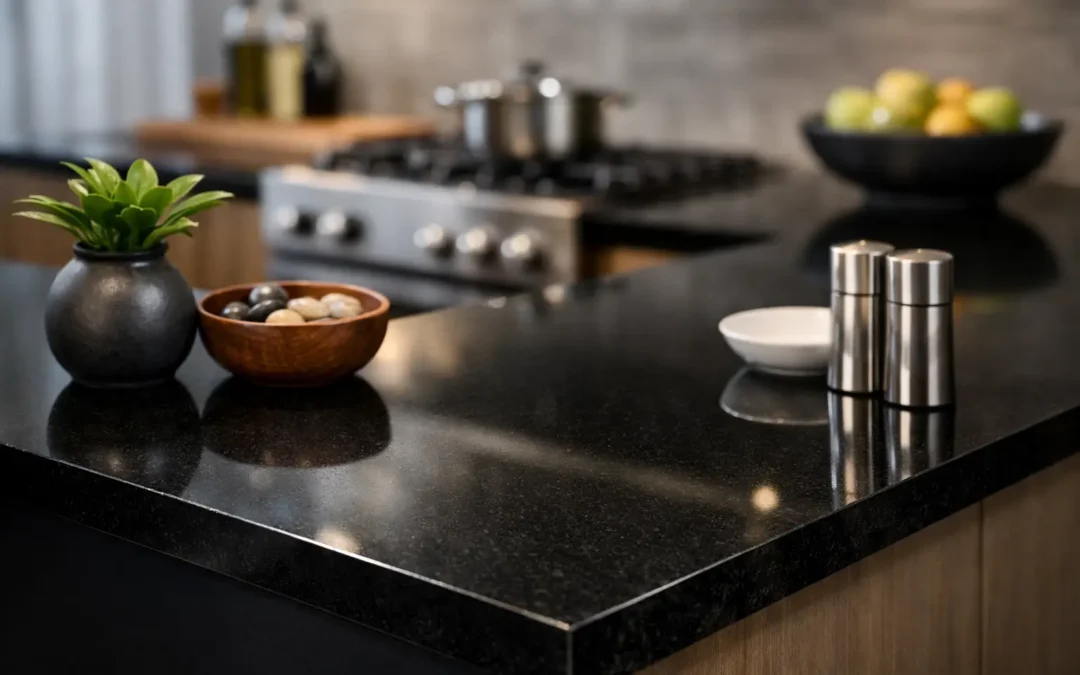
A black countertop can make a kitchen feel sharper, quieter, and more expensive all at once. That is exactly why Absolute Black Granite keeps coming up in high-impact remodels. It has a clean, saturated black appearance that works in modern spaces, classic homes, and custom projects where the surface needs to feel intentional, not busy.
For homeowners and design professionals, the appeal is obvious. But this is also a material that benefits from a closer look. Not every black stone behaves the same way, and not every project asks for the same finish, edge, or level of maintenance. If you are considering absolute black granite for a kitchen, bath, fireplace, or feature wall, the right decision comes from understanding both the look and the practical trade-offs.
What makes Absolute Black Granite different
Absolute Black Granite is known for one thing first: consistency. Compared with stones that have dramatic movement, veining, or color variation, this material is valued for its uniform dark tone. That makes it especially useful when the goal is a refined, architectural look.
In a kitchen, it can ground lighter cabinetry without fighting for attention. In a bathroom, it can create contrast with warm metals, white walls, or wood vanities. In a custom application like a fireplace surround or bar top, it often reads as tailored and understated rather than decorative.
That restraint is a large part of its value. Some materials become the focal point because they are visually active. Absolute black granite tends to do the opposite. It supports the rest of the design and gives the room structure.
Where absolute black granite works best
This is one of the more versatile natural stones for residential interiors because it can move across styles without feeling out of place. It works well in contemporary kitchens with flat-panel cabinetry, but it also suits transitional homes where the goal is contrast with a timeless finish.
Kitchens
In kitchens, the biggest advantage is visual stability. If you have a lot happening already – a statement hood, mixed metals, open shelving, or patterned floors – a quieter countertop can bring balance. Absolute Black Granite: is especially strong on islands, perimeter counters, and full-height backsplashes where a crisp black plane can define the room.
It is also a practical choice for cooking spaces because granite is a hard natural stone with good durability for daily use. That said, the finish you choose matters. A polished surface usually gives the richest black appearance, while a honed or leathered finish can soften glare and create a more tactile look.
Bathrooms
In bathrooms, this stone can feel either dramatic or calm depending on what surrounds it. Pair it with white porcelain and brushed nickel, and the result is classic. Pair it with walnut cabinetry and warm brass, and it becomes richer and more boutique in feel.
Smaller baths can also benefit from it, especially when you want the vanity top to feel substantial without adding visual clutter. Because the surface is visually consistent, it often helps compact spaces feel more composed.
Fireplaces and feature walls
Absolute black granite is a smart option for fireplaces because it has presence without excessive pattern. It suits both slab-style surrounds and more traditional applications. On feature walls, it creates a clean, monolithic effect that works especially well in homes aiming for a more modern interior language.
Polished, honed, or leathered?
This is where many projects shift from good to excellent. The same slab can read very differently depending on finish, and with granito preto absoluto, that choice affects both appearance and maintenance.
A polished finish usually delivers the deepest, clearest black. It reflects light, looks formal, and tends to be the version people picture first. If you want a sharp, high-contrast statement, polished is often the strongest choice.
A honed finish reduces shine and gives the stone a softer, more muted look. Many clients like it because it feels current and understated. The trade-off is that honed black surfaces can show fingerprints, residue, or temporary marks more readily depending on use.
A leathered finish adds texture and can hide daily wear a bit better in busy spaces. It also gives the stone a more relaxed, tactile quality. This can be a strong fit for kitchens that want black stone without the more formal look of high polish.
There is no universal best finish. It depends on how much light the room gets, how the surface will be used, and whether you want crisp reflectivity or a softer presence.
Durability and maintenance in real life
One reason clients continue to choose absolute black granite is that it performs well in hardworking spaces. Granite is generally resistant to scratching and heat, which makes it a dependable countertop material for kitchens. For families who cook often, entertain regularly, or simply want a surface that can handle daily life, that matters.
Still, durable does not mean maintenance-free. Natural stone benefits from proper sealing and routine care, even when it is relatively dense. Using a pH-neutral cleaner and wiping spills promptly is a smart baseline. Oily residue, soap film, and hard water marks tend to be more visible on dark surfaces than on heavily patterned stone, so cleaning habits make a difference.
This is where honest guidance matters. Clients are sometimes drawn to black stone because they expect it to hide everything. In practice, dark surfaces often hide visual noise and pattern variation very well, but they may show dust, smudges, or mineral spotting more clearly. That does not make them high maintenance. It just means expectations should match the material.
Is absolute black granite really granite?
This question comes up often, especially because some black stones in the market are labeled inconsistently. In many cases, what is sold as absolute black granite may be geologically classified differently, but for residential countertop decisions, the more useful question is performance. How does the slab look, how dense is it, what finish does it take well, and how will it behave in the intended application?
For buyers, the best path is not getting stuck on terminology alone. It is seeing the actual material, reviewing finish options, and working with a fabricator who understands slab quality, movement, edge execution, and installation details. Those factors often have more impact on the final result than the label itself.
Design pairings that tend to work
Granito preto absoluto is one of the easiest dark stones to pair because it does not impose a heavy pattern on the room. It works especially well with white oak, walnut, painted white cabinetry, warm greige tones, and natural plaster or soft matte walls.
For hardware and plumbing, polished chrome gives it a crisp, classic edge. Brass adds warmth and a more layered look. Black fixtures can work too, but the success of that pairing depends on contrast. If everything is too close in tone, the design can flatten.
Lighting also matters more than people expect. Under warm lighting, black stone can feel softer and more luxurious. Under cooler lighting, it can read sharper and more graphic. That is worth considering early, especially in kitchens with large islands or bathrooms with limited natural light.
What to watch before you commit
The biggest mistake with black stone is choosing too quickly from a small sample. Granito preto absoluto is more consistent than many materials, but finish, lighting, slab quality, and fabrication details still affect the outcome. A polished sample under bright showroom lighting will not look exactly the same in a home with warm evening light and matte cabinetry.
Edge profile is another detail that changes the overall impression. A simple eased edge tends to support a cleaner, more contemporary look. A thicker build-up or more pronounced profile can make the material feel more traditional or formal.
Then there is the question of application size. On a small vanity, black can feel elegant and contained. On a large island with a waterfall edge, it becomes architectural. Neither is better. The scale simply changes how bold the stone feels.
For projects where confidence and predictability matter, this is exactly why an integrated process helps. Seeing full slabs, discussing finish options, reviewing fabrication details, and having the same team guide selection through final installation reduces guesswork and protects the design intent.
At Stonhaus Design, that is often where the decision gets easier. When clients can compare real materials, ask practical questions, and understand how the slab will actually live in their space, the right choice becomes much clearer.
Granito preto absoluto is not the right answer for every home, but when the goal is a deep black surface with lasting strength and a refined presence, it earns its place quickly. The best results come from treating it not just as a color choice, but as a design material that deserves the right finish, fabrication, and setting.